Life
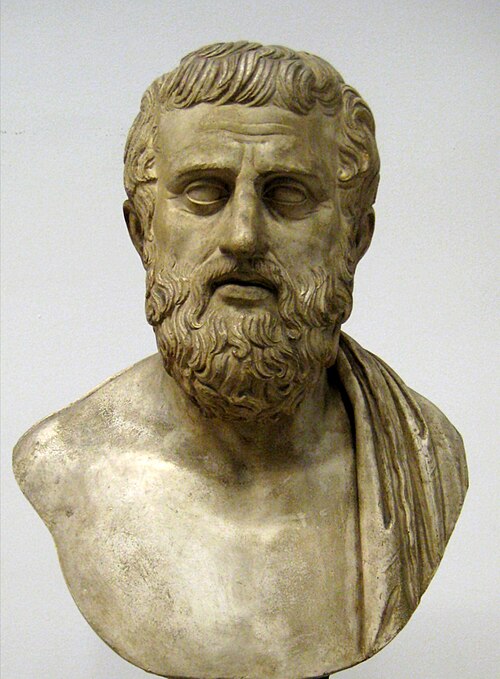
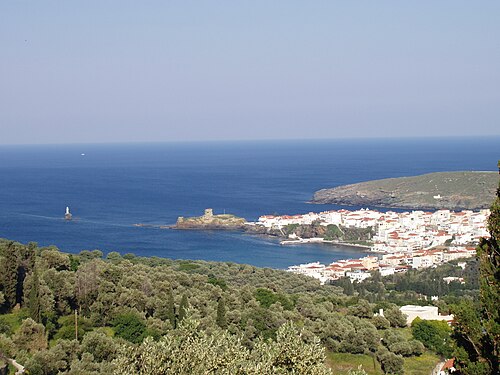
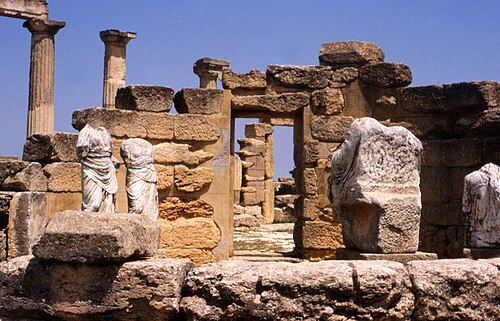
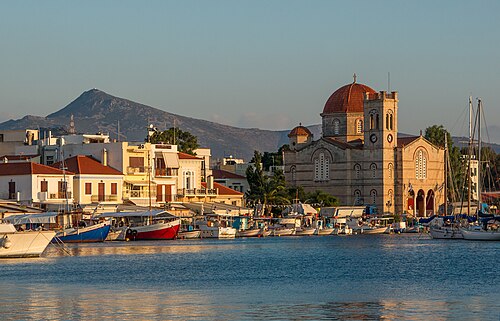
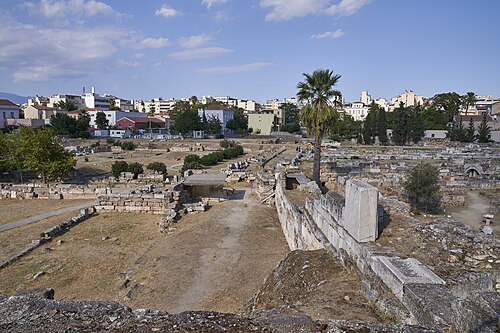
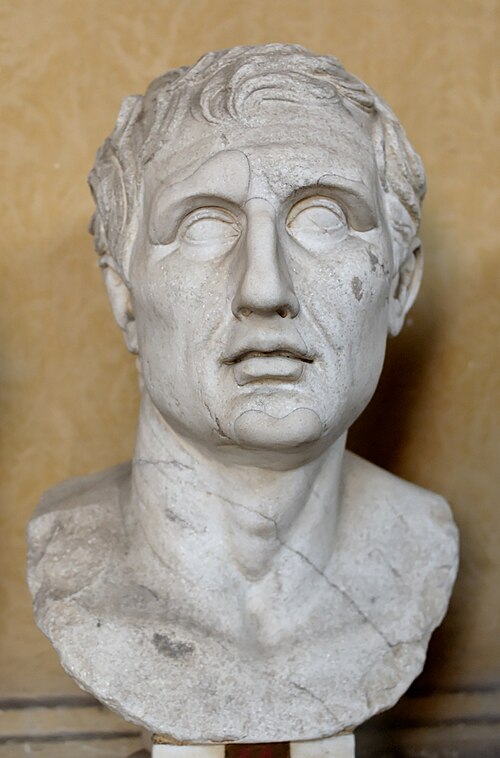
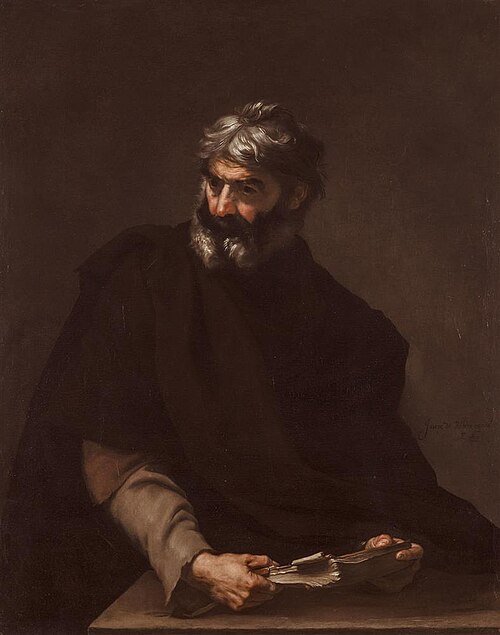
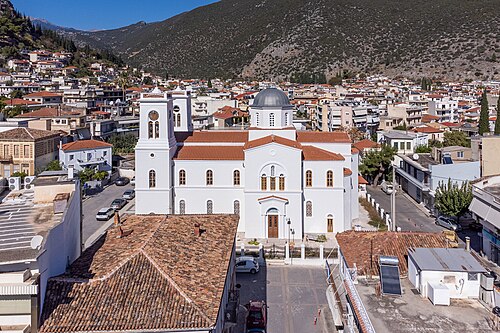
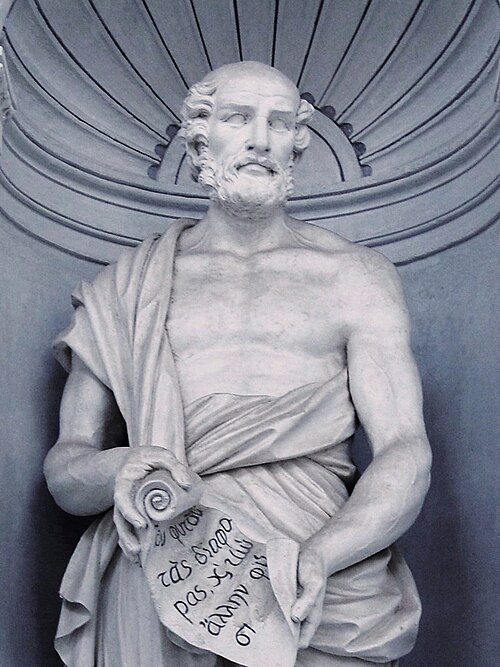
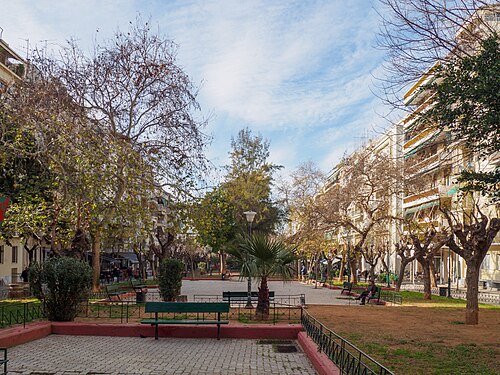
Parmenides belonged to Elea, a Greek settlement on the coast of southern Italy, now known by its Roman name Velia. His life reminds us that ancient Greek culture extended far beyond the borders of modern Greece. He was active in the early fifth century BC. A birth around 515 BC is often proposed, but ancient accounts produce different chronologies. His death cannot be dated securely, and a precise lifespan would give a false impression of certainty.
Plato later made him a character in the dialogue Παρμενίδης (Parmenides), where an elderly philosopher meets a young Socrates. This is a philosophical drama, not a transcript or reliable travel diary. It helps explain the familiar birth date, but it cannot settle every biographical question. Zeno of Elea is closely associated with Parmenides in ancient tradition. Reports also connect Parmenides with laws for his home city, although the details are limited.
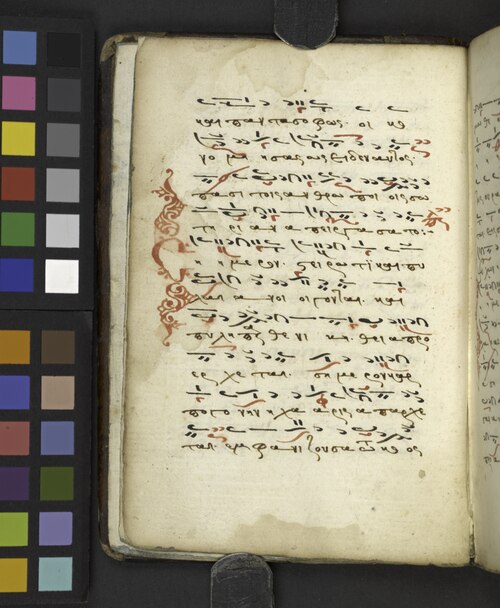
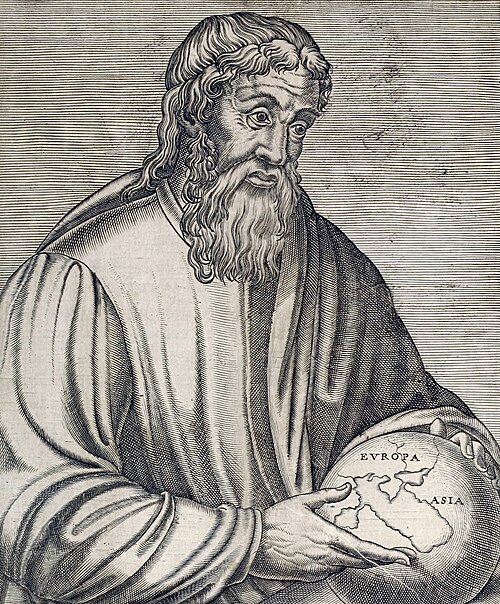
We know him chiefly through his poem, preserved as quotations in later authors rather than as a complete manuscript. Sextus Empiricus and Simplicius are especially important witnesses. Their interests shaped what they chose to copy. Reconstructing this philosopher therefore means reading fragments carefully and keeping later reports distinct from his surviving words.
Works

The poem is conventionally called Περὶ φύσεως (On Nature), although that title probably came later. Its epic hexameters join vivid storytelling to sustained argument. In the opening, a young traveller rides in a chariot towards a goddess who promises instruction. This journey belongs to the poem: it should not be turned into a story about the historical author’s travels. The goddess then asks which paths of inquiry can lead to understanding.
Her argument about what is challenges explanations that make it arise from nothing or disappear into nothing. In fragment 8, what is is described as ungenerated, imperishable, continuous and motionless. These claims helped make being, thinking and explanation central philosophical problems. Yet the familiar slogan that Parmenides simply denied everything we see is too quick: scholars disagree about the scope of his claims and their relation to the rest of the poem.
The later cosmological account discusses light and night, the heavens and living things. Surviving lines describe the moon’s borrowed light and its relation to the sun. The poem therefore asks us to read arguments about stable reality alongside an account of the changing natural world. The entries below are themes within this single work, arranged in the poem’s sequence, not four separate books. Their exact composition date is unknown.
Legacy in Greece today
For a learner in Greece today, Parmenides offers a way into Greek philosophical vocabulary: αλήθεια, truth, γνώμη, opinion, and είναι, being. These ordinary-looking words carry questions that are still discussed. His Elea also broadens the map of Greek culture to include southern Italy.
You can begin with the short modern Greek reading here, then compare the ancient quotation with its modern rendering. Notice how λόγῳ becomes an expression about reasoning, rather than simply a spoken word. Next, read about Plato and distinguish the historical poet from the later dialogue character. Finally, try explaining one question in your own Greek: can something come from nothing? You do not need to solve it to practise clear thinking and careful language.
Did you know?
- His only known work was a poem, not a collection of philosophical dialogues.
- The chariot journey is a scene in the poem, not evidence of a real expedition.
- The moon appears in his poem as receiving its light from elsewhere: from the sun.
Key works
| Greek title | Title | Year |
|---|---|---|
| Το προοίμιο | The proem (theme of the poem) | early 5th c. BC (approx.) |
| Οι δρόμοι της έρευνας | Paths of inquiry (theme of the poem) | early 5th c. BC (approx.) |
| Τα γνωρίσματα του όντος | The character of what is (theme of the poem) | early 5th c. BC (approx.) |
| Φως, νύχτα και ουρανός | Light, night and the heavens (theme of the poem) | early 5th c. BC (approx.) |
A line to remember
κρῖναι δὲ λόγῳ πολύδηριν ἔλεγχον ἐξ ἐμέθεν ῥηθέντα.
In today's GreekΚρίνε όμως με τη λογική το πολυσυζητημένο επιχείρημα που σου παρουσίασα.
krînai dè lógōi polýdērin élenchon / ex eméthen rhēthénta.
But judge by reasoning the much-disputed argument I have spoken.