Life
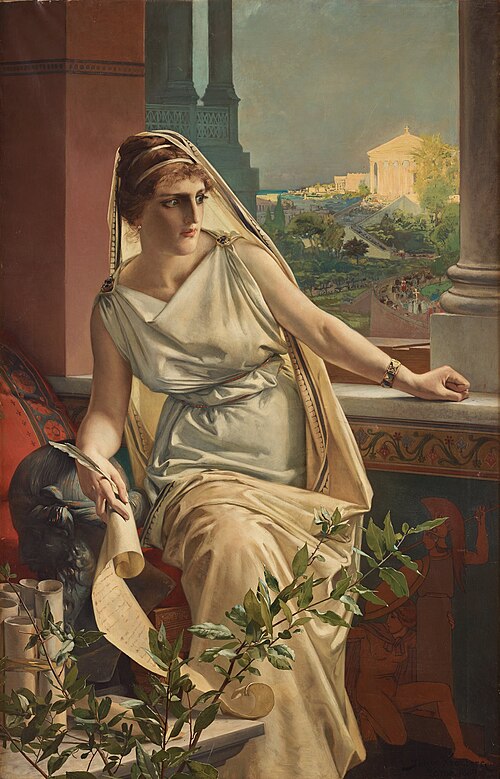
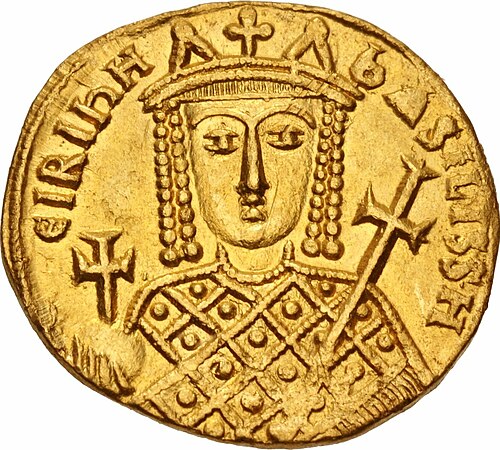
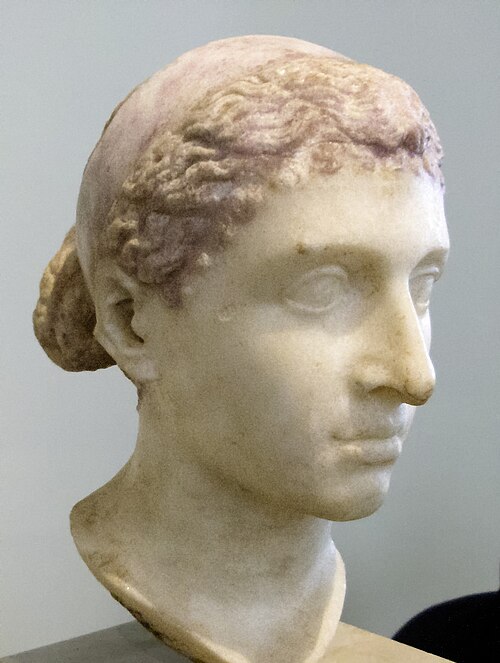
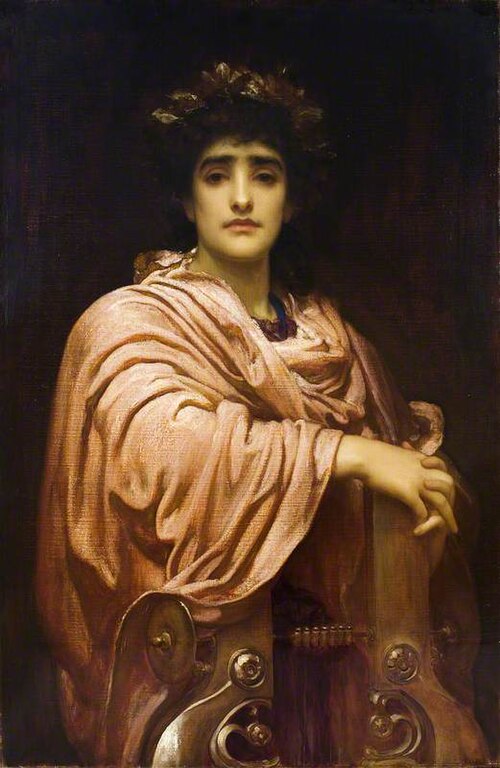
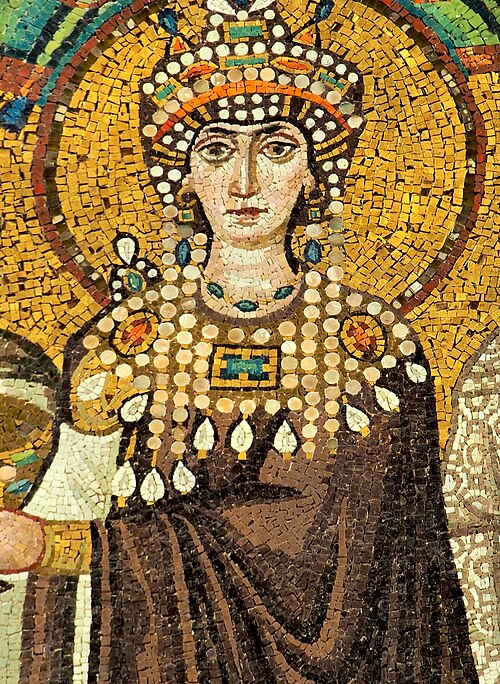
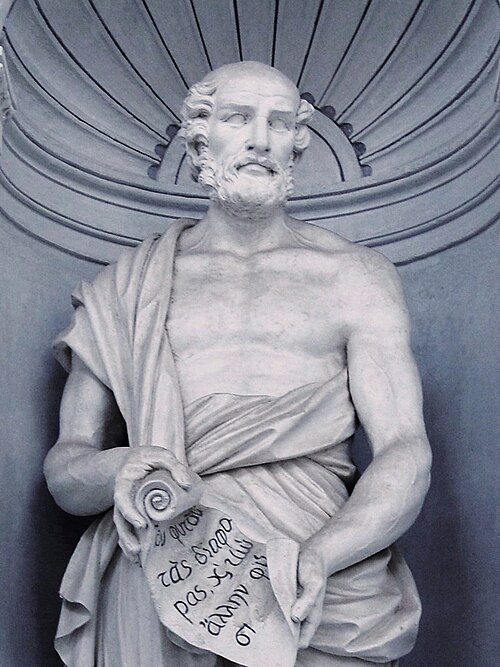
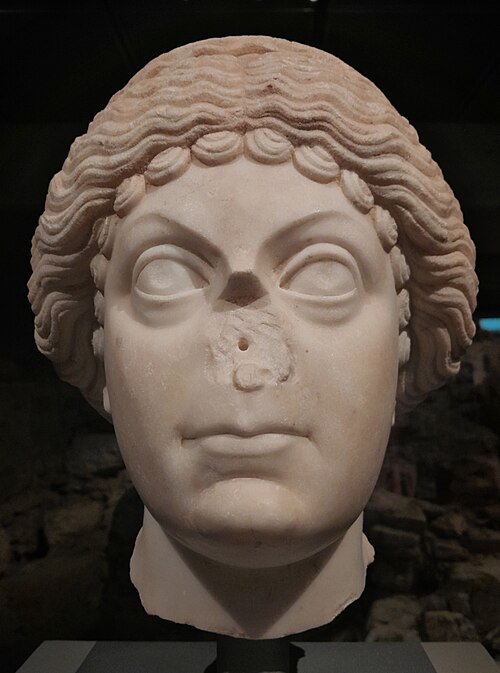
Aelia Eudocia was born around 400 and was originally called Athenais. The later historian Evagrius identifies Athens as her home and describes her father, Leontius, as a teacher. Her command of Greek epic language confirms a substantial literary education. Stories about how she arrived at the imperial court acquired dramatic details in later chronicles, so they should be read as narratives rather than a secure record of every event. She became Christian and took the name Eudocia before marrying the Eastern Roman emperor Theodosius II in 421. She received the imperial title Augusta in 423.
In 438–439 she travelled to the Holy Land, visiting Antioch along the way. Evagrius reports that she ended an address there with an adapted Homeric verse claiming kinship with her audience. During the early 440s she withdrew from Constantinople to Jerusalem; sources differ over the date and circumstances. She remained an imperial benefactor and an active participant in religious life there, rather than disappearing from public affairs. Her later years included involvement in disputes following the Council of Chalcedon in 451. She died in Jerusalem in 460. The poet’s life brings classical Greek education, Christian writing and imperial patronage into the same historical frame.
Works

Eudocia’s poetry makes the meeting of classical education and Christianity visible at the level of individual words. Her Homeric centos retell biblical episodes by rearranging lines and pieces of lines from the Iliad and Odyssey. A cento is a literary patchwork: familiar language gains another setting and another speaker. The transmitted collection has a complicated history, involving earlier work by Patricius and several versions. It is safer to describe Eudocia’s contribution to this tradition than to assign every surviving line to her without qualification.
The poem on Cyprian and Justa adapts Christian narrative into Greek epic verse. Its magician, conversion and steadfast heroine belong to a religious story, not a documentary biography of its characters. Parts survive, while the later reader Photius describes material that is now lost. A verse inscription from the baths at Hammat Gader, associated with Eudocia, praises hot springs and their waters. These works show different settings for literary Greek: a scriptural retelling, a saint’s story and a public bathing complex. Her reported Antioch address supplies another example of reuse: a Homeric line about ancestry becomes a way to establish a connection with a civic audience. Ancient epic vocabulary and grammar need a supported translation; the page’s B1 passage is in Modern Greek.
Legacy in Greece today
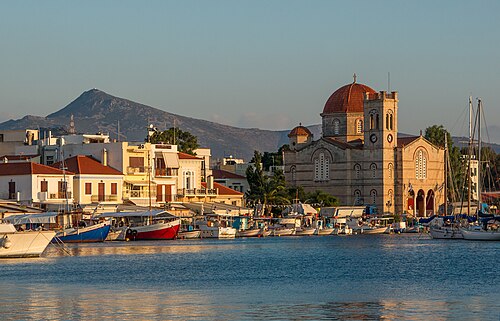
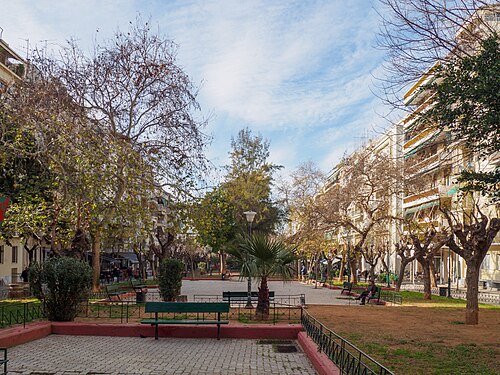
Eudocia offers a way to follow Greek across periods without treating its ancient and modern forms as identical. Open the Greek passage of Evagrius, Ecclesiastical History 1.20, and locate her reported verse beginning Ὑμετέρης. Read our Modern Greek rendering beside it: Λέω πως είμαι από τη δική σας γενιά και το δικό σας αίμα. Compare ancient αἵματος with modern αίμα, then use a more everyday way to talk about origins: Η καταγωγή μου είναι από την Αθήνα. On a map, trace Athens, Constantinople and Jerusalem and describe the journey with από and στην. This activity joins a real transmitted text to useful Modern Greek phrases; the original remains a late antique literary text.
Did you know?
- Her first name was Athenais
- Eudocia was her Christian imperial name.
- A cento rearranges earlier verse to make a new poem.
- The Antioch quotation is reported by Evagrius and adapts Homer.
Key works
| Greek title | Title | Year |
|---|---|---|
| Αυγούστα | Title of Augusta | 423 |
| Λόγος στην Αντιόχεια | Address in Antioch | 438–439 |
| Ομηρικοί κέντρωνες | Homeric centos — contribution to the tradition | before 460 |
| Ποίημα για τον Κυπριανό και την Ιούστα | Poem on Cyprian and Justa | before 460 |
A line to remember
Ὑμετέρης γενεῆς τε καὶ αἵματος εὔχομαι εἶναι
In today's GreekΛέω πως είμαι από τη δική σας γενιά και το δικό σας αίμα.
Hymeteres genees te kai haimatos euchomai einai
I declare that I am of your lineage and blood.