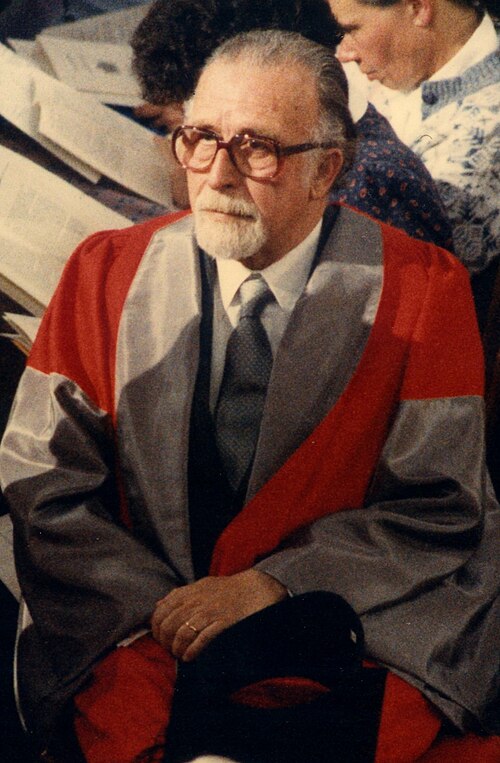
Life
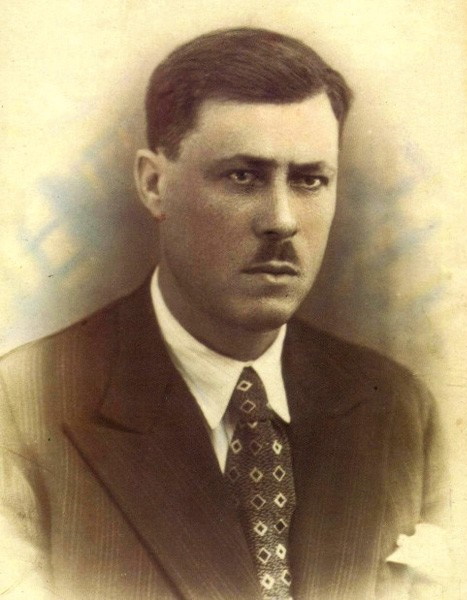
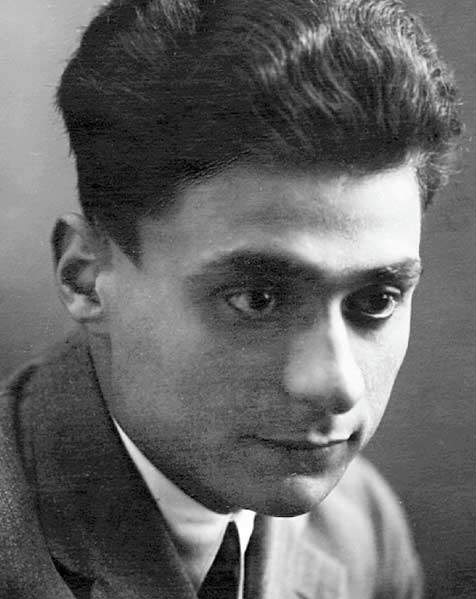
Andronikos was born on 23 October 1919 in Prousa (today Bursa, in Turkey), to a father from Samos and a mother from Imbros. After the Asia Minor Catastrophe of 1922 the family came as refugees to Thessaloniki, the city where he lived for the rest of his life. In 1936 he entered the Philosophical School of the University of Thessaloniki, where the archaeologist Konstantinos Rhomaios became his teacher; as a student he worked as Rhomaios' assistant at the site of Vergina, a village at the foot of the Pierian mountains. He graduated in 1941.
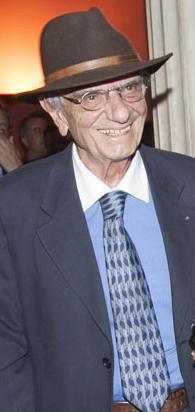
During the Second World War he escaped from occupied Greece to the Middle East and served in the Greek army there. After the war he joined the Archaeological Service and, from 1949, began his own excavations at Vergina. He studied at Oxford in 1954–55 under the great specialist of Greek vases, John Beazley, and made his career at the University of Thessaloniki, where he became full professor of classical archaeology in 1964. In 1976 he began to dig the Great Tumulus, a huge artificial hill at Vergina, and the next year came the discovery of his life. He spent his last years studying and publishing the finds, and received the Grand Cross of the Order of the Phoenix in 1992. He died in Thessaloniki on 30 March 1992.
Works

For centuries no one knew exactly where Aigai, the old royal capital of the Macedonians, had been. Andronikos spent almost thirty years at Vergina, first excavating a vast cemetery of small burial mounds of the Iron Age, then the Great Tumulus, 110 metres wide and about 12 metres high. In the autumn of 1977 his team found three tombs. One, small and already robbed, had a magnificent wall painting of Η αρπαγή της Περσεφόνης (The Abduction of Persephone), one of the very few large Greek paintings of the fourth century BC to survive.
On 8 November 1977 he opened Tomb II, a vaulted Macedonian tomb with a painted hunting scene on its façade, untouched since antiquity. Inside lay a solid gold casket, a λάρνακα, decorated with the sixteen-rayed Macedonian star, containing burned bones wrapped in purple cloth, together with a gold wreath of oak leaves, weapons, armour and silver vessels. Andronikos attributed the tomb to Philip II, murdered in 336 BC; scholars still debate whether it belonged to Philip II or to Philip III Arrhidaios. In 1978 a further tomb, the «Prince's Tomb», was found intact, probably the burial of the young Alexander IV. Andronikos explained his finds in clear books for the public, above all Βεργίνα: οι βασιλικοί τάφοι (Vergina: The Royal Tombs, 1984).
Legacy in Greece today
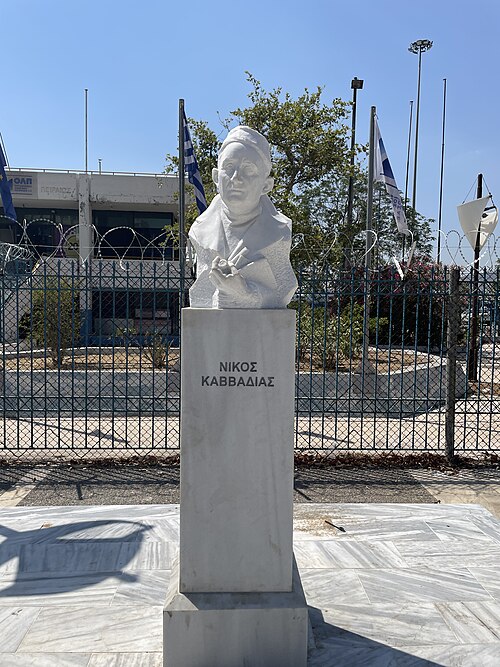
The place to go is Vergina, an hour from Thessaloniki. The Museum of the Royal Tombs of Aigai is built inside the Great Tumulus itself: you walk under the earth, in half-darkness, past the façades of the tombs, and see the gold larnax, the wreaths and the armour where they were found. Aigai has been a UNESCO World Heritage Site since 1996. In Thessaloniki the street in front of the Archaeological Museum carries Andronikos' name, a bust of him stands opposite, and several schools are named after him. The Vergina star, from the lid of the larnax, has become a symbol of Greek Macedonia, on flags, coins and logos.
Did you know?
- He was born in Bursa, in today's Turkey, and came to Thessaloniki as a child refugee after 1922.
- He first worked at Vergina as a student assistant in the 1930s, about forty years before his great discovery.
- The gold larnax from Tomb II weighs about eleven kilos.
- Whether the tomb belongs to Philip II or to Philip III Arrhidaios is still debated by archaeologists.
Key works
| Greek title | Title | Year |
|---|---|---|
| Βεργίνα Ι: Το νεκροταφείο των τύμβων | Vergina I: The Cemetery of the Tumuli (book) | 1969 |
| Ανασκαφή της Μεγάλης Τούμπας της Βεργίνας | Excavation of the Great Tumulus of Vergina begins | 1976 |
| Ο τάφος της Περσεφόνης | The Tomb of Persephone and its wall painting | 1977 |
| Ο τάφος του Φιλίππου | Tomb II, attributed to Philip II, found intact (8 November) | 1977 |
| Ο τάφος του Πρίγκιπα | The Prince's Tomb | 1978 |
| Βεργίνα: οι βασιλικοί τάφοι και οι άλλες αρχαιότητες | Vergina: The Royal Tombs and Other Antiquities (book) | 1984 |
From the works


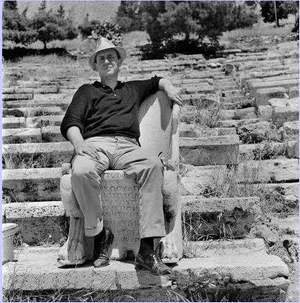
Public-domain pictures from Wikimedia Commons.
A line to remember
Όμως αυτό που αντικρίσαμε στο άνοιγμά της μας έκοψε για μιαν ακόμη φορά την ανάσα.
Omos afto pou antikrisame sto anoigma tis mas ekopse gia mian akomi fora tin anasa.
But what we saw when it was opened took our breath away once again.