Life
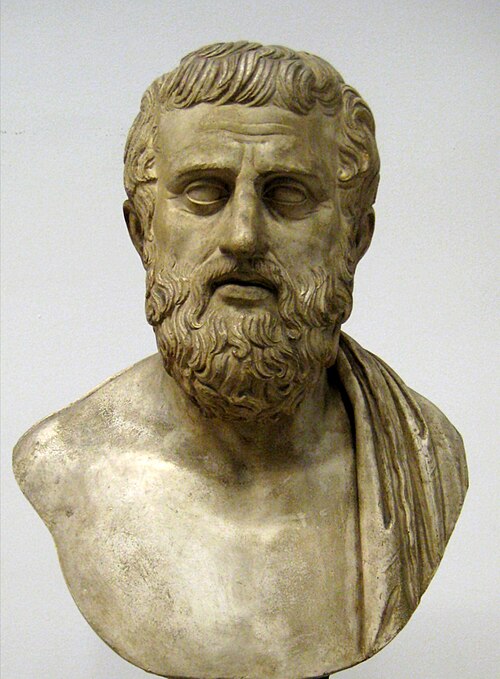
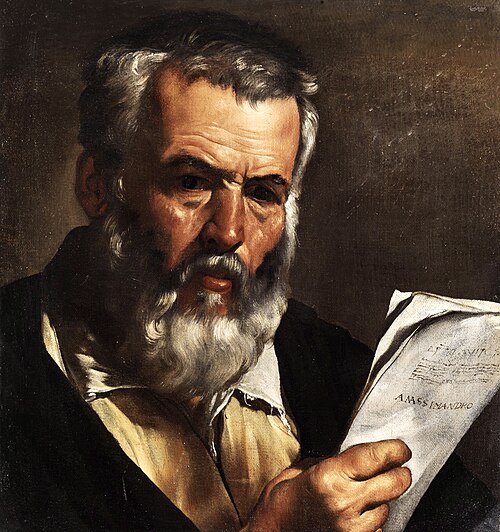
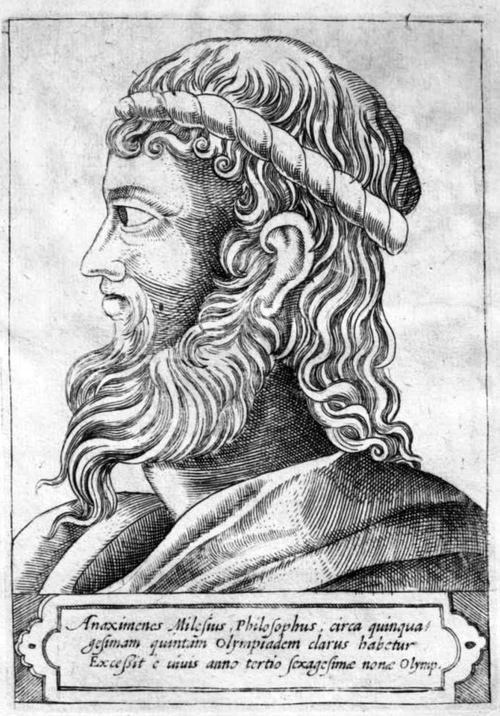
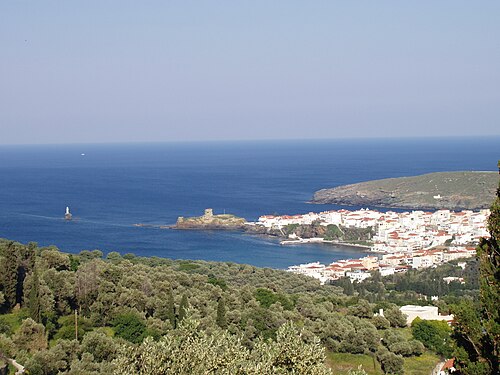
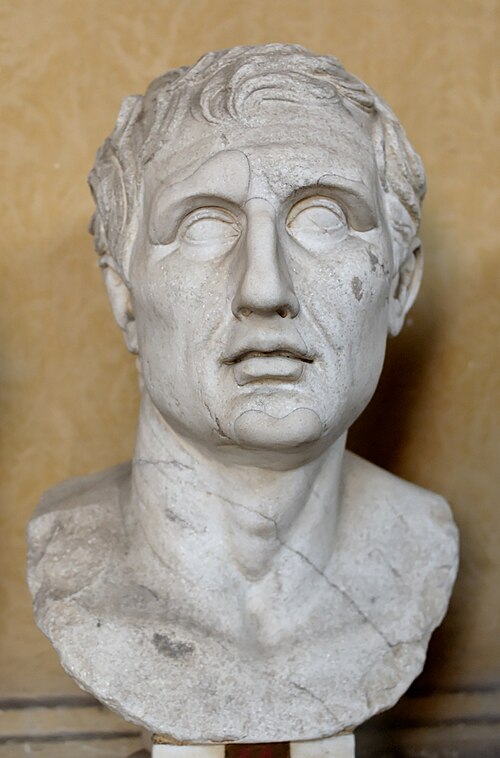
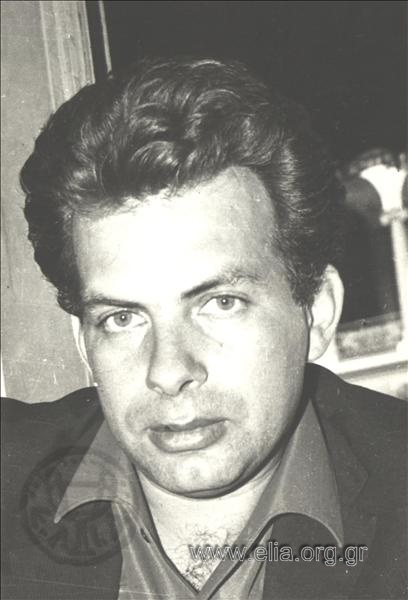
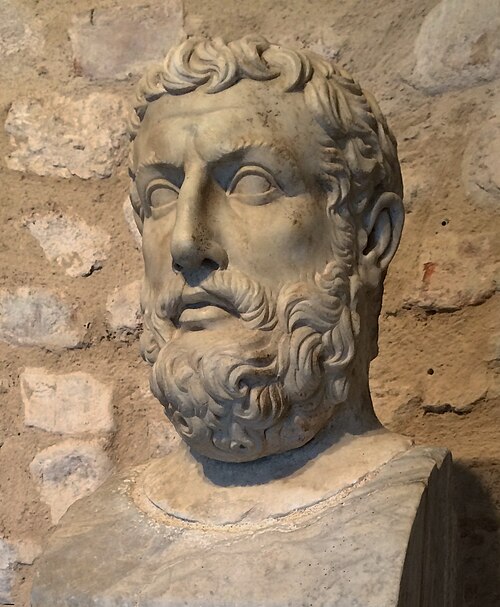
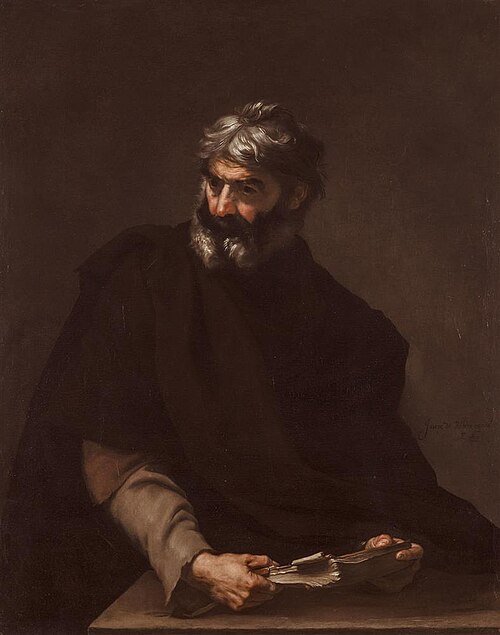
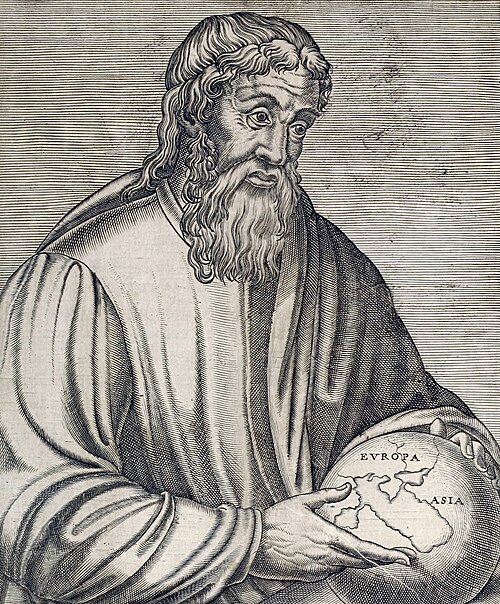
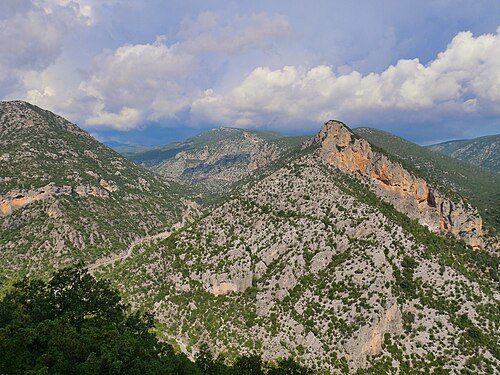
Anaxagoras was born around 500 BC in Clazomenae, a Greek city on the western coast of Asia Minor, in present-day Turkey. He eventually moved to Athens, where ancient accounts place him for roughly twenty to thirty years. Exact arrival and departure dates remain disputed. His association with Pericles connected philosophical inquiry with the political and cultural world of the city. Later stories describe him abandoning inherited wealth to study nature, but such portraits of the absorbed philosopher should not be treated as a fully documented daily life.
Ancient sources connect his departure from Athens with an accusation of impiety. His claim that the sun was a hot stone challenged familiar religious ideas, and his relationship with Pericles also made the episode politically charged. The date and details of the proceedings are uncertain; competing reports should not be forced into a single courtroom story. He went to Lampsacus, on the Hellespont, and died in 428 BC. His writings remained known to later readers. Plato’s Apology even presents his ideas as available in inexpensive books. The contrast between a lost original and this later testimony is part of how we reconstruct his place in Greek intellectual life.
Works

Anaxagoras asked how changing things can arise without anything coming from nothing. His answer involved mixture: everything contains a portion of everything else, although what predominates makes each thing appear as it does. Food becoming flesh, hair and bone offered a concrete problem for this account. It is not a modern theory of chemical ingredients or atoms, and scholars still disagree about the exact nature of the constituents. The opening of his book imagines all things together before the differentiation of the visible world.
Nous, usually translated as mind or intellect, initiates the motion that rearranges the mixture. Its precise relation to the material world remains a subject of interpretation. His astronomical explanations were more concrete: the moon receives light from the sun, and eclipses occur through the blocking of light by another body. Some other proposals were mistaken, but the search for physical causes mattered. The lost prose work is conventionally called On Nature. Its surviving fragments owe much to Simplicius, writing roughly a millennium later. The table distinguishes that one book from doctrines and an astronomical achievement. They are not titles of four independently surviving treatises.
Legacy in Greece today
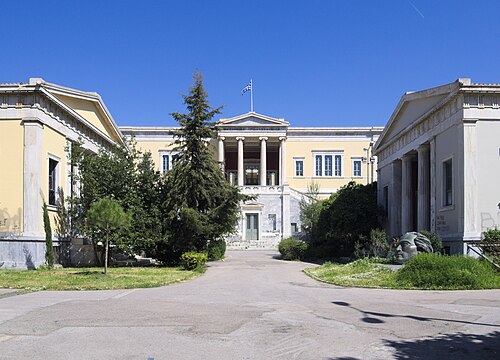
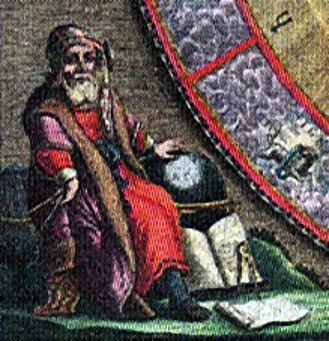
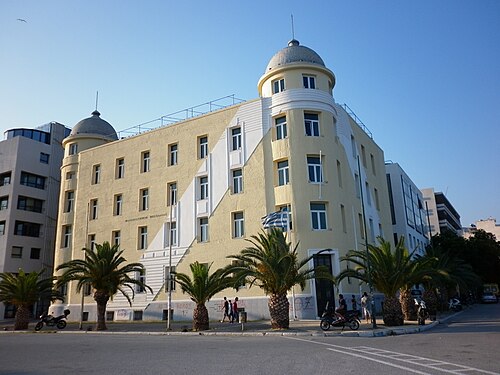
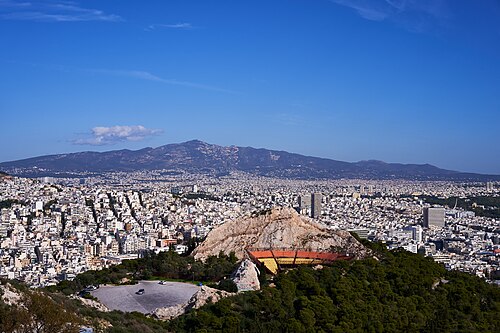
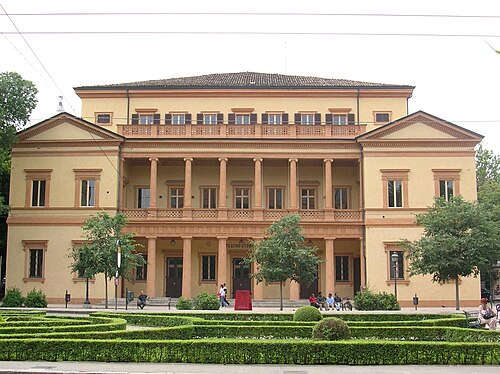
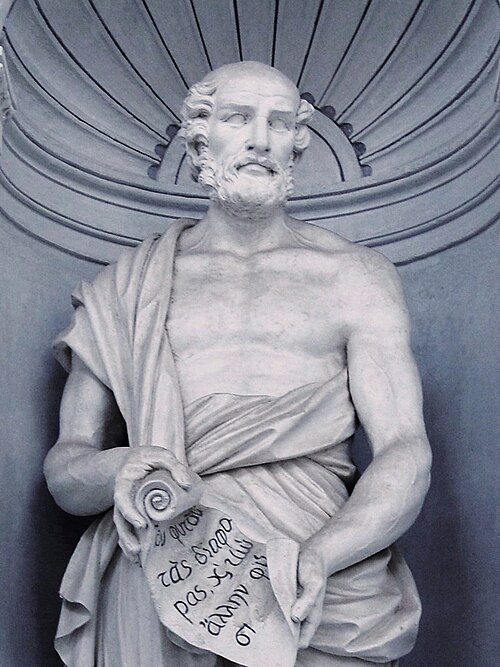
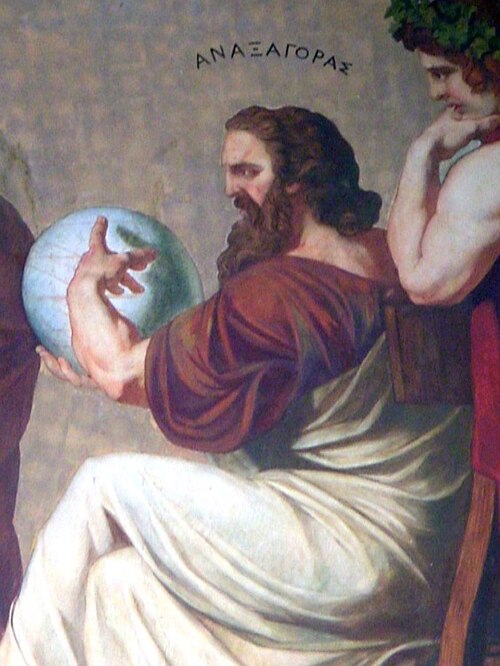
Anaxagoras links Greek-speaking Asia Minor with classical Athens. In Athens today, an imaginary image of him appears in the painted decoration of the historic university building, showing how modern Greek institutions remember ancient inquiry. His work also helps a learner notice changes within the language itself.
In the quotation, χρήματα means things, while in everyday Modern Greek it usually means money. Write the modern sentence with πράγματα, then describe a simple sky observation using ήλιος, σελήνη and φως. Add a question beginning γιατί. Compare an eclipse diagram with his explanation, keeping modern astronomy distinct from ancient proposals. This turns a difficult cosmology into useful Greek observation and questioning.
Did you know?
- He explained the moon’s light as coming from the sun.
- His surviving quotations come largely through much later authors.
- Ancient χρήματα in the opening means things, not specifically money.
Key works
| Greek title | Title | Year |
|---|---|---|
| Περὶ φύσεως (συμβατικός τίτλος) | On Nature: lost prose book, conventional title | 5th century BC |
| Πάντα ἐν παντί (διδασκαλία) | Everything in everything: doctrine | 5th century BC |
| Νοῦς καὶ κίνησις (διδασκαλία) | Nous and motion: doctrine | 5th century BC |
| Εξήγηση των εκλείψεων (επίτευγμα) | Explaining eclipses: astronomical achievement | 5th century BC |
A line to remember
ὁμοῦ πάντα χρήματα ἦν
In today's GreekΌλα τα πράγματα ήταν μαζί.
homou panta chrēmata ēn
All things were together.