Life
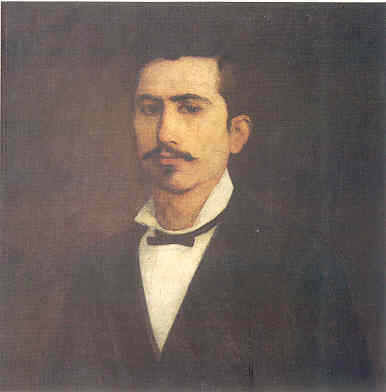
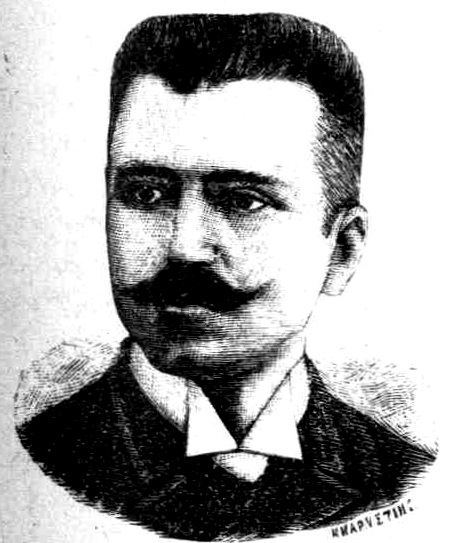
Valaoritis was born in 1824 in Lefkada, then part of the Ionian Islands under British protection. His family was wealthy and had roots in Epirus, on the mainland opposite, the land of the klephts and of Ali Pasha that would fill his poems. He studied at the Ionian Academy in Corfu and then in Western Europe, in Switzerland, France and Italy, where he took a degree in law. His first book of verse, Στιχουργήματα (Verses), came out in 1847.
Back in the Ionian Islands he entered politics. Elected to the Ionian Parliament in the 1850s, he became one of the most eloquent voices of the radical demand for union with the Kingdom of Greece, against British rule, and when the islands were finally united with Greece in 1864 he sat as a deputy in the Greek parliament in Athens, famous for his fiery speeches.
In his last years he withdrew more and more from public life to Madouri, a small green islet off the east coast of Lefkada that belonged to his family. There he worked on Φωτεινός, the poem he considered his best, and there he spent his time among olive trees, boats and fishermen. He died in 1879, leaving Φωτεινός unfinished.
Works

Valaoritis wrote after Solomos and Kalvos, and like them he wanted a national poetry for the new Greek state, but his voice is louder and more theatrical. He chose demotic Greek, the living language of the people, at a time when many writers in Athens preferred the learned katharevousa, and he filled his verse with the images and rhythms of the δημοτικά τραγούδια, the folk songs of the klephts: eagles, rocks, mountain springs, black clothes and heroic deaths.
His subjects are the struggles of the Greeks against Ottoman power. Κυρά Φροσύνη (Lady Frosyni, 1859) tells the story of a woman of Ioannina drowned in the lake with other women on the orders of Ali Pasha in 1801. Αθανάσιος Διάκος (1867) follows the deacon who fought at the bridge of Alamana in 1821 and was cruelly executed after his capture. Αστραπόγιαννος (Astrapogiannos, 1867) is a ballad about a klepht and his loyal companion. His collection Μνημόσυνα (Memorials, 1857) honoured the dead of the struggle.
Φωτεινός, published after his death, moves the story back to the Middle Ages: a poor farmer of Lefkada rises against the foreign lords of the island. Its plainer, harder language is admired by many critics as the best thing he wrote.
Legacy in Greece today
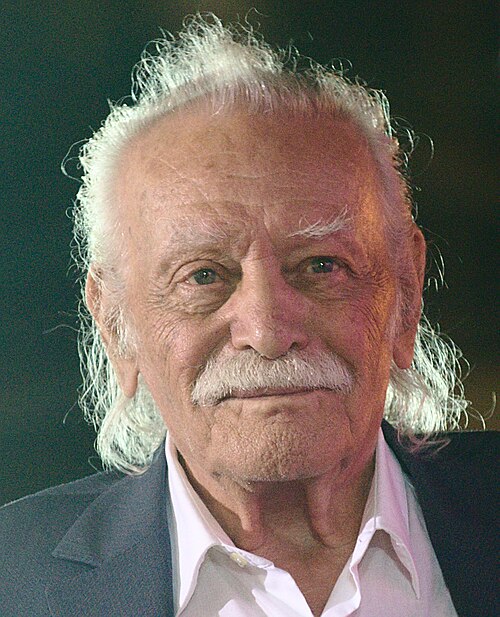
In Lefkada Valaoritis is the island's great man: his statue stands in the town, the islet of Madouri with his house can be seen from the coast road at Nydri, and local cultural events carry his name. Streets named Βαλαωρίτου exist in Athens, Thessaloniki and many other towns. Greek schoolbooks have long included passages from his poems, among them «Ο βράχος και το κύμα» (The Rock and the Wave), and his name is linked with the 25 March celebrations of the Revolution. For a learner, a good way in is to read the folk song of Athanasios Diakos, then a few lines of Valaoritis's poem on the same hero. His great-grandson Nanos Valaoritis (1921–2019) became a well-known surrealist poet.
Did you know?
- He spent his last years on Madouri, a tiny private islet off Lefkada that his family still owns.
- As a deputy he was one of the strongest voices for the union of the Ionian Islands with Greece, achieved in 1864.
- His poem Φωτεινός, which he left unfinished, is set not in 1821 but in the Middle Ages.
- The modern surrealist poet Nanos Valaoritis was his great-grandson.
Key works
| Greek title | Title | Year |
|---|---|---|
| Στιχουργήματα | Verses | 1847 |
| Μνημόσυνα | Memorials | 1857 |
| Κυρά Φροσύνη | Lady Frosyni | 1859 |
| Αθανάσιος Διάκος | Athanasios Diakos | 1867 |
| Αστραπόγιαννος | Astrapogiannos | 1867 |
| Φωτεινός | Fotinos (unfinished, posthumous) |
From the works


Public-domain pictures from Wikimedia Commons.
A line to remember
«Μέριασε βράχε να διαβώ!» το κύμα ανδρειωμένο / λέγει στην πέτρα του γυαλού θολό, μελανιασμένο.
«Meriase vrache na diavo!» to kyma andreiomeno / legei stin petra tou gyalou tholo, melaniasmeno.
"Make way, rock, let me pass!" the emboldened wave, / murky and bruise-dark, says to the stone of the shore.