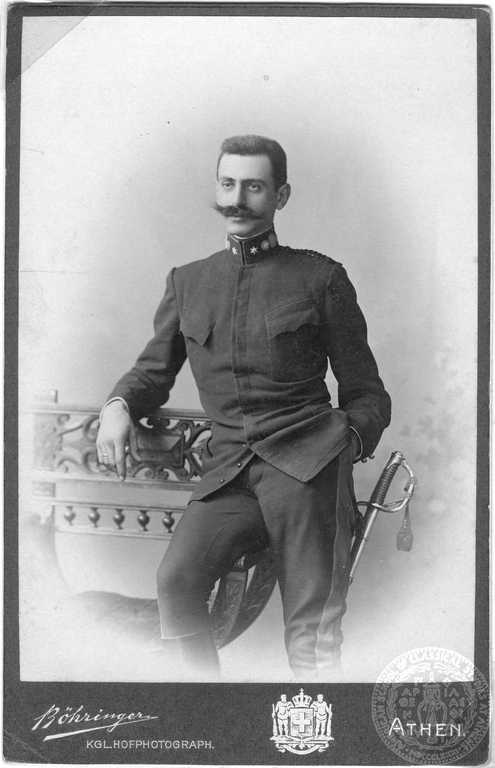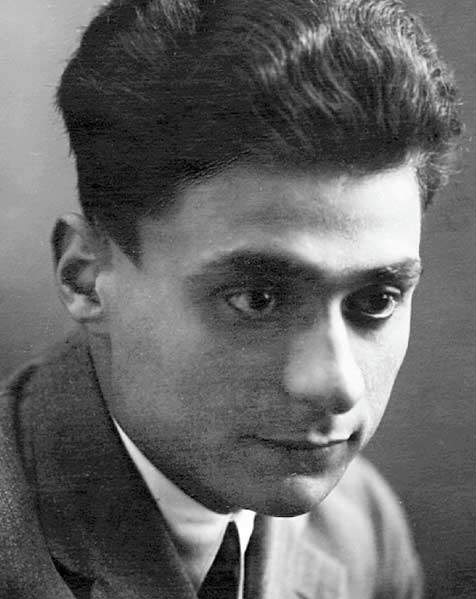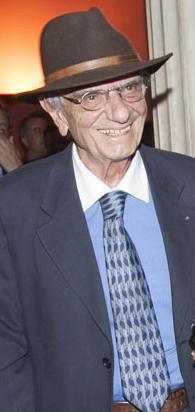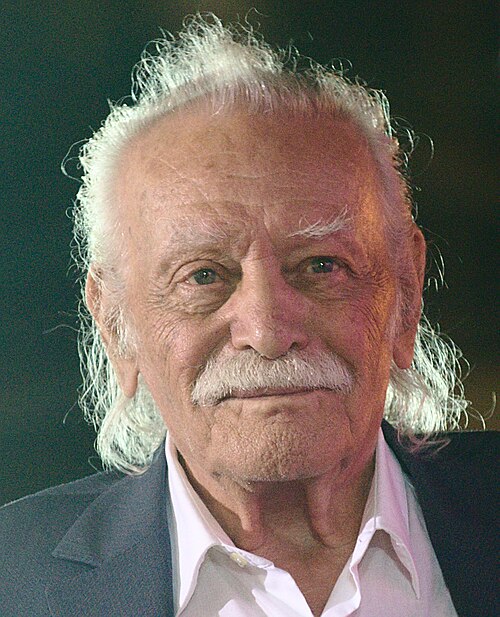
Life
Glezos was born on 9 September 1922 in Apeiranthos, a mountain village of marble houses on Naxos. In 1935 his family moved to Athens, where he finished school, worked from a young age and became involved in left-wing youth groups that opposed the Metaxas dictatorship and the Axis. The Germans entered Athens on 27 April 1941 and raised the swastika on the Acropolis.
On the night of 30 to 31 May 1941, Glezos and Apostolos (Lakis) Santas, a fellow student, climbed up through a cleft in the rock on the north-west side, reached the flagpole and brought the flag down. The occupiers announced death sentences for the unknown culprits; the two were not identified at the time. Glezos was arrested several times during the Occupation, by the Germans and the Italians, and was tortured. His brother Nikos was executed by the occupiers in 1944.
After the war Glezos, a communist, was persecuted in the Civil War years: he was sentenced to death more than once, and the sentences were not carried out after an international outcry. In 1951 he was elected to parliament for the EDA party while in prison, and he was elected again from prison in 1961. Imprisoned again under the junta of 1967–1974, he spent in total more than eleven years in prison and four and a half years in exile. In later life he was an MP for PASOK in the 1980s, a member of the European Parliament in 1984 and again in 2014, president of his village community on Naxos, and a tireless campaigner for German war reparations. He died in Athens on 30 March 2020, aged 97.
Works

The flag on the Acropolis was a small act with an enormous echo. In the first weeks of the Occupation, when Greece had been overrun and much of Europe seemed resigned, two students showed that the swastika over the Parthenon could be pulled down. The news spread through Athens by word of mouth and then abroad, and the act became a symbol of Greek resistance, celebrated every year since the war.
For Glezos it was the beginning of a political life. He worked in the Resistance press, was editor of the communist newspaper Ριζοσπάστης (Rizospastis) in 1947, until the paper was closed down at the end of that year, and remained on the left all his life, through the EDA of the 1950s and 1960s, PASOK in the 1980s and SYRIZA in the 2010s. He was never a comfortable ally: he criticised his own parties openly, including SYRIZA in 2015.
He also had a practical side. As president of the community of Apeiranthos in the late 1980s he experimented with local self-government and with small dams and terraces to keep rainwater in the soil, a cause he defended for decades. He wrote books on the history of the Resistance and on direct democracy. Few Greeks were tear-gassed at a demonstration at the age of 87, as Glezos was in Athens in 2010; for many, that image summed up a man who never stopped protesting.
Legacy in Greece today
Go up to the Acropolis and look for the plaque that recalls the night of 30 to 31 May 1941; the anniversary is marked there every year. On Naxos, Apeiranthos is one of the most beautiful villages of the Cyclades and is proud of its son, who was president of its community in 1986–1990. Greek school history books tell the story of the flag, and Greeks of every political colour respected his courage when he died in March 2020, during the first Covid lockdown, which meant only a small funeral for a man who had filled squares all his life. The phrase «κατέβασε τη σημαία από την Ακρόπολη» needs no explanation in Greece.
Did you know?
- The two were not identified as the culprits during the Occupation; the Germans sentenced the unknown perpetrators to death in absentia.
- He was elected to the Greek parliament from prison twice, in 1951 and in 1961.
- He was a member of the European Parliament at 61 and again at 91.
- He is often called «ο πρώτος παρτιζάνος της Ευρώπης» (the first partisan of Europe), a title usually credited to Charles de Gaulle.
Key works
| Greek title | Title | Year |
|---|---|---|
| Το κατέβασμα της σημαίας από την Ακρόπολη | Tearing down the swastika from the Acropolis | 1941 |
| Αρχισυντάκτης του «Ριζοσπάστη» | Editor of Rizospastis | 1947 |
| Εκλογή στη Βουλή από τη φυλακή | Elected to parliament from prison | 1951 |
| Ευρωβουλευτής | Member of the European Parliament | 1984 |
| Πρόεδρος της κοινότητας Απειράνθου | President of the community of Apeiranthos | 1986–1990 |
| Ευρωβουλευτής ξανά, στα 91 | Member of the European Parliament again, at 91 | 2014 |
From the works


Public-domain pictures from Wikimedia Commons.
A line to remember
…ανάμεσα σε καταπιεστή και καταπιεζόμενο δεν μπορεί να υπάρξει συμβιβασμός
…anamesa se katapiesti kai katapiezomeno den borei na yparxei symvivasmos
…between oppressor and oppressed there can be no compromise