Life
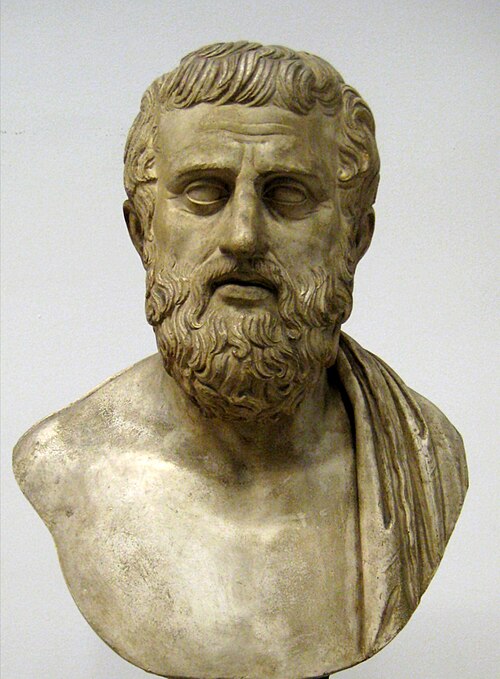
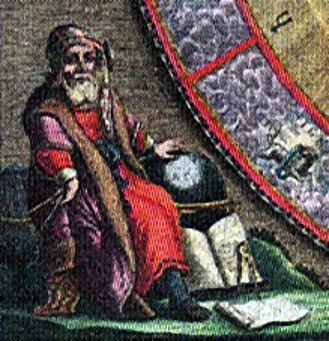
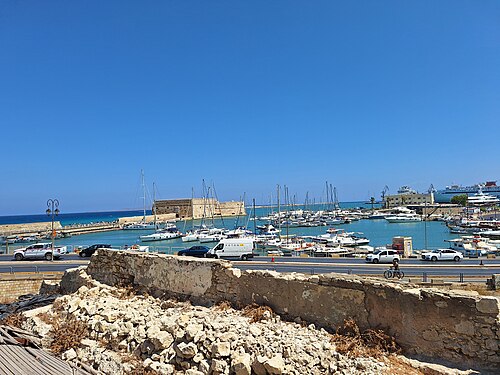
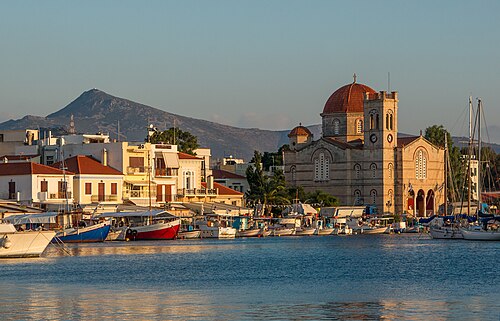
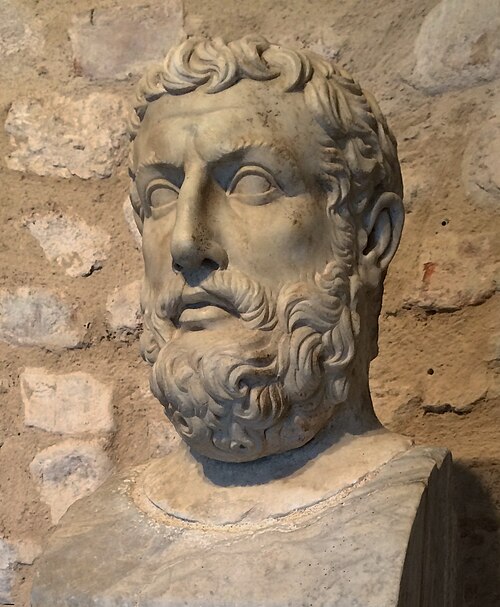
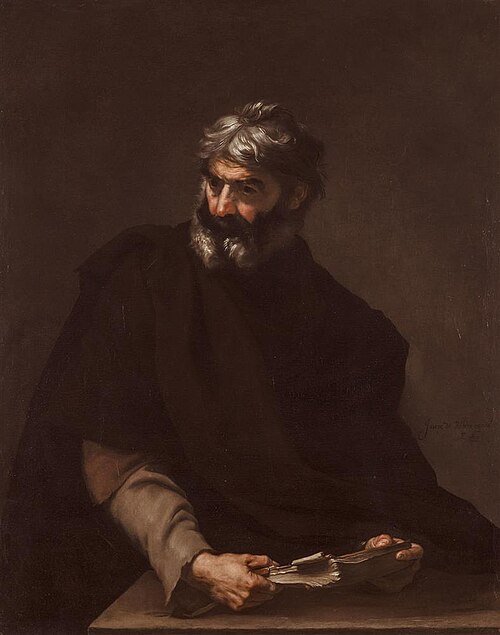
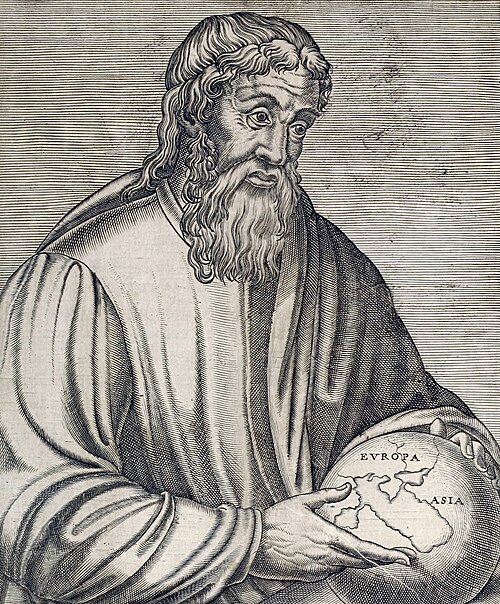
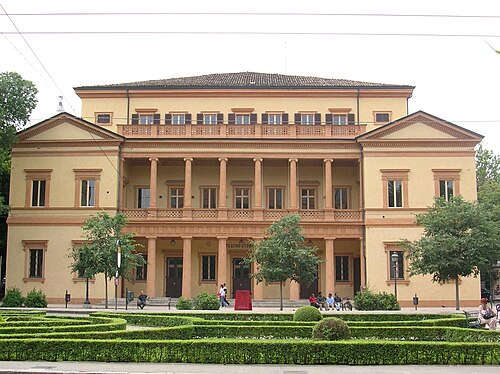
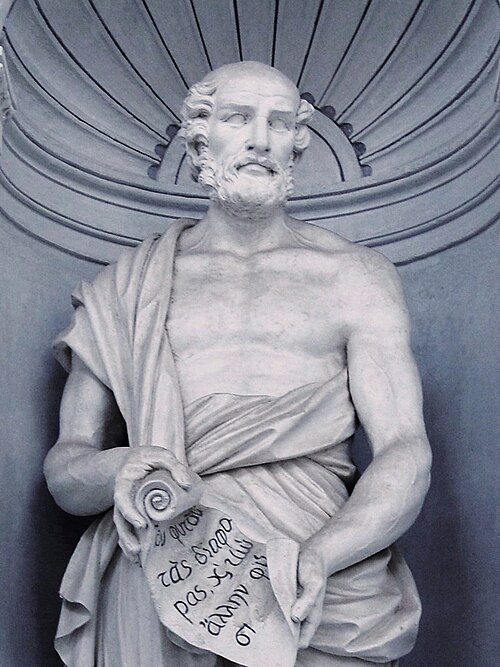
Anaximander lived in Miletus, a Greek city on the coast of Asia Minor, in what is now Turkey. His conventional dates, around 610–546 BC, depend on later ancient chronology rather than contemporary records. Miletus belonged to the trading world of Ionia, where journeys, navigation and encounters with neighbouring cultures encouraged questions about land and sky. Ancient writers connected him with Thales and Anaximenes. The familiar picture of a neat succession of teachers and pupils is useful, but cannot be treated as a documented school register.
Little can be established about his daily life. Reports associate him with a map of the inhabited world and with the use of a gnomon, the upright rod whose shadow helps measure time. They do not justify calling him the inventor of every instrument attributed to him. His prose book, conventionally called On Nature, has disappeared. Aristotle and Theophrastus discussed his ideas, and later authors transmitted parts of that discussion. In the sixth century AD, Simplicius preserved the celebrated passage about justice and time. This long chain of readers explains both why we know anything about Anaximander and why apparently simple biographical statements need care.
Works

Anaximander’s surviving achievement is a way of asking connected questions about nature. According to ancient reports, the source of things was the apeiron: something boundless or indefinite, rather than an ordinary substance such as water. Scholars disagree about its precise meaning. We should therefore resist turning it into a modern scientific concept with a settled definition. The fragment speaks of things paying one another penalty and recompense according to time. Its legal language suggests an ordered process of change, but its original context and exact quotation boundaries remain uncertain.
His astronomy was equally ambitious. The Earth, he reportedly argued, remains unsupported because its central position gives it no reason to move in one direction rather than another. This was not the modern spherical Earth: reports describe a cylindrical shape. Accounts of fiery wheels behind the visible heavenly bodies also belong to his reconstruction of the cosmos. A reported world map brought inhabited lands into a single representation. These proposals were speculative, and many were wrong. Their interest lies in the effort to explain a coherent world through natural relationships and reasons. The table below distinguishes the lost book from ideas and an achievement reported by later sources.
Legacy in Greece today
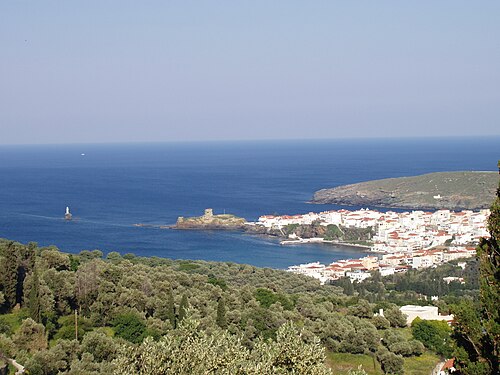
In Greece, Anaximander usually appears beside the Milesians Thales and Anaximenes. Their Greek-speaking home in Asia Minor reminds learners that ancient culture extended beyond today’s borders. His vocabulary opens a door into modern Greek: αρχή can mean beginning or principle, κόσμος world or people, and φύση nature or the character of something.
Read the Greek passage, draw his Earth and compare it with a modern diagram. Add Greek labels, then use these three words in everyday sentences. You can also compare his question about origins with Aristotle’s account of earlier thinkers. The exercise makes the distance between evidence, reconstruction and present knowledge tangible.
Did you know?
- His book survives through a single celebrated fragment and later reports, not as a complete manuscript.
- The exact beginning and end of the quotation in Simplicius are disputed.
- The unsupported Earth of his model was reportedly cylindrical, not a modern globe.
Key works
| Greek title | Title | Year |
|---|---|---|
| Περὶ φύσεως (συμβατικός τίτλος) | On Nature: lost prose treatise, conventional title | 6th century BC |
| Το ἄπειρον ως αρχή | The boundless as nature’s source: reported doctrine | 6th century BC |
| Η Γη χωρίς στήριγμα | An unsupported Earth: reported cosmological explanation | 6th century BC |
| Χάρτης της οικουμένης (μαρτυρία) | A map of the inhabited world: ancient attribution | 6th century BC |
A line to remember
διδόναι γὰρ αὐτὰ δίκην καὶ τίσιν ἀλλήλοις τῆς ἀδικίας κατὰ τὴν τοῦ χρόνου τάξιν
In today's GreekΓιατί πληρώνουν το ένα στο άλλο ποινή και αποζημίωση για την αδικία, σύμφωνα με την τάξη του χρόνου.
didonai gar auta dikēn kai tisin allēlois tēs adikias kata tēn tou chronou taxin
For they pay one another penalty and recompense for injustice, according to the ordering of time.