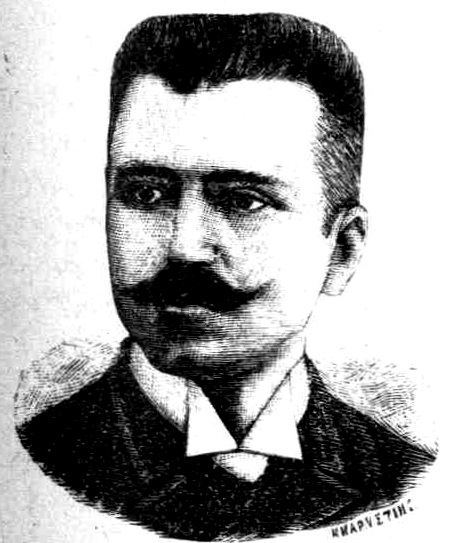
Life
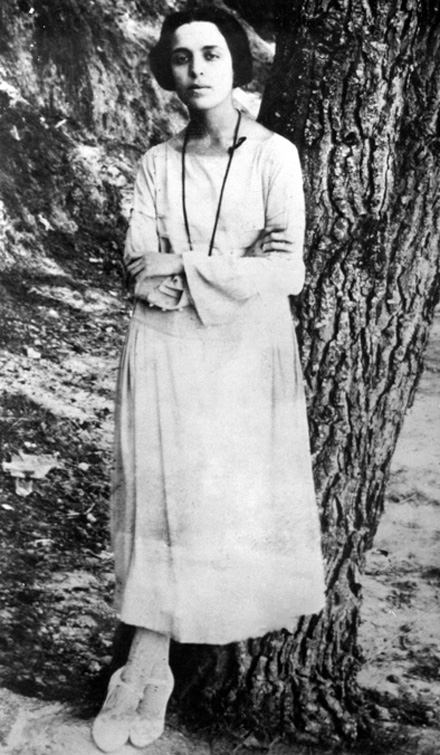
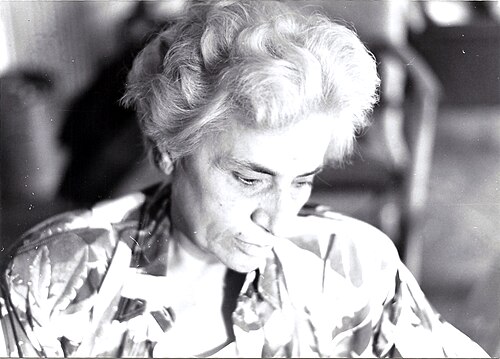
Lela Karagianni was born in 1898 in Limni, a small coastal town in the north of Euboea. She married and settled in Athens, where she brought up a large family of seven children. Nothing in her life before the war suggested a heroine: she was a housewife and mother in a middle-class Athenian household.
In April 1941 the German army entered Athens, and Greece was divided between German, Italian and Bulgarian occupation. Thousands of British, Australian and New Zealand soldiers who had fought in Greece were left behind and hiding. Karagianni, with members of her family and friends, began to shelter them, feed them and organise their escape by boat to the Middle East. Her house became a centre of a growing network. Over the next three years the group, which took the name «Μπουμπουλίνα» (Bouboulina), also collected military information for the Allies, helped people wanted by the Germans and took part in acts of sabotage. She was first arrested in October 1941 and spent about seven months in prison, then went back to her work.
In the summer of 1944, betrayed by an informer, she was arrested again, together with some of her children, and taken to the Gestapo headquarters on Merlin Street. She was interrogated and tortured, but did not betray her companions. She was held in the Haidari concentration camp, west of Athens, the largest German camp in occupied Greece. On 8 September 1944 she was executed by firing squad in the grove of Haidari with some sixty other prisoners. A month later, in October 1944, the Germans left Athens.
Works

The «Bouboulina» network is a good example of how the Greek Resistance worked in the cities. Unlike the armed bands in the mountains, urban groups lived inside an occupied capital full of informers and patrols. Their weapons were trust, secrecy and courage: houses where a stranger could sleep, families who shared food in a city where, in the winter of 1941–42, tens of thousands died of hunger, fishermen ready to sail at night, and messages carried from hand to hand.
Karagianni's role was that of an organiser. She recruited helpers, found safe houses and boats, and made sure that the information her people gathered reached the Allies in the Middle East. The choice of the name «Μπουμπουλίνα» says a lot: Laskarina Bouboulina, the shipowner and naval commander of the War of Independence, was the most famous Greek woman fighter, and Karagianni's group placed itself in that tradition. Her importance is also symbolic. She showed that Resistance was not only for young men with guns but also for women and mothers, and her calm courage under arrest became a model. After the war the Academy of Athens honoured her posthumously, and in 2011 Yad Vashem recognised her as Righteous Among the Nations for helping Jews during the Occupation. Her life has been told in books, in school texts and in television documentaries.
Legacy in Greece today
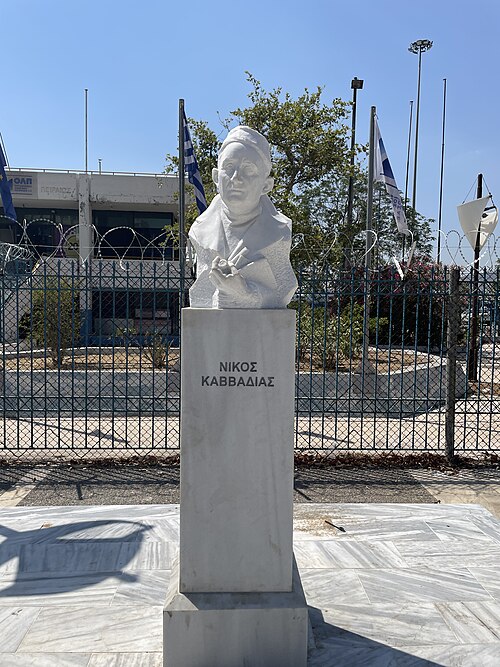
Today a street near Amerikis Square in Athens bears her name, and a marble bust of her (1963) stands on Tositsa Street in Exarchia, in memory of the women of the Resistance. Streets in Thessaloniki, Chalkida, Haidari and other towns are named after her. Her story is told in schools around 28 October and on the anniversary of the liberation of Athens, 12 October. The site of the former Haidari camp, with its memorial to the prisoners who were tortured and shot there, can be visited. If you want to practise your Greek, look for the word αντίσταση (resistance) and for the phrase «Μπουμπουλίνα» in the history pages of Greek newspapers every autumn: the name of Lela Karagianni comes back each year.
Did you know?
- She was a mother of seven when she started to hide Allied soldiers in her house.
- Her network took the name of Bouboulina, the heroine of the 1821 War of Independence.
- She was executed on 8 September 1944, about a month before the Germans left Athens.
- In 2011 Yad Vashem named her Righteous Among the Nations.
Key works
| Greek title | Title | Year |
|---|---|---|
| Απόκρυψη και φυγάδευση συμμαχικών στρατιωτών | Hiding Allied soldiers and organising their escape | 1941 |
| Οργάνωση «Μπουμπουλίνα» | The «Bouboulina» Resistance network | 1941–1944 |
| Συλλογή πληροφοριών για τους Συμμάχους | Gathering intelligence for the Allies | 1941–1944 |
| Σύλληψη και θάνατος στο Χαϊδάρι | Arrest and death at Haidari | 1944 |
From the works


Public-domain pictures from Wikimedia Commons.
A line to remember
Μπουμπουλίνα
Boumpoulina
Bouboulina