Life
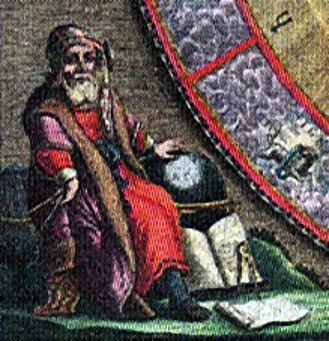
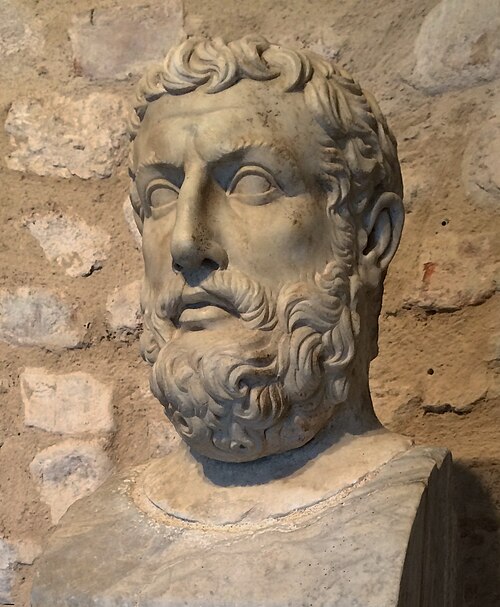
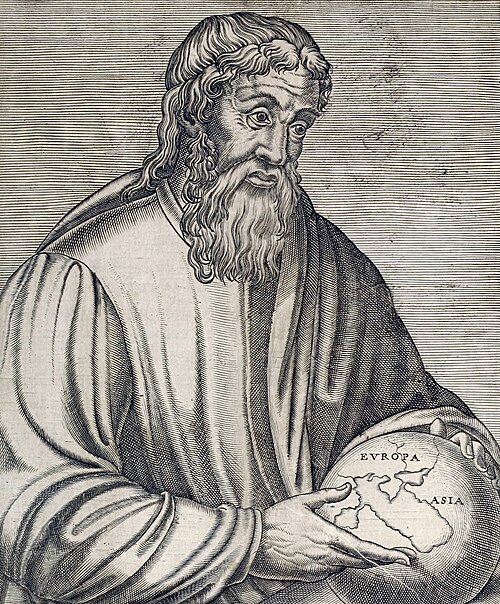
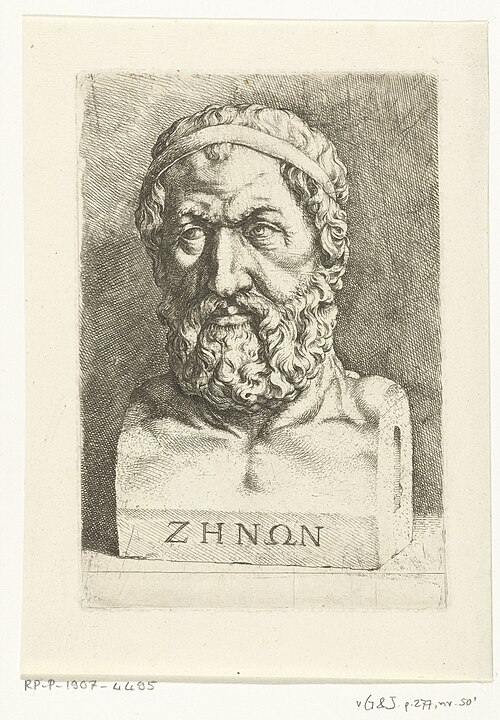
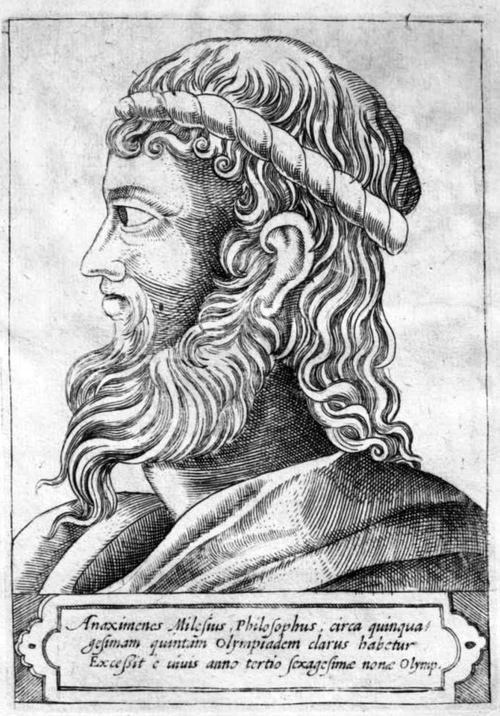
Anaximenes belonged to Miletus, an Ionian city on the western coast of Asia Minor. He worked in the sixth century BC. His exact life dates are uncertain, and ancient chronological notices are difficult to reconcile. A cautious introduction therefore begins with place and period, rather than a precise birthday. The familiar label “Milesian thinkers” places him beside Thales and Anaximander, but it should not suggest a modern university department with an official curriculum.
Diogenes Laertius describes him as a hearer of Anaximander and says that he used plain Ionic prose. That description comes much later than Anaximenes himself. Other important reports pass through Aristotle, Theophrastus and later commentators such as Simplicius. This long chain is part of the story: we often read a philosopher explaining an earlier philosopher in a vocabulary shaped by later questions. No continuous book lets us check every report against the original. The letters assigned to Anaximenes in the biographical tradition should not be treated as securely genuine personal correspondence. His importance lies in a proposal about nature and transformation, not in a detailed life story reconstructed from uncertain anecdotes or an invented list of publications.
Works

The table presents reported ideas, not four surviving books. Anaximenes is associated with air as an underlying principle. The ancient word ἀήρ needs attention: its range and the way later authors interpret it are subjects of scholarship. Simply replacing it with a modern scientific definition of atmospheric gas would erase the historical problem. The quotation here is Diogenes Laertius reporting a doctrine, not a sentence recovered from Anaximenes' own manuscript.
In the account preserved by Simplicius, air changes through thinning and thickening: rarefaction leads toward fire, while increasing density produces wind, cloud, water, earth and stones. This proposes a mechanism linking different appearances instead of naming an origin alone. Other testimony describes a flat earth supported by air and explanations of weather. These are ancient physical accounts, not a modern textbook or verified discoveries about atmospheric science. Their individual dates are unknown. Comparing the reports helps distinguish the broad idea of continuous change from the particular explanations offered for each phenomenon. For a learner, the examples are unusually tangible: the philosophical discussion begins with things one can name outside a window, while the historian must still ask which author preserved each claim.
Legacy in Greece today
Use Anaximenes to practise Greek observation and explanation. Look outside and write three sentences using αέρας, σύννεφο or άνεμος. Add a description with κρύος or ζεστός, then connect two sentences with όταν or γιατί. Next compare the ancient ἀήρ with the modern αέρας and identify the changed ending. Read one report of his theory and begin your summary “Simplicius reports that…” rather than presenting it as today's science. This keeps an old explanation distinct from your own observation. A short weather description becomes a bridge from everyday vocabulary to the language of causes, and a useful exercise in naming the source of a claim.
Did you know?
- He came from Miletus in Ionia.
- His complete book has not survived.
- Diogenes describes his prose as plain Ionic.
- The table lists ideas reported later, not four book titles.
Key works
| Greek title | Title | Year |
|---|---|---|
| Αέρας ως αρχή | Air as principle | 6th c. BC (reported idea; undated) |
| Πύκνωση και αραίωση | Condensation and rarefaction | 6th c. BC (reported idea; undated) |
| Η γη στηρίζεται στον αέρα | Earth supported by air | 6th c. BC (reported idea; undated) |
| Εξήγηση καιρικών φαινομένων | Weather explanations | 6th c. BC (reported idea; undated) |
A line to remember
οὗτος ἀρχὴν ἀέρα εἶπε καὶ τὸ ἄπειρον
In today's GreekΑυτός είπε ότι αρχή είναι ο αέρας και το άπειρο.
houtos archen aera eipe kai to apeiron
He said the principle was air and the unlimited.