Life
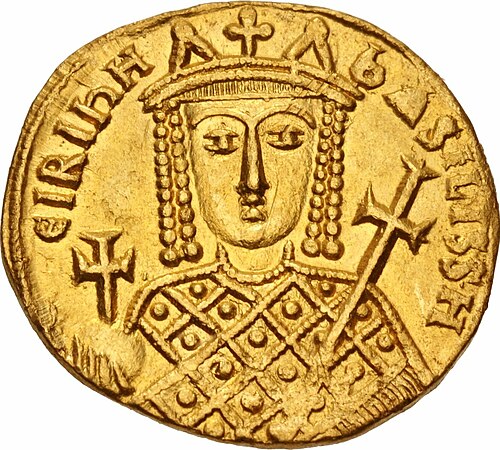
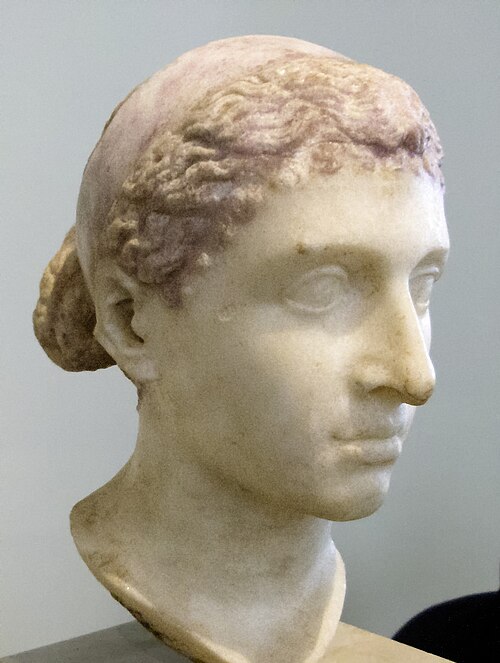
Theodora became empress in 527 when Justinian rose to imperial power. Her exact birth date and early biography are uncertain; she was born around the end of the fifth century. Constantinople, today's Istanbul, was the centre of her adult political life. She died in 548. This is the sixth-century Theodora, not the ninth-century empress associated with the restoration of icons. Names recur in Byzantine history, so dates are essential when following a story across different sources.
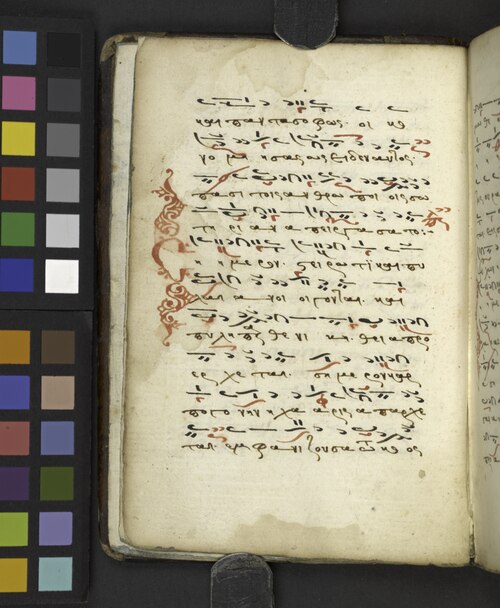
Theodora's position involved more than ceremonial visibility. A surviving papyrus petition addressed to her from Egypt shows people directing requests to the empress. Her name also appears in the Greek dedicatory inscription of Saints Sergius and Bacchus in Constantinople. Literary evidence needs a different kind of reading. Procopius presents her in strikingly different ways across his works, including the hostile Secret History. Its attacks cannot be treated as a transparent record of her early life or motives. Nor does the celebrated speech he assigns her during the Nika revolt of 532 provide a verbatim recording. These sources reveal political authority and competing representations, while leaving much of the person beyond recovery.
Works

Theodora's key entries are political milestones and surviving representations, rather than books or artworks she personally made. During the Nika revolt of 532, Procopius describes an imperial council considering flight. In his narrative, Theodora argues for remaining. The speech ends with an old saying that kingship is a fine burial cloth. The original Greek says βασιλεία, kingship; the familiar version about “purple” is not the wording of that final sentence. Our quotation is taken from the historian's literary speech and attributed accordingly.
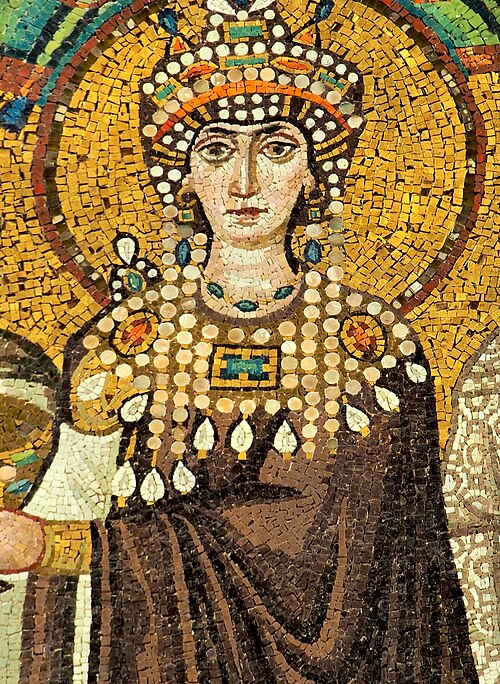
Other evidence has another purpose. The papyrus petition records an appeal to the empress, while the inscription at Saints Sergius and Bacchus praises imperial patronage and care for the needy. The church's precise construction chronology is debated; its sixth-century inscription is more useful here than a falsely exact foundation date. At San Vitale, around 547, a mosaic shows Theodora with attendants and a chalice, facing Justinian's panel across the sanctuary. This image expresses imperial dignity and religious offering; it is not a photograph of an actual procession. Read together, document, inscription, narrative and mosaic provide four different ways of asking what authority looked like and how it was communicated.
Legacy in Greece today
Theodora gives Greek learners a small exercise in the language of power. Read the short quotation and compare βασιλεία with the modern rendering βασιλική εξουσία. Notice how the older word ἐντάφιον needs explanation even when the sentence is short. Then look at the Ravenna mosaic and describe three visible details in simple Greek: a woman, a cup, a crown. A museum photograph is enough for this activity; visiting San Vitale adds scale and setting. Finally, write “Procopius presents Theodora saying…” before your translation. This keeps the historian's constructed speech distinct from a ruler's documented words and makes the reporting verb part of the language lesson.
Did you know?
- She was empress from 527 to 548.
- An Egyptian papyrus preserves a petition addressed to her.
- The famous Ravenna mosaic dates to around 547.
- The Nika speech survives through Procopius, not a transcript.
Key works
| Greek title | Title | Year |
|---|---|---|
| Αυτοκράτειρα δίπλα στον Ιουστινιανό | Accession as empress | 527 |
| Αίτηση από την Αίγυπτο | Egyptian petition addressed to her | 527–548 |
| Στάση του Νίκα — αφήγηση Προκοπίου | Nika revolt: Procopius’s account | 532 |
| Ψηφιδωτό στον Άγιο Βιτάλιο | San Vitale mosaic representation | c. 547 |
A line to remember
καλὸν ἐντάφιον ἡ βασιλεία ἐστί
In today's GreekΗ βασιλική εξουσία είναι ωραίο σάβανο.
kalon entaphion he basileia esti
Kingship is a fine burial cloth.