Life
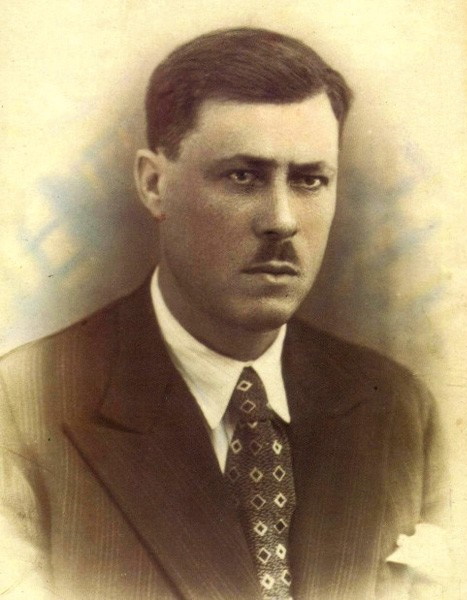
Samarakis was born in Athens on 16 August 1919. He studied law at the University of Athens and in 1935, still a student, joined the Ministry of Labour, where he would work as a civil servant, with one interruption, until 1963. The interruption was the Occupation: he resigned in 1944, took part in the Resistance, was arrested by the Germans and sentenced to death, and escaped. That experience, of a single person caught in the machinery of power, became the subject of everything he wrote.
He began publishing late, at thirty-five, with the short-story collection «Ζητείται ελπίς» (Hope Wanted, 1954), and his output remained small: three collections of stories and three novels in half a century. He travelled a great deal for the International Labour Organisation and other agencies, especially in Africa and the Middle East. After «Το λάθος» made him famous abroad he gave up his post and lived from his writing.
In his last decades he was a public figure of a rare kind: a writer whom young people liked. He served as a UNICEF Goodwill Ambassador for Greece from 1989, campaigned against drugs, and was the inspiration behind the Greek Youth Parliament (Βουλή των Εφήβων), which first met in the mid-1990s. He died on 8 August 2003 in Pylos, a week before his eighty-fourth birthday, having left his body to the medical school of the University of Athens.
Works

The stories of «Ζητείται ελπίς» (1954), «Σήμα κινδύνου» (Danger Signal, 1959, a short novel) and «Αρνούμαι» (I Refuse, 1961, which won the State Prize for the short story) have the same cast: a clerk, a lonely man in a café, a child, a worker, people without names in a city that does not see them. Something small happens, a telephone call, a letter, a newspaper headline, and it opens onto fear, loneliness or an unexpected act of kindness. «Το ποτάμι» (The River), in which a soldier breaks orders to swim in a river between two front lines and meets an enemy soldier doing the same, is the story Greek pupils remember.
«Το λάθος» (The Flaw, 1965) turned this material into a political thriller. In an unnamed country ruled by the Regime, a man sitting in a café makes a tiny slip and is arrested by two agents. On the long drive to the capital one of the agents is under orders to befriend him so that he will give himself away; instead the agent's own humanity gets the better of him, and the book's final «flaw» is not the prisoner's but his. Written in cool, almost documentary sentences, two years before the colonels' coup of 1967, it read in Greece like a prophecy. It was filmed in 1975 by Peter Fleischmann with Michel Piccoli and Ugo Tognazzi.
Later came «Το διαβατήριο» (The Passport, 1973), stories written under the dictatorship, and the novel «Εν ονόματι» (In the Name Of, 1998). His style never changed: short sentences, repetition, no metaphors, the vocabulary of the newspaper. The plainness is a choice: he wanted ordinary readers, not critics, and he got them.
Legacy in Greece today
Samarakis is one of the few modern Greek prose writers whom pupils actually read: «Το ποτάμι» and other stories are in the lyceum anthologies, and «Το λάθος» is a common first adult novel for Greek teenagers, as it can be for a learner, since its Greek is simple and its plot pulls you along. The phrase «ζητείται ελπίς» has left the book and become a stock headline whenever Greece feels gloomy. The Youth Parliament he inspired still meets every year in the chamber of the Greek Parliament, with a seat for pupils from every region and from the diaspora. His foreign reputation rests on The Flaw, which exists in English, French, German and dozens of other languages, often in the crime-fiction shelf, where it sits a little uneasily.
Did you know?
- «Το λάθος» won the Grand Prix de Littérature Policière in France in 1970, a prize for crime fiction, although Samarakis insisted it was a book about human dignity.
- He published his first book at thirty-five and only a handful more in the next fifty years; his whole work fits on one short shelf.
- He left his body to science: after his death in 2003 it went to the medical school of the University of Athens, as he had asked.
- The Flaw has been compared to Kafka and Orwell, yet its Regime has no name, no ideology and no country, which is exactly what makes it frightening.
Key works
| Greek title | Title | Year |
|---|---|---|
| Ζητείται ελπίς | Hope Wanted (stories) | 1954 |
| Σήμα κινδύνου | Danger Signal (novel) | 1959 |
| Αρνούμαι | I Refuse (stories) | 1961 |
| Το λάθος | The Flaw (novel) | 1965 |
| Το διαβατήριο | The Passport (stories) | 1973 |
| Εν ονόματι | In the Name Of (novel) | 1998 |
A line to remember
Ζητείται ελπίς
Ziteitai elpis
Hope wanted