Life
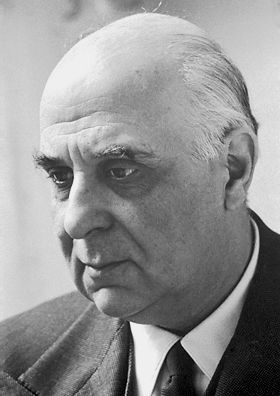
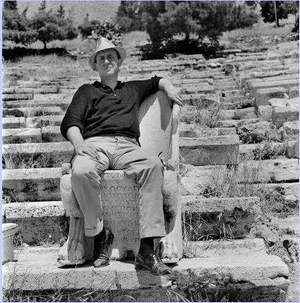
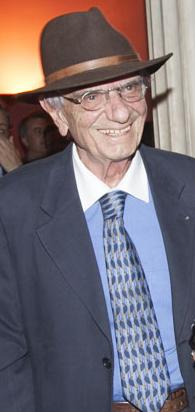
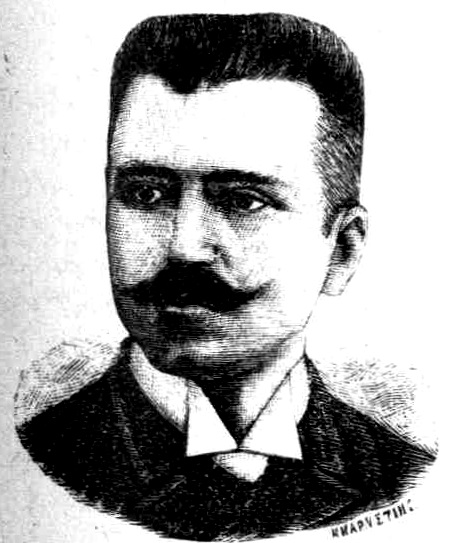
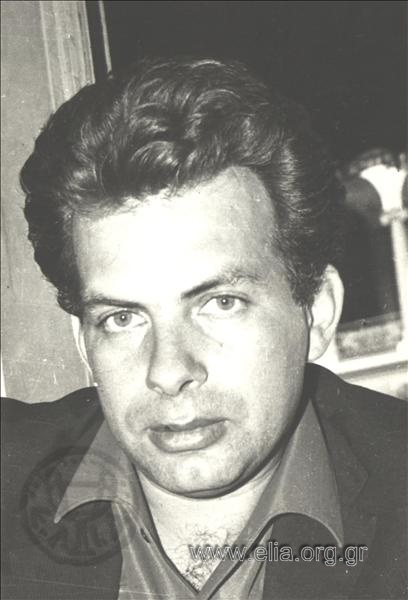
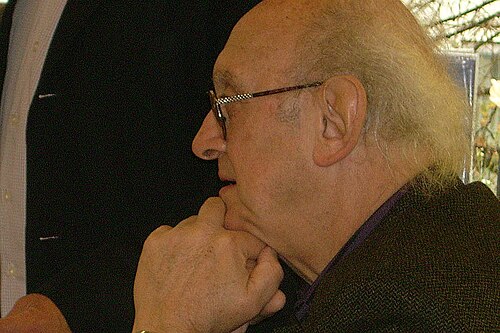
Thanasis Valtinos was born in Kastri, Kynouria, in 1932. His childhood and schooling took him through Sparta, Gytheio and Tripoli during the Occupation and Civil War. He moved to Athens in 1950, entered Panteion and then left to study cinema at the Stavrakos school. Film and literature became intertwined parts of his working life.
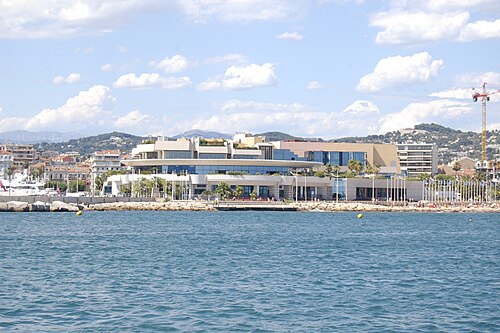
He published fiction in the 1950s. Η κάθοδος των εννιά (The Descent of the Nine) appeared in the magazine Εποχές (Seasons) in 1963; its first standalone book edition followed in 1978. Συναξάρι Αντρέα Κορδοπάτη (The Life of Andreas Kordopatis) was serialised in 1964 before its 1972 book edition. In cinema, he shared the 1984 Cannes original-screenplay award with Theo Angelopoulos and Tonino Guerra for Voyage to Cythera.
Valtinos translated ancient tragedy into Modern Greek for Karolos Koun’s Art Theatre. His 1989 novel Material on the 1960s received the State Novel Prize in 1990. He became a regular member of the Academy of Athens in 2008 and its president in 2016. He died on 30 October 2024. Across fiction, screenwriting and translation, his work attends to the voice that tells a story and the language that gives it shape.
Works

Valtinos often lets a voice, a letter or a fragment carry more weight than a long explanation. His prose compresses events and leaves gaps between accounts. A reader must listen to differences of vocabulary, rhythm and perspective, asking who speaks, to whom and with what knowledge. Documentary forms become part of the construction of fiction.
The Descent of the Nine follows a small group caught in the violence of the Greek Civil War. The Life of Andreas Kordopatis gives literary form to a migrant’s account of America. Μπλε βαθύ σχεδόν μαύρο (Deep Blue Almost Black, 1985) turns towards a woman’s monologue, showing how a different speaking voice can organise an entire narrative.
Material on the 1960s assembles letters, reports and other everyday textual forms. Valtinos described researching newspapers and working with letter collections; selection and arrangement create the novel’s connections. Ορθοκωστά (Orthokosta, 1994) gathers voices around wartime violence in Kynouria and provoked sharp political and historical debate. Its reception shows how literature participates in contested public memory. Across these books, small verbal choices reveal distance, intimacy and authority. The language of an ordinary request can tell us much about the relationship between writer and recipient.
Legacy in Greece today
Open the school selection Δύο γράμματα της Χαράς (Two Letters from Chara), taken from Material on the 1960s. Identify sender and recipient before discussing what the letters reveal about migration. Then write your own request for an address, unrelated to the characters’ lives. For a friend use Σε παρακαλώ, στείλε μου τη διεύθυνση. For a formal recipient use Σας παρακαλώ, στείλτε μου τη διεύθυνση. Keep the information the same, but change greeting, pronoun and verb together. Ask a partner to reply in the same register. Read both exchanges aloud. The novel’s attention to letters becomes a practical exercise in audience, courtesy and clear written Modern Greek.
Did you know?
- Thanasis Valtinos was the pen name of Athanasios Spanos.
- The Descent of the Nine first appeared in a magazine in 1963; its first standalone book followed in 1978.
- His 1984 Cannes screenplay award was shared with Angelopoulos and Guerra.
Key works
| Greek title | Title | Year |
|---|---|---|
| Η κάθοδος των εννιά | The Descent of the Nine — first magazine publication | 1963 |
| Συναξάρι Αντρέα Κορδοπάτη — Αμερική | The Life of Andreas Kordopatis: America — first standalone book | 1972 |
| Μπλε βαθύ σχεδόν μαύρο | Deep Blue Almost Black | 1985 |
| Στοιχεία για τη δεκαετία του ’60 | Material on the 1960s | 1989 |
| Ορθοκωστά | Orthokosta | 1994 |
A line to remember
Δεν υπάρχει φτωχή ελληνική γλώσσα.
Den ipárchi ftochí ellinikí glóssa.
Greek is not an impoverished language.