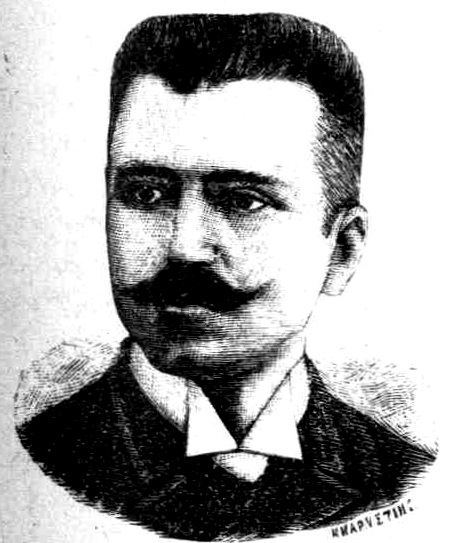
Life
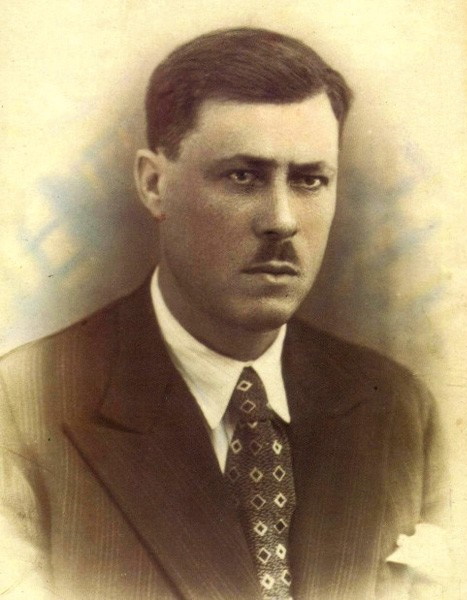
Kaldaras was born on 7 April 1922 in Trikala, in Thessaly, the same year that the Asia Minor catastrophe sent more than a million Greek refugees to the mainland, a coincidence he would later turn into music. He learned the bouzouki as a boy, at a time when it was still the instrument of the poor and of the rebetiko underworld, studied at the school of agriculture of the University of Thessaloniki, and during the Occupation became a professional musician. His first recordings date from 1946.
He grew up as a musician during the German Occupation and the Civil War, the hardest decade of modern Greek history, and his early songs carry that weight: hunger, night, separation, mothers waiting for sons in prison or exile. From the late 1940s his songs were recorded by the leading singers of rebetiko and laïko, and he became one of the most respected composers of the generation that followed Markos Vamvakaris and Vassilis Tsitsanis. He wrote hundreds of songs over four decades.
In the early 1970s, in the middle of the dictatorship, he turned to a larger project with the lyricist Pythagoras Papastamatiou: a whole album on the refugees of Asia Minor. It brought him to a new, younger audience and was a decisive early step for a young singer, Haris Alexiou. Kaldaras died in Athens on 8 April 1990, the day after his 68th birthday.
Works

Kaldaras wrote in the language of rebetiko, the zeibekiko and the chasapiko, the bouzouki and the baglamas, but his songs were already reaching beyond the small world of the hashish dens towards the broad popular song of the 1950s. Νύχτωσε χωρίς φεγγάρι (Night Fell Without a Moon, 1947) describes a young man who cannot sleep in the deep darkness; it was written in the years of the Civil War, and many listeners heard in it the fate of prisoners and exiles. It was first recorded in 1947 by Stella Haskil, and in 1951 Manos Hadjidakis included it in his piano cycle Έξι λαϊκές ζωγραφιές (Six Popular Pictures).
His masterpiece is Μικρά Ασία (Asia Minor, 1972), with lyrics by Pythagoras Papastamatiou and the voices of Haris Alexiou and Giorgos Dalaras. Released fifty years after the catastrophe of 1922, it is a cycle of songs on the lost cities of Ionia, Smyrna burning, the flight across the Aegean and the hard new life of the refugees in Greece. The music mixes the rebetiko of Piraeus with the softer, eastern colours of the music the refugees brought with them. The album sold in huge numbers and remains one of the great concept records of Greek popular music. It was followed in 1973 by Βυζαντινός Εσπερινός (Byzantine Vespers), again sung by Dalaras, and in 1977 by Οι ξεριζωμένοι (The Uprooted).
Legacy in Greece today
Start with Νύχτωσε χωρίς φεγγάρι: it has been recorded by dozens of singers, from the old rebetiko voices to Giorgos Dalaras and younger artists, and you will hear it in any taverna with live music. Then listen to the album Μικρά Ασία from beginning to end, ideally with the lyrics, and you will learn as much about 1922 as from a history book. For Haris Alexiou, then a newcomer, it was one of the records that made her name. In Trikala, where he grew up, he is remembered as the town's great musician. The site's pages on Tsitsanis and Vamvakaris show the world he came from.
Did you know?
- He was born in 1922, the year of the Asia Minor catastrophe, and fifty years later wrote the most famous album about it.
- Μικρά Ασία was released in 1972, under the dictatorship, and was one of the first records of Haris Alexiou.
- Νύχτωσε χωρίς φεγγάρι has been recorded by so many singers that many Greeks think it is a folk song.
Key works
| Greek title | Title | Year |
|---|---|---|
| Νύχτωσε χωρίς φεγγάρι | Night Fell Without a Moon | 1947 |
| Μικρά Ασία | Asia Minor (album, lyrics by Pythagoras) | 1972 |
| Βυζαντινός Εσπερινός | Byzantine Vespers (album) | 1973 |
| Οι ξεριζωμένοι | The Uprooted (album) | 1977 |
A line to remember
Νύχτωσε χωρίς φεγγάρι, το σκοτάδι είναι βαθύ
Nychtose choris fengari, to skotadi einai vathy
Night has fallen without a moon, the darkness is deep