Life
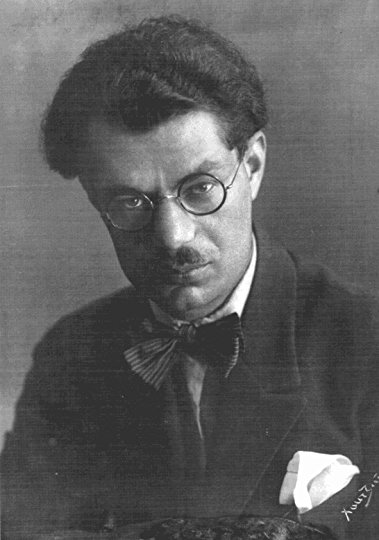
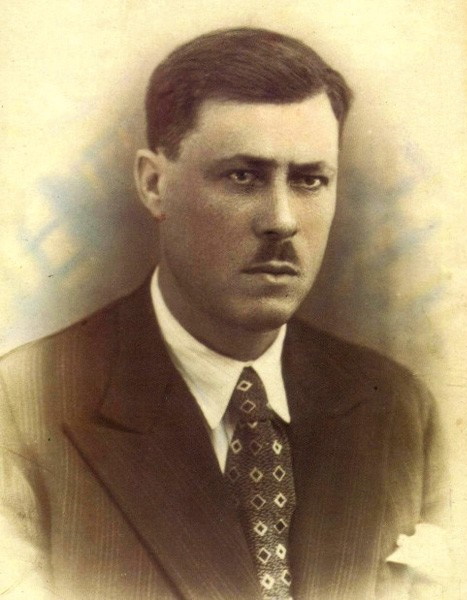
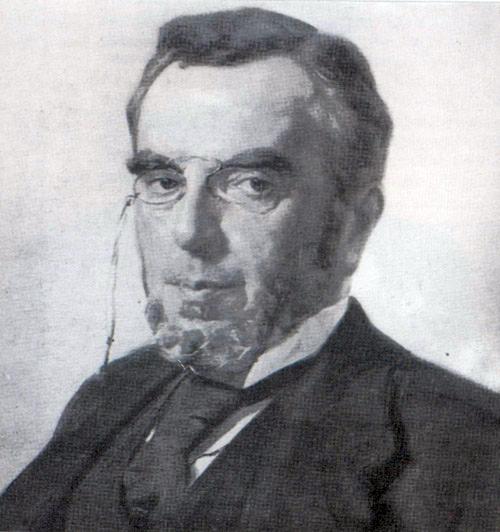
Vikelas was born on 15 February 1835 in Ermoupoli on Syros, then the busiest port in Greece, into a merchant family; his father's people came from Veroia and his mother belonged to the Melas family of Constantinople. His childhood was unsettled and sickly, and the family moved between Syros, Constantinople and Odessa. At seventeen he was sent to London to work in the trading house of his uncles, the Melas brothers. He stayed for a quarter of a century, became a partner, made a comfortable fortune, and studied botany and architecture in his spare time at University College. In 1866 he married Kalliopi Geralopoulou; her long mental illness later darkened his life, and in 1877 the couple moved to Paris for her treatment.
All along he wrote: poems, essays on Byzantine history, translations of Shakespeare, and in 1879 the novel that made his name. In Paris he became the Greek man of letters whom French scholars consulted, and in 1894 the Panhellenic Gymnastic Society asked him to represent it at a congress on athletics at the Sorbonne. It turned out to be Pierre de Coubertin's congress to revive the Olympic Games. Vikelas argued for Athens as the first host, won, and was elected president of the new International Olympic Committee, since the rules then gave the presidency to the next host country.
After the success of the 1896 Games he settled in Athens, handed the IOC presidency to Coubertin, and devoted his last years to popular education. He died in Athens on 7 July 1908.
Works

Λουκής Λάρας (1879) is a short novel told in the first person by an old Greek merchant in London, who remembers how, as a young man from Chios, he lived through the War of Independence of 1821. He is no hero: he flees the massacre of Chios in 1822 with his family, hides, trades, loses everything and starts again, and the book is quietly proud of that ordinary courage. Written in a clear katharevousa and first serialised in the magazine Εστία, it was translated into French, English, German, Italian and several other languages within a few years, the first Greek novel to travel so widely, and it opened the way for the realistic short story of the 1880s. His Διηγήματα (Short Stories, 1887) are in the same calm, observant manner.
Vikelas was also the first serious translator of Shakespeare into Greek: from 1876 he published Romeo and Juliet, Othello, King Lear, Hamlet, Macbeth and The Merchant of Venice, and his versions were the ones Greek theatres used for a generation. His essays, such as Περί Βυζαντινών (On the Byzantines, 1874), defended the Byzantine centuries at a time when Western scholars dismissed them. His memoir, Η ζωή μου (My Life), was published after his death. And his last great work was not a book: in 1899 he founded the Σύλλογος προς Διάδοσιν Ωφελίμων Βιβλίων (Society for the Distribution of Useful Books), which printed cheap, well-written little volumes on history, science and health for ordinary Greek readers, a society that still publishes today.
Legacy in Greece today
Vikelas is remembered in Greece for the Olympics first and the novel second. Every account of the 1896 Games, and every Olympic museum, including the one in Lausanne, names him as the first president of the IOC, and his portrait hangs beside Coubertin's in the history of the movement. Λουκής Λάρας is read in extracts at school and is available free online, in Greek and in translation; its plain, dignified prose is a good first long read for a learner who has reached B1 or B2. The Society for the Distribution of Useful Books still operates from Athens. Streets named Βικέλα exist in Athens, on Syros and elsewhere, and the public library of Heraklion in Crete, the Vikelaia Library, grew out of the gift of his own books that he made to the city in 1908.
Did you know?
- He became president of the IOC because the rule in 1894 said the president must come from the country of the next Games, and he had just won the Games for Athens.
- He translated Shakespeare in the evenings while running a trading business in the City of London.
- Λουκής Λάρας was translated into more than ten languages within a few years of its publication in 1879.
- His personal library, given to the city of Heraklion, became the Vikelaia Municipal Library, one of the largest in Greece.
Key works
| Greek title | Title | Year |
|---|---|---|
| Περί Βυζαντινών | On the Byzantines (essay) | 1874 |
| Μεταφράσεις Σαίξπηρ | Translations of Shakespeare | from 1876 |
| Λουκής Λάρας | Loukis Laras | 1879 |
| Διηγήματα | Short Stories | 1887 |
| Οι πρώτοι σύγχρονοι Ολυμπιακοί Αγώνες στην Αθήνα | The first modern Olympic Games in Athens | 1896 |
| Η ζωή μου | My Life (memoir) | 1908 |
From the works


Public-domain pictures from Wikimedia Commons.
A line to remember
Ο πρώτος πρόεδρος της Διεθνούς Ολυμπιακής Επιτροπής
O protos proedros tis Diethnous Olympiakis Epitropis
The first president of the International Olympic Committee
From the original
The text as Dimitrios Vikelas wrote it, out of copyright, with our own translation beside it.
«Λουκῆς Λάρας»Loukis Laras
The first lines of the novel: the old merchant Loukis Laras begins the story of how the War of Independence of 1821 uprooted his family from Smyrna and Chios. The book made Vikelas' name and was translated across Europe.
«Λουκῆς Λάρας» (1879), chapter 1, opening paragraph · Public-domain text, source: el.wikisource.org