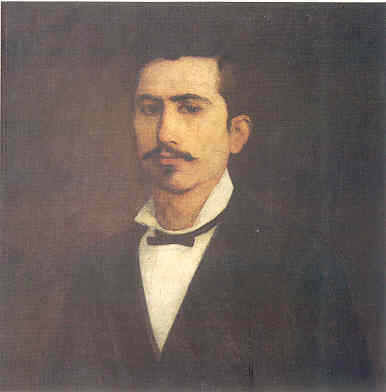
Life
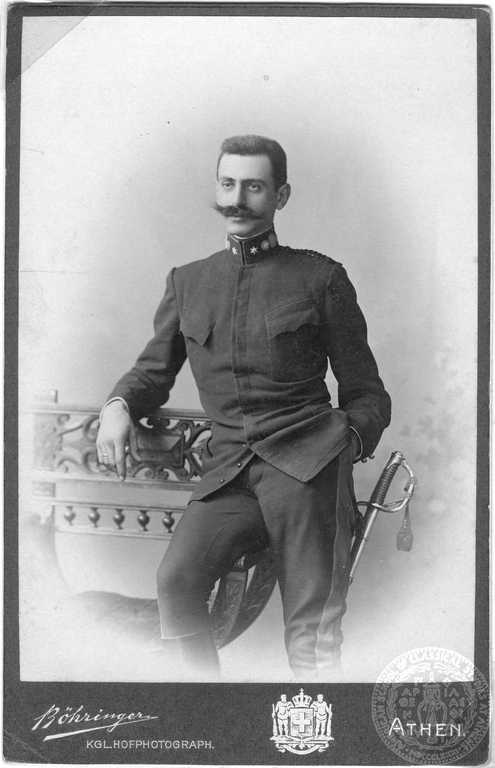
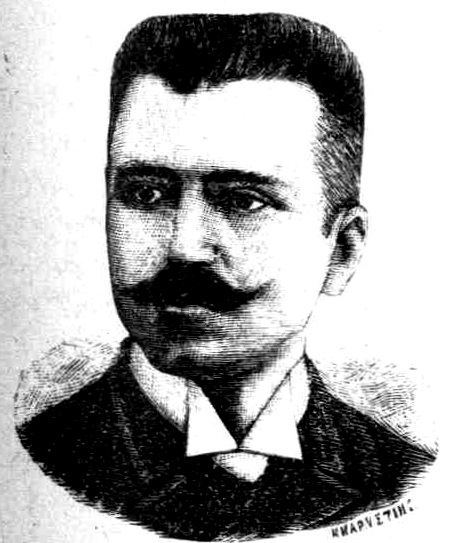
Krystallis was born in 1868 in Syrrako, a stone village high in the Tzoumerka mountains of Epirus, then still part of the Ottoman Empire. Its people were Vlach-speaking shepherds and craftsmen who moved their flocks between the summer pastures and the plains, and the boy grew up among the songs, stories and customs of this mountain life. He studied at the famous Zosimaia school in Ioannina, the main Greek school of the region, and began writing poetry early.
As a young man he published a long patriotic poem, Αι σκιαί του Άδου (The Shades of Hades, 1887), on episodes of the War of Independence. The Ottoman authorities considered it dangerous and a court sentenced him in his absence, so in January 1889 he fled across the border to Athens. There he lived in poverty, working as a typesetter in a printing house, briefly as an editor of the magazine Εβδομάς (The Week), and finally as a clerk for the Peloponnese railways. He published poems and prose in Athenian magazines and became known in literary circles, where Kostis Palamas and other writers of the new generation appreciated his fresh, popular voice.
Life in the city never suited him. He missed the mountains, the clean air and the shepherds' world, and these feelings run through everything he wrote. In the early 1890s he fell ill with tuberculosis. He left Athens and went to Arta, near his homeland, hoping the change of air would save him, but he died there in April 1894, at only twenty-six.
Works

Krystallis was writing at the moment when Greek poets were moving from the formal, learned katharevousa to the spoken demotic language. His first work, the long poem Αι σκιαί του Άδου (The Shades of Hades), still uses the older style, but he quickly found his own voice in the form and rhythm of the Greek δημοτικό τραγούδι (folk song), especially the songs of Epirus he had heard as a child. He uses the fifteen-syllable line of the folk songs, simple rhymes and the vocabulary of shepherds: the στάνη (sheepfold), the τσέλιγκας (chief shepherd), the flute, the spring, the fir forest, the eagle.
His two main collections are Αγροτικά (Rural Poems, 1891) and Ο τραγουδιστής του χωριού και της στάνης (The Singer of the Village and the Sheepfold, 1893). In them he describes village festivals, weddings, the departure of the flocks, the life of the shepherd on the high pastures and, again and again, the pain of being far from home. In poems such as Στο σταυραητό (To the Golden Eagle) the free bird of the mountains becomes a symbol of the freedom he had lost in the city. He also wrote short prose pieces about the customs and people of Epirus, which have value today as a record of a vanished world.
His poetry is not complicated: its strength is its sincerity and its music. Critics have called him a bridge between the anonymous folk song and the modern demotic poetry of Palamas and his circle.
Legacy in Greece today
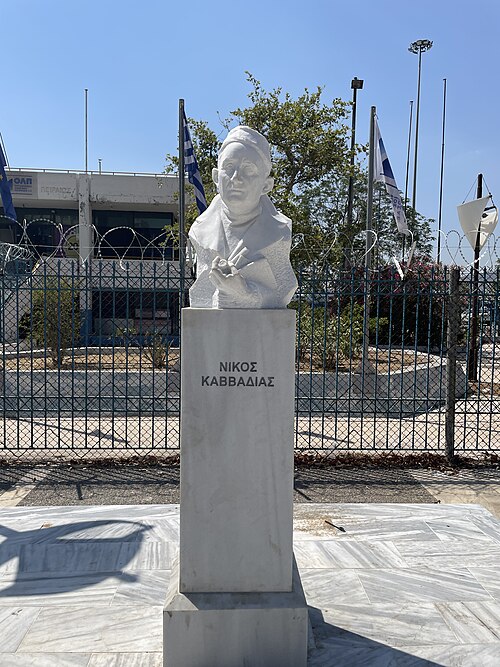
Krystallis's poems about mountains and shepherds have long been read in Greek schools, and many Greeks remember a few lines from their childhood. In his home village of Syrrako, today a protected traditional settlement visited by hikers, there is a monument to him, and the village celebrates his memory. Streets named Κρυστάλλη exist in Athens, Ioannina, Arta and many other towns. Musicians have set some of his poems to music in the style of Epirus folk song. A learner can read one of his short poems from Αγροτικά aloud: the regular fifteen-syllable rhythm makes the lines easy to say, and the vocabulary of mountains, animals and nature is useful for any trip to the Greek countryside.
Did you know?
- He had to flee his homeland at about twenty because the Ottoman authorities saw one of his poems as dangerous.
- In Athens he worked for a railway company, far from the mountains he wrote about.
- He published his main books in just three years, between 1891 and 1893.
- He died at twenty-six, younger than almost any other well-known Greek poet.
Key works
| Greek title | Title | Year |
|---|---|---|
| Αι σκιαί του Άδου | The Shades of Hades (epic poem on 1821) | 1887 |
| Αγροτικά | Rural Poems | 1891 |
| Ο τραγουδιστής του χωριού και της στάνης | The Singer of the Village and the Sheepfold | 1893 |
| Στο σταυραητό | To the Golden Eagle (poem in the 1893 collection) | 1893 |
From the works

Public-domain pictures from Wikimedia Commons.
A line to remember
κι απλώνεις πήχες τα φτερά και σπιθαμές τα νύχια, / και μες στα σύγνεφα πετάς, μες στα βουνά ανεμίζεις!
ki aploneis piches ta ftera kai spithames ta nychia, / kai mes sta sygnefa petas, mes sta vouna anemizeis!
and you spread your wings by the yard and your talons by the span, / and you fly among the clouds, you sail the winds among the mountains!