Life
Cleopatra was born in 69 BC and grew up in the royal world of Alexandria. Her father, Ptolemy XII, died in 51 BC. She inherited the throne jointly with her younger brother Ptolemy XIII, but their competing claims led to civil war. Rome was already deeply involved in Egyptian affairs. When Julius Caesar arrived in Alexandria in 48 BC, Cleopatra sought his support. After the Alexandrian war and her brother’s death, she recovered her position in 47 BC, with another brother, Ptolemy XIV, as co-ruler.
She later ruled with her son Caesarion. In 41 BC she met Mark Antony at Tarsus, forming an alliance that connected Egyptian resources with Roman military power. They also had three children. Their conflict with Octavian ended in defeat at Actium, off western Greece, in 31 BC. Octavian entered Alexandria the following year. Antony died, and Cleopatra also took her own life. The precise method remains uncertain: even Plutarch gives competing accounts. Egypt then came under Roman rule. Much of the surviving narrative was written later, so vivid scenes require care. The familiar spellings Cleopatra and Kleopatra refer to the same queen.
Works

Cleopatra’s work was government: securing a dynasty, negotiating alliances and representing royal authority. Egypt’s grain and wealth made it valuable to Roman leaders, while Rome’s armies could determine who held the Egyptian throne. Her choices therefore belonged to a dangerous struggle for survival and influence, rather than a story explained by romance alone. The alliance with Antony brought additional territories under her control, although its security depended on a fragile political partnership.
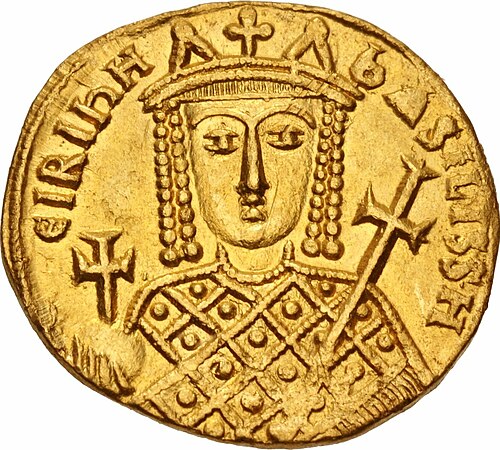
Coins offer evidence from her own lifetime. Some carry her portrait and Greek royal titles; others place her image alongside Antony’s. These were public statements of power, not neutral photographs. Egyptian temple decoration presents another royal language: at Dendera, Cleopatra and Caesarion appear within traditional Egyptian religious imagery. Her monarchy operated across several cultural settings. Plutarch, writing long after her death, praises her voice and ability to speak different languages, including Egyptian. His account is valuable testimony to her later reputation, but it cannot establish an exact list of languages she mastered. Reading coins beside literary narratives helps distinguish contemporary evidence from later storytelling. Neither kind of source gives us direct access to her private thoughts.
Legacy in Greece today
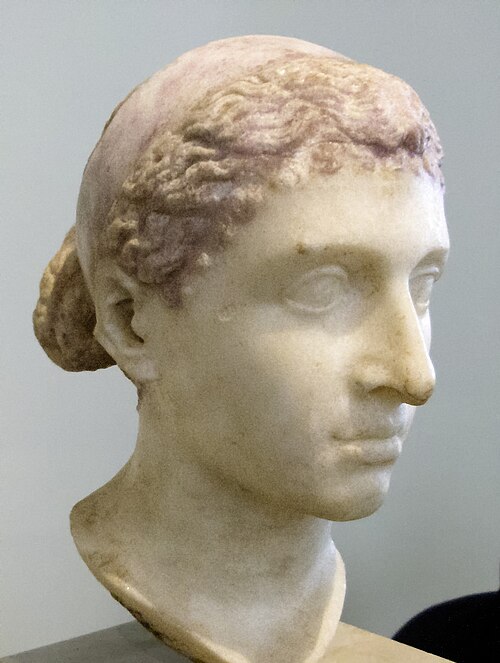
For learners in Greece, Cleopatra opens a route from Hellenistic history to modern Greek poetry. Cavafy’s Αλεξανδρινοί βασιλείς (Alexandrian Kings) revisits the ceremony that gave royal titles to her children; Καισαρίων (Caesarion) imagines her son beyond the surviving historical record. Read the poems in Greek and compare their viewpoint with Plutarch’s narrative. They are later artistic interpretations, not eyewitness reports. You can also explore a museum’s online coin collection: find her Greek name and the word for queen, then compare the portrait with a film image. This small exercise shows how objects, literature and cinema each build a different Cleopatra.
Did you know?
- Her name appears on ancient coins in Greek, alongside royal titles.
- Plutarch’s account of her languages was written long after her lifetime.
- Actium lies in western Greece; the decisive naval battle took place in 31 BC.
- The famous snakebite story is an ancient account, not an established explanation of her death.
Key works
| Greek title | Title | Year |
|---|---|---|
| Ανάληψη της βασιλείας | Accession to the throne | 51 BC |
| Αποκατάσταση στην εξουσία | Restoration with Caesar’s support | 47 BC |
| Συμμαχία με τον Αντώνιο | Alliance negotiated at Tarsus | 41 BC |
| Εξουσία στη Χαλκίδα της Ιτουραίας | Rule over Chalcis in Ituraea | 36 BC |
From the works

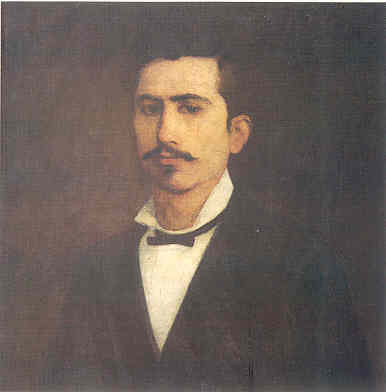
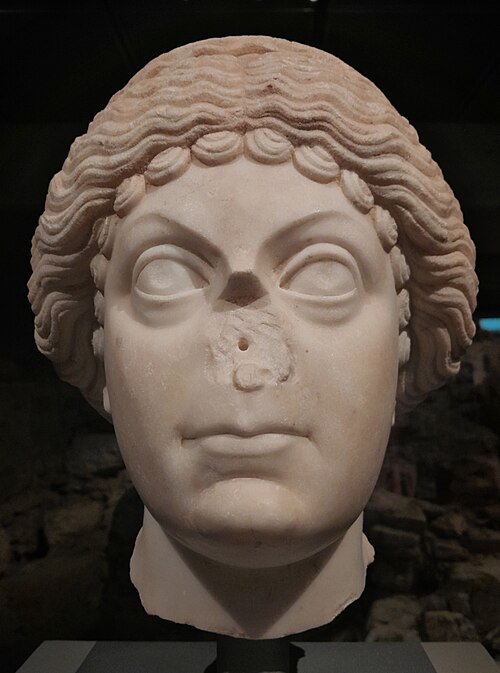
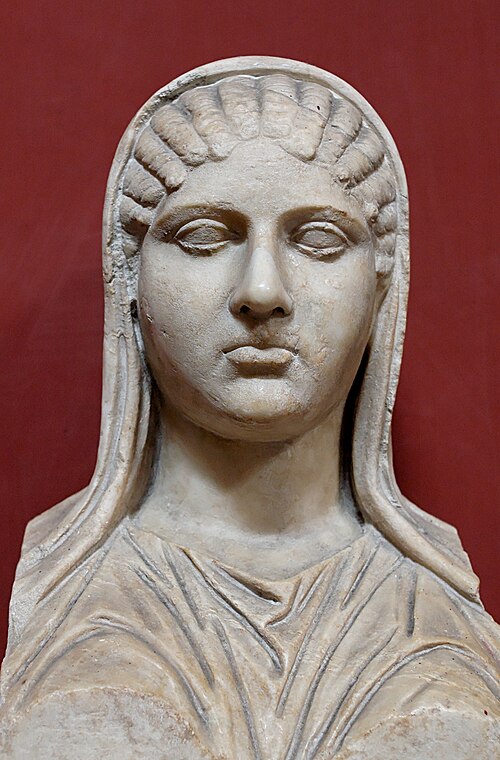
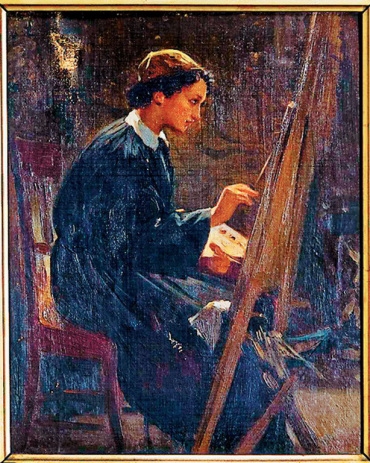
Public-domain pictures from Wikimedia Commons.
A line to remember
ἡδονὴ δὲ καὶ φθεγγομένης ἐπῆν τῷ ἤχῳ·
In today's GreekΗ φωνή της ήταν ευχάριστη όταν μιλούσε.
Hedone de kai phthengomenes epen toi echoi.
There was also pleasure in the sound of her speaking.