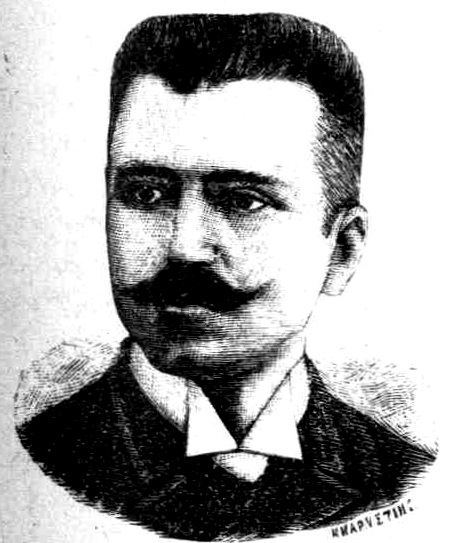
Life
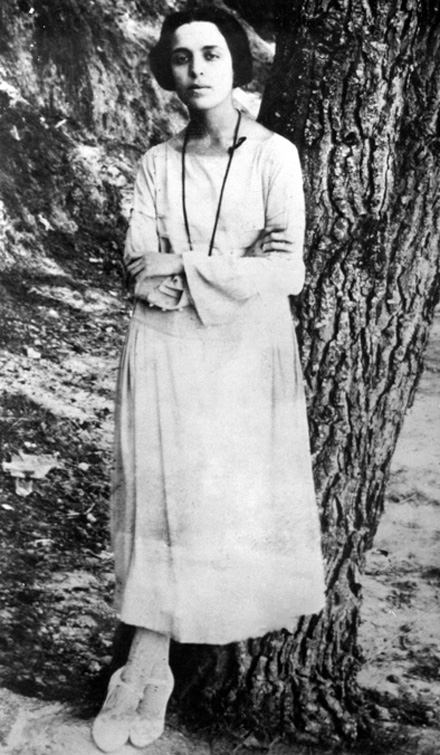
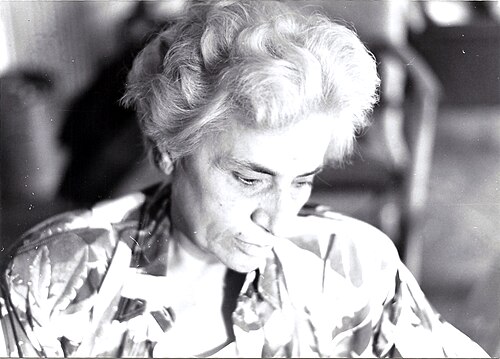
Liberaki was born in Athens in 1919. She grew up in the Athens of the interwar years, when families still spent the summer in country houses with large gardens in villages north of the city, a world that would feed her best-known book. She studied law at the University of Athens, but literature was her real interest, and she began writing young. She married Giorgos Karapanos, and in 1946 their daughter Margarita was born; she would become the novelist Margarita Karapanou, author of Η Κασσάνδρα και ο λύκος (Kassandra and the Wolf). The marriage did not last.
Her first novel, Τα δέντρα (The Trees), appeared in 1945, and the second, Τα ψάθινα καπέλα (The Straw Hats), in 1946, when she was twenty-seven. It was an immediate success, and a French translation followed, which brought her name to Paris. From the late 1940s she lived for long periods in France, moving between Paris and Athens. There she turned more and more to the theatre, writing plays, several of them in French, that drew on Greek myth and ritual. She also worked for the cinema: with the American director Jules Dassin she co-wrote Phaedra (1962), a modern version of the ancient myth starring Melina Mercouri. She returned to the novel with Το μυστήριο (The Mystery, 1976). She died in Athens in 2001.
Works

Τα ψάθινα καπέλα (The Straw Hats) follows three sisters, Maria, Katerina and Infanta, through three summers in their family's house at Kifissia, which in the years before the war was still a place of fields, gardens and pine trees north of Athens. Katerina, the middle sister, tells the story. Each sister has her own temperament and her own path: one is drawn to love and marriage, one to dreams of a larger life, one keeps her pride and distance from the boys who fall for her. Around them move the grown-ups of the family, the neighbours and the young men of the area. Nothing dramatic happens, and everything happens: the girls grow up, and each summer changes them.
What made the book so loved was its tone: light, sensuous, full of sun, fruit, heat and the smell of the garden, but with an undercurrent of sadness at the passing of time. It was one of the first Greek novels to give young women their own inner life, their desires and doubts, without moralising. Ο άλλος Αλέξανδρος (The Other Alexander, 1950), darker and more experimental, tells of a divided family and of children growing up in its shadow. Her later plays turned to myth and the theatre of ritual.
Legacy in Greece today
Τα ψάθινα καπέλα has never been out of print in Greece. It is read by teenagers and adults alike, it was adapted for Greek television, and the image of three sisters in straw hats in a summer garden has become part of Greek memory. For a learner, it is one of the best first novels to read in Greek: its sentences are clear, and its world of summer, family and first love needs little explanation. The neighbourhoods of Kifissia, with their old villas and shady streets, still give an idea of the setting. The mother–daughter story is part of the legacy too: Margarita Karapanou became an important novelist in her own right.
Did you know?
- She wrote The Straw Hats at twenty-seven, just after the end of the German Occupation.
- Her daughter, Margarita Karapanou, also became a well-known novelist.
- She co-wrote the screenplay of Phaedra (1962) with Jules Dassin, Melina Mercouri's husband.
- Several of her plays were written in French, during her long years in Paris.
Key works
| Greek title | Title | Year |
|---|---|---|
| Τα δέντρα | The Trees (novel) | 1945 |
| Τα ψάθινα καπέλα | The Straw Hats (novel) | 1946 |
| Ο άλλος Αλέξανδρος | The Other Alexander (novel) | 1950 |
| Φαίδρα | Phaedra (screenplay, with Jules Dassin) | 1962 |
| Το μυστήριο | The Mystery (novel) | 1976 |
A line to remember
Τα ψάθινα καπέλα
Ta psathina kapela
The Straw Hats