Life
Aristotle was born in 384 BC in Stagira, a small Ionian colony on the east coast of Chalkidiki. His father Nicomachus was physician to King Amyntas III of Macedon, which may explain both the son's lifelong interest in living things and his ties to the Macedonian court. Orphaned early, he was sent at seventeen to Athens, to Plato's Academy, and stayed twenty years as student and teacher. When Plato died in 347 BC and the Academy passed to his nephew Speusippus, Aristotle left Athens.
He spent the next years in Asia Minor and on Lesbos: at Assos, at the court of the ruler Hermias, whose niece Pythias he married, and at Mytilene, where he and his pupil Theophrastus studied the fish, birds and shellfish of the lagoon of Kalloni. In 343 BC Philip II of Macedon summoned him to Mieza to educate his thirteen-year-old son Alexander; the lessons lasted about three years, and the pupil later sent his teacher specimens from Asia.
In 335 BC Aristotle returned to Athens and opened a school in the grove of Apollo Lykeios, the Lyceum, where he lectured while walking under the covered colonnade, the περίπατος, which gave his followers the name Peripatetics; he gathered a library, maps and collections there. When Alexander died in 323 BC and anti-Macedonian feeling swept Athens, Aristotle was charged with impiety, as Socrates had been, and withdrew to his mother's estate at Chalcis on Euboea, reportedly saying that he would not let the Athenians sin twice against philosophy. He died there in 322 BC, aged 62.
Works

What survives of Aristotle, some thirty works, are the lecture courses of the Lyceum, compressed and unpolished, edited around 60 BC by Andronicus of Rhodes; the elegant dialogues he published in his lifetime are lost. The Όργανον (Organon, «the tool») founded logic: the syllogism, the categories, the rules of valid argument that were taught unchanged until the nineteenth century. The Φυσικά (Physics) and Μετά τα Φυσικά (Metaphysics), the latter named simply from its place «after the physical works» in the edition, analyse change, cause and being, with the four causes, matter and form, potentiality and actuality, and the unmoved mover; its first sentence, that all men by nature desire to know, is the most famous opening in philosophy.
The Ηθικά Νικομάχεια (Nicomachean Ethics), dedicated to his son, define happiness, ευδαιμονία, as a life of activity according to virtue, and virtue as a mean between two extremes, courage between cowardice and rashness. The Πολιτικά (Politics) start from the claim that man is by nature a political animal, draw on the school's collection of 158 constitutions and defend the mixed regime of the middle class. The Περί Ποιητικής (Poetics) is the first theory of literature: tragedy is the imitation of a serious action that, through pity and fear, accomplishes the κάθαρσις of such emotions, a sentence argued over ever since. Around these stand the Ρητορική (Rhetoric), Περί Ψυχής (On the Soul) and the great biological works, above all the Περί τα ζώα ιστορίαι (History of Animals), which describe some five hundred species and make Aristotle, in Darwin's words, the master of all the naturalists.
Legacy in Greece today
Aristotle is a presence in Greece in a way few ancient thinkers are. Thessaloniki's central square and its university, the Αριστοτέλειο Πανεπιστήμιο, founded in 1925, bear his name; the village of Stagira in Chalkidiki has an Aristotle park with working models of his physical experiments, and the excavated ruins of ancient Stagira lie by the sea at Olympiada. In Athens the site of the Lyceum, discovered in 1996 behind the Byzantine Museum, has been open to visitors since 2014: a palaestra and the outlines of the walks where he taught. Lyceum pupils read the Nicomachean Ethics and the Politics in the original in their final year, and his coinages are everyday Modern Greek: πολιτικόν ζώον, η χρυσή μεσότης, κάθαρση, ενέργεια, κατηγορία, ουσία. The 2,400th anniversary of his birth was celebrated worldwide by UNESCO in 2016.
Did you know?
- The word «metaphysics» means nothing more than «the books placed after the Physics» in the ancient edition of his works.
- He studied marine animals on the lagoon of Kalloni on Lesbos and correctly described the reproduction of the dogfish and the octopus, observations confirmed only in the nineteenth century.
- His school was named after the sanctuary of Apollo Lykeios where it stood, and «lyceum», λύκειο, is today the word for upper secondary school in Greek and many other languages.
- The remains of the Lyceum were found in central Athens in 1996 during digging for a new museum, and the site has been open to the public since 2014.
Key works
| Greek title | Title | Year |
|---|---|---|
| Όργανον | Organon, the logical works | c. 350–322 BC |
| Φυσικά | Physics | c. 350–322 BC |
| Μετά τα Φυσικά | Metaphysics | c. 350–322 BC |
| Ηθικά Νικομάχεια | Nicomachean Ethics | c. 335–322 BC |
| Πολιτικά | Politics | c. 335–322 BC |
| Περί Ποιητικής | Poetics | c. 335–322 BC |
From the works


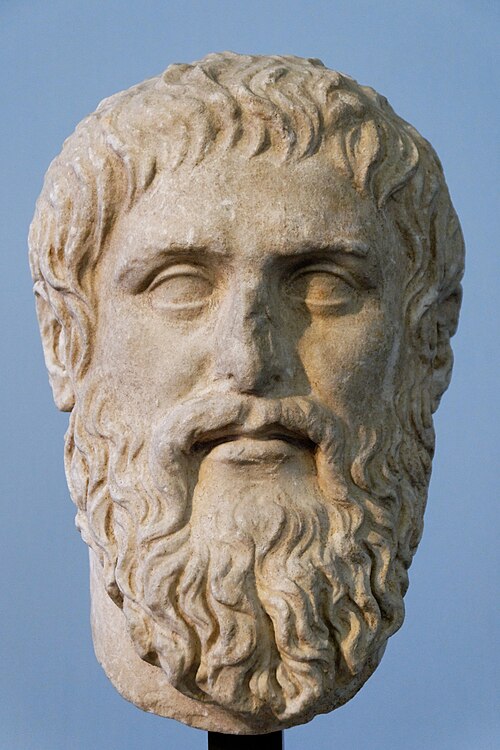
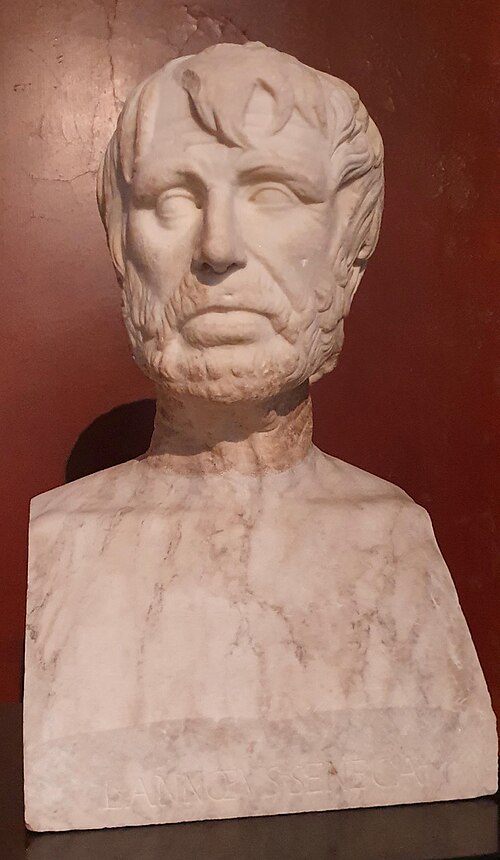
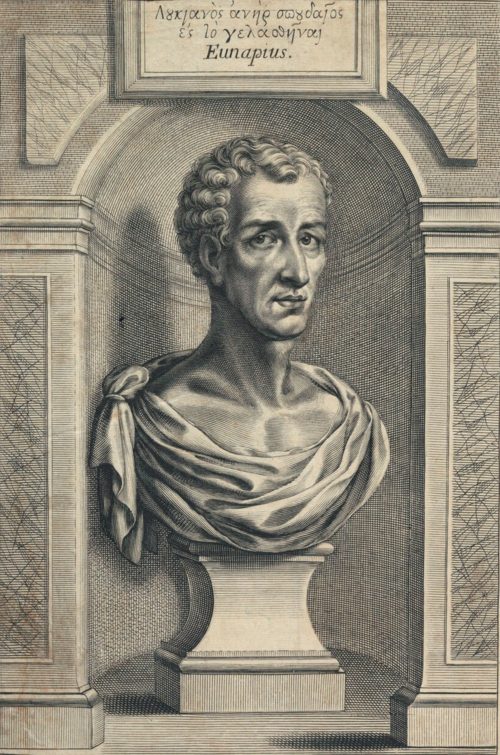
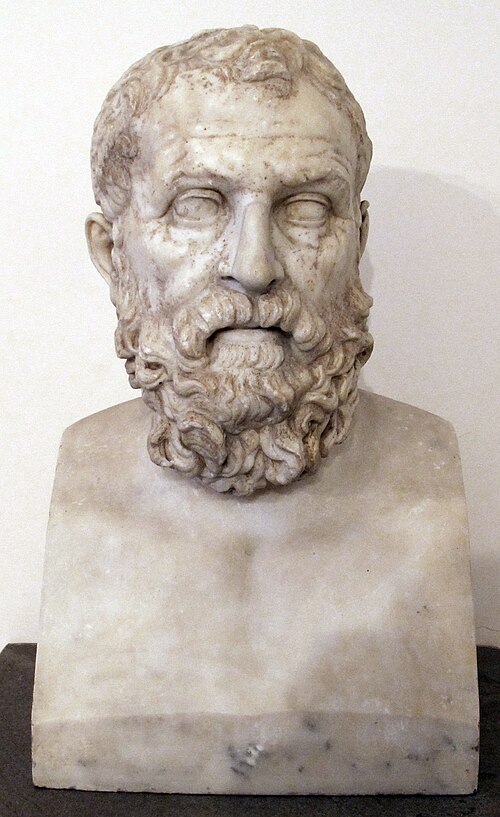
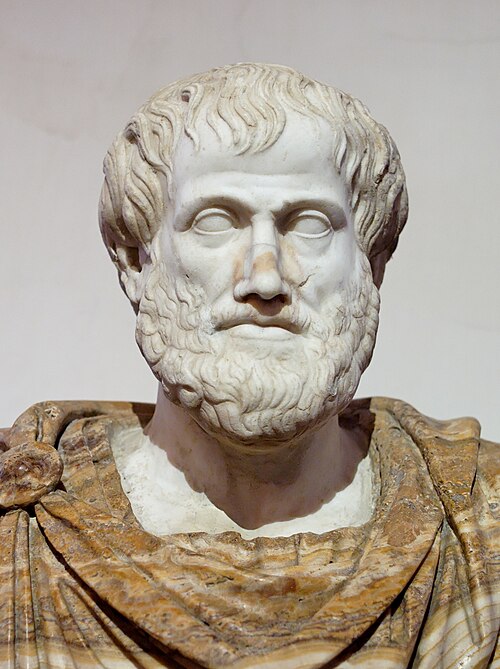
Public-domain pictures from Wikimedia Commons.
A line to remember
Πάντες ἄνθρωποι τοῦ εἰδέναι ὀρέγονται φύσει.
In today's GreekΌλοι οι άνθρωποι από τη φύση τους επιθυμούν τη γνώση.
Pantes anthropoi tou eidenai oregontai fysei.
All human beings by nature desire to know.
From the original
The text as Aristotle wrote it, out of copyright, with our own translation beside it.
«Μετὰ τὰ φυσικά»Metaphysics
The opening of the Metaphysics: from the pleasure we take in simply seeing, Aristotle climbs step by step, through memory and experience, towards art and knowledge. Its first sentence is the one quoted on this page.
Μετὰ τὰ φυσικά Α 1, 980a21–980b29 (c. 350–322 BC), the opening · Public-domain text, source: perseus.tufts.edu