Life
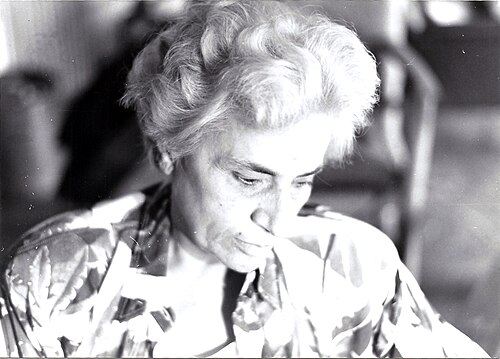
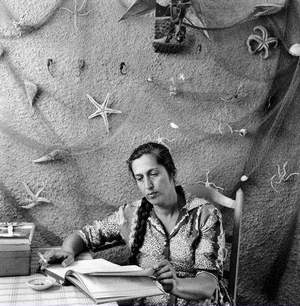
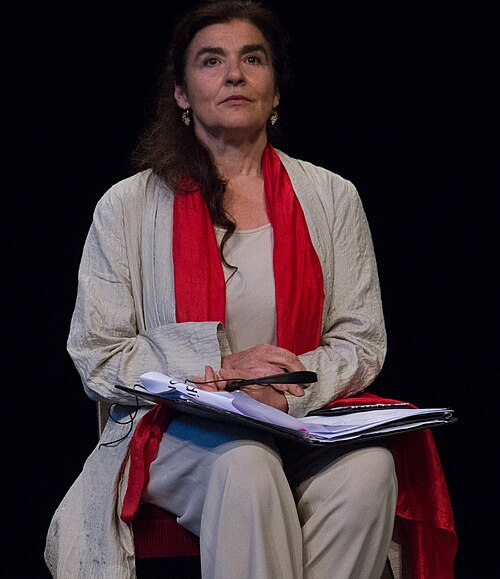
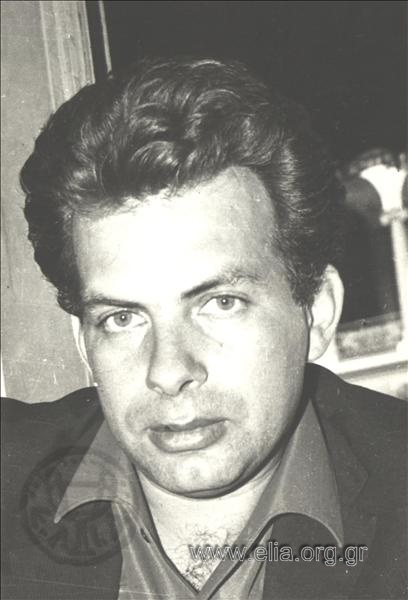
Anna Synodinou was born in Loutraki in 1927 and trained at the National Theatre’s drama school, graduating in 1950. Her early professional work included the company of Marika Kotopouli. A National Theatre contract followed in 1954, placing her within an ensemble where acting, translation, movement and music shaped the performance of classical drama.
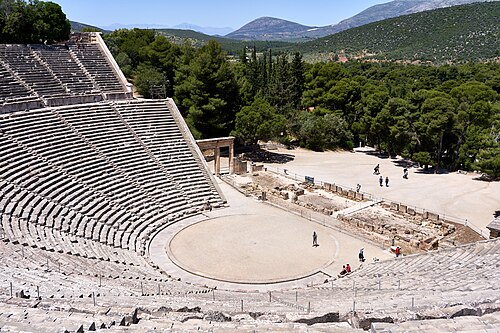
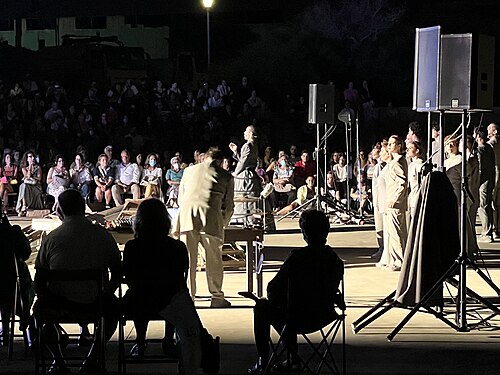
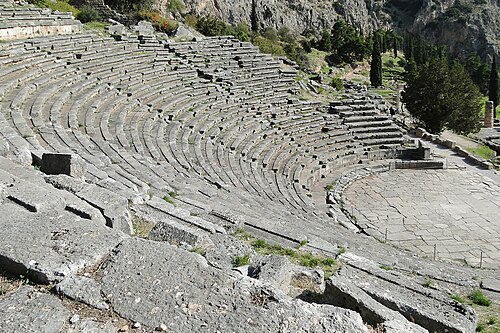
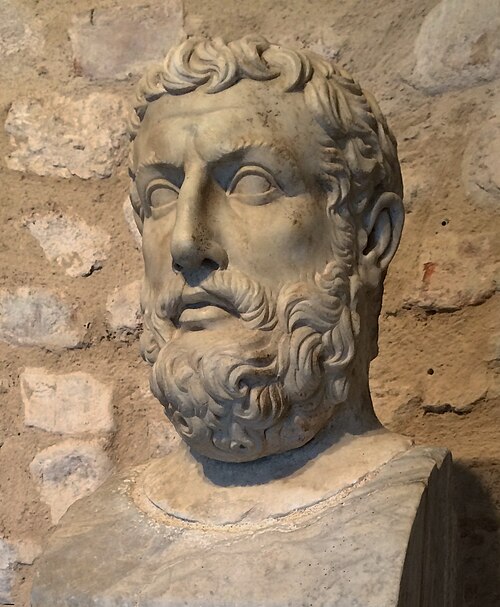
In 1955 she played Polyxena in Euripides’ Εκάβη (Hecuba) at the opening of the Epidaurus festival, with Katina Paxinou as Hecuba and Alexis Minotis directing. The following year she took the title role in Sophocles’ Αντιγόνη (Antigone), again under Minotis. These were modern productions, with Greek translations carrying ancient dramatic conflicts to contemporary audiences. Her repertoire also extended to comedy and more recent Greek and foreign writing.
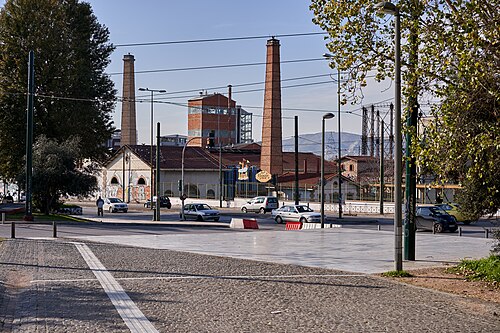
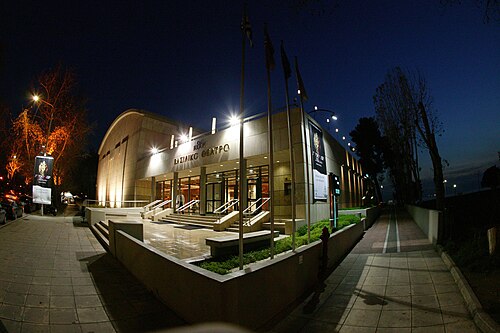
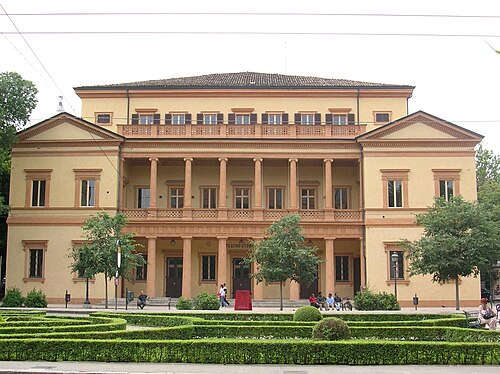
In 1964 she founded Ελληνική Σκηνή (Greek Stage). The company opened at the Lycabettus Theatre in 1965, a project developed with architect Takis Zenetos and the Greek National Tourism Organisation. The military dictatorship’s censorship interrupted this enterprise in 1967. She returned to the stage in 1972 and continued performing; in 1991 she played Hecuba in Τρωάδες (The Trojan Women). She died in 2016, leaving a career that linked interpretation with theatre building.
Works

Synodinou’s roles reveal different kinds of dramatic pressure. As Polyxena in Εκάβη (Hecuba, 1955), she inhabited a young woman facing sacrifice, within a production led by Katina Paxinou in the title role. As Αντιγόνη (Antigone, 1956), she stood at the centre of a confrontation over authority and obligation. Giannis Gryparis’s Greek translation and Alexis Minotis’s direction formed the framework for that performance; the actor’s task was to make the conflict audible and embodied.
Her own company widened the settings for this work. At Lycabettus in 1965, the programme included Aristophanes’ Εκκλησιάζουσες (Assemblywomen), directed by Minos Volanakis, and Antigone, directed by Giorgos Sevastikoglou. Comedy and tragedy shared a new open-air venue overlooking Athens. That autumn she also played the title role in a revival of Angelos Sikelianos’s Σίβυλλα (The Sibyl) with the National Theatre of Northern Greece.
Returning to Euripides as Hecuba in Τρωάδες (The Trojan Women, 1991), she described actors as portraying human and divine suffering and searching for justice. Her interview connects performance with interpretation: a voice carries disagreement, grief and a question to an audience. Each production depended on an ensemble’s shared work.
Legacy in Greece today
Synodinou’s legacy includes both memorable roles and the effort to establish another open-air home for Greek theatre. Her work invites attention to speech as an action between people. Listen to the adapted Modern Greek passage, then say Θα έρθεις αύριο first as a statement and then as a question. Keep the words the same and notice the change in intonation. Repeat the sentence with emphasis on αύριο, making the time the important detail. Leave a small pause between versions, and ask a partner which one asks for an answer. This everyday exercise develops listening, clear delivery and attention to meaning through the voice, inspired by an actor’s craft.
Did you know?
- Born in Loutraki in 1927; died in 2016.
- Graduated from the National Theatre drama school in 1950.
- Founded Greek Stage in 1964; the company opened at Lycabettus in 1965.
- The work dates are performance years, not the dates of the ancient plays.
Key works
| Greek title | Title | Year |
|---|---|---|
| Εκάβη — Πολυξένη | Hecuba — Polyxena (performance) | 1955 |
| Αντιγόνη — Αντιγόνη | Antigone — title role (performance) | 1956 |
| Σίβυλλα — Σίβυλλα | The Sibyl — title role (revival) | 1965 |
| Τρωάδες — Εκάβη | The Trojan Women — Hecuba (performance) | 1991 |
A line to remember
Οι ηθοποιοί αναπαριστούμε τα πάθη των θεών και των ανθρώπων, τις διαμάχες και ψάχνουμε να βρούμε πού είναι το δίκιο.
Oi ithopoioi anaparistoume ta pathi ton theon kai ton anthropon, tis diamaches kai psachnoume na vroume pou einai to dikio.
We actors portray the sufferings of gods and human beings, their conflicts, and try to find what is right.