Life
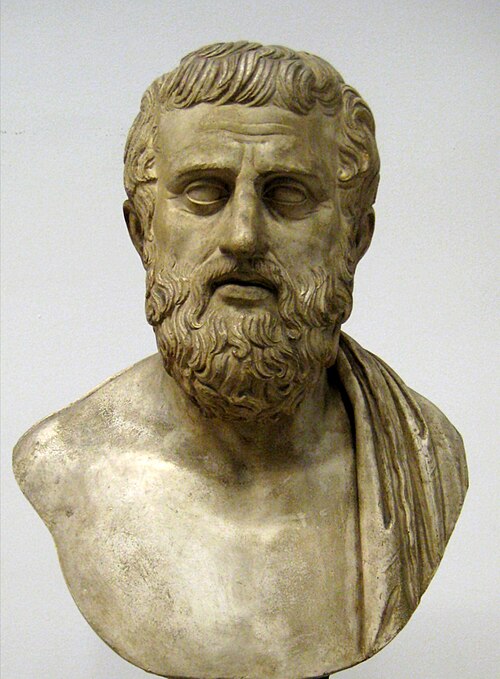
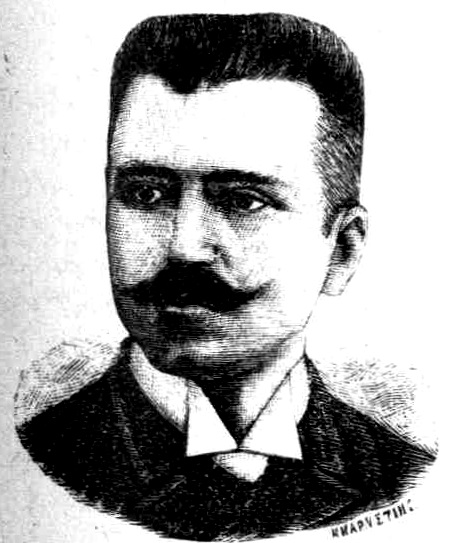
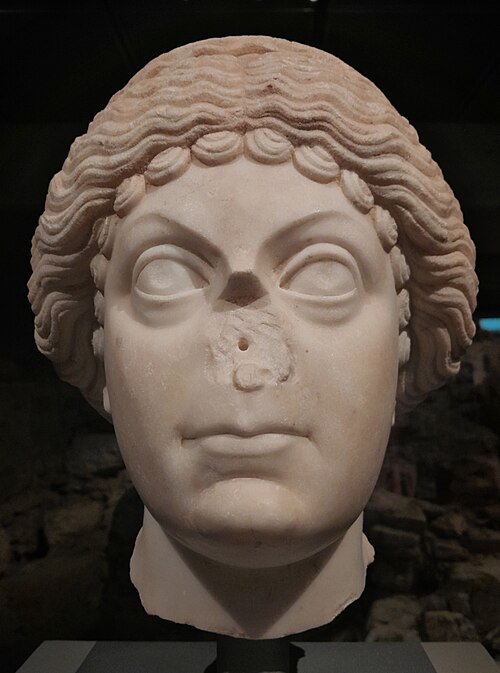
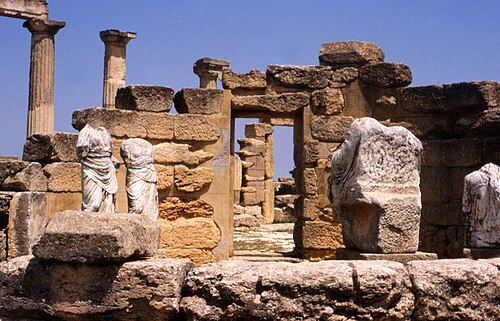
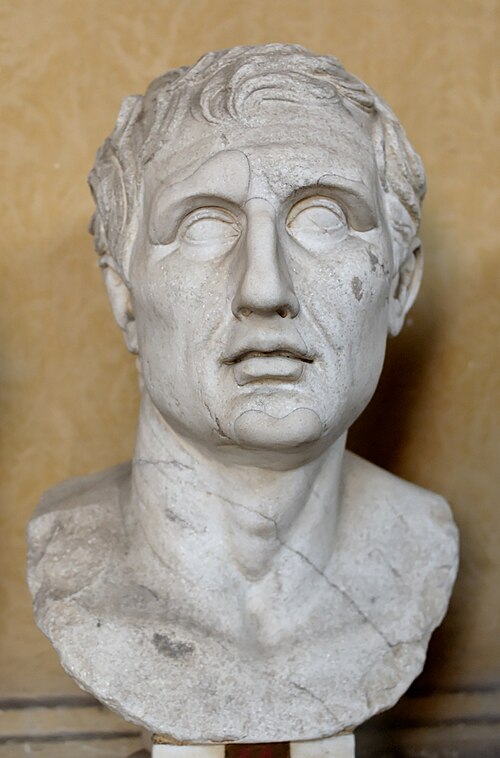
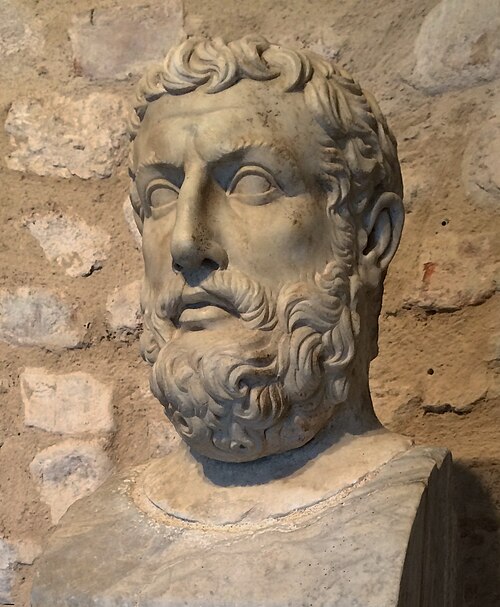
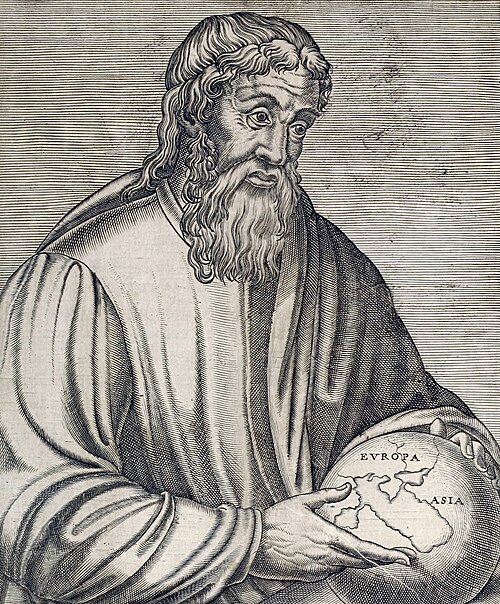
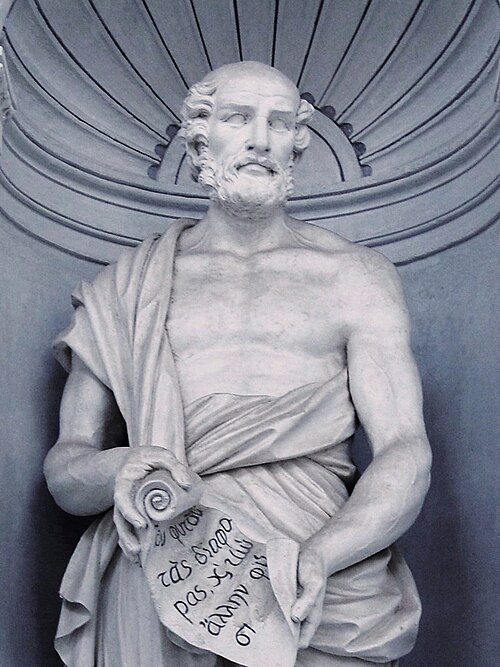
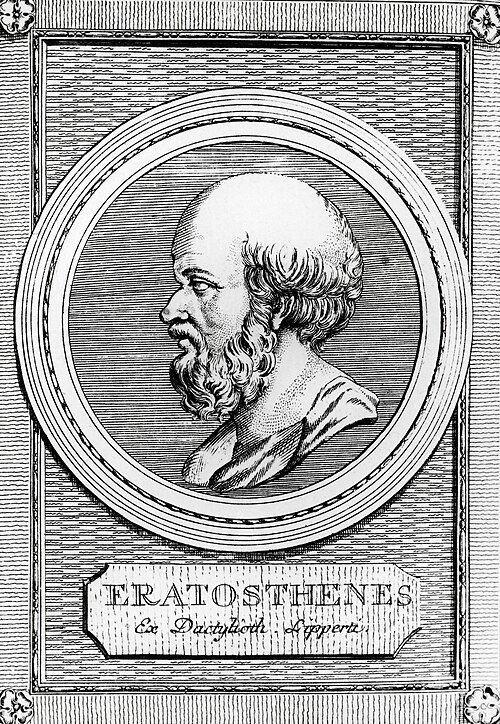
Eratosthenes was born around 276 BC in Cyrene, a Greek city in North Africa, in present-day Libya. He studied in Athens before moving to Alexandria at the invitation of Ptolemy III. Around the middle of the third century BC, the Egyptian royal court offered an unusually rich setting for scholarship. Eratosthenes became associated with the royal household and directed the Library of Alexandria. His career belongs to a Greek-speaking Mediterranean network, not simply to the geography of modern Greece.
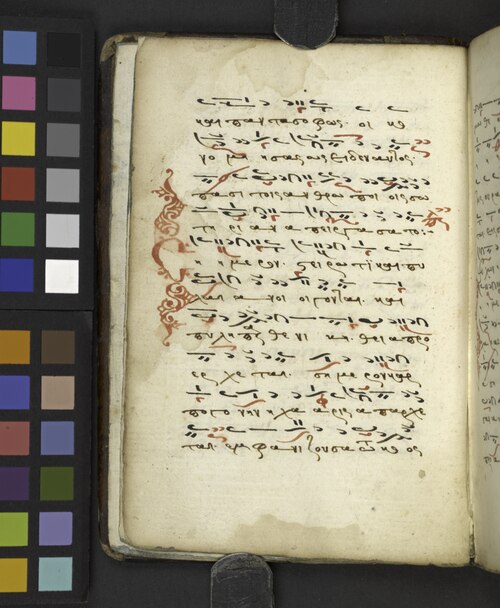
The library was a place for comparing texts as well as collecting them. Eratosthenes worked across subjects that modern institutions often separate: the shape of the inhabited world, mathematical relations, dates and poetry. His correspondence with other scholars and the dedication of Archimedes’ Method to him show a wider intellectual conversation. He probably died in Alexandria around 194 BC. Later biographical stories give a more dramatic ending, but they do not make every personal detail secure. Most works are lost or fragmentary. To reconstruct his life, we therefore combine ancient references with the surviving traces of what he wrote and distinguish evidence from a smooth modern biography.
Works

His Geography organised information about the inhabited world using mathematical questions as well as travel reports. Platonicus, another lost work, explored mathematical topics connected with Plato. The table also includes two achievements rather than pretending that four complete books survive: estimating Earth’s circumference and the prime-number method known as his sieve. The sieve removes multiples to identify primes; its familiar name belongs to a later transmitted tradition.
The circumference calculation is best known through Cleomedes, writing later. His simplified account compares the Sun at Syene and Alexandria at the summer solstice: an angle of one fiftieth of a circle and a distance of 5,000 stadia give 250,000 stadia. Other ancient writers transmit 252,000. These are ancient figures, not direct modern-kilometre readings; the stadium’s length and details of the procedure remain debated. The famous result is a model of reasoning from a local observation to a planetary scale, not proof of a precisely stated modern error percentage. Eratosthenes also wrote poetry. The quotation comes from an epigram on doubling a cube’s volume, preserved by Eutocius. The authenticity of the accompanying Letter to Ptolemy is disputed; the poem is generally accepted as Eratosthenes’ own.
Legacy in Greece today
Eratosthenes gives a Greek learner a way to describe space and explain a calculation. His route from Cyrene to Alexandria also makes Greek culture visible beyond the boundaries of today’s Greece. Modern words such as γεωγραφία and Γη can lead back to older scientific writing without making that writing automatically easy.
Draw two rods and shadows on paper. Label σκιά, γωνία and απόσταση, then compare the shadows with μεγαλύτερη and μικρότερη. Add a sentence beginning Υπολογίζω or Συγκρίνω. Work from the graded Modern Greek passage and its translation; the ancient epigram needs its separate modern rendering. This small activity practises scientific description without claiming to reproduce every uncertain step of the historical measurement.
Did you know?
- His geographical writings survive in fragments and later quotations.
- Cleomedes gives 250,000 stadia; other ancient sources transmit 252,000.
- Doubling a cube means doubling its volume, not doubling the length of each edge.
Key works
| Greek title | Title | Year |
|---|---|---|
| Γεωγραφικά | Geography: lost work in fragments | 3rd century BC |
| Πλατωνικός | Platonicus: lost mathematical work | 3rd century BC |
| Μέτρηση της περιφέρειας της Γης | Measurement of Earth’s circumference: achievement | 3rd century BC |
| Κόσκινο του Ερατοσθένη | Sieve of Eratosthenes: attributed method | 3rd century BC |
A line to remember
εἰ κύβον ἐξ ὀλίγου διπλήσιον, ὦγαθέ, τεύχειν φράζεαι ἢ στερεὴν πᾶσαν ἐς ἄλλο φύσιν εὖ μεταμορφῶσαι, τόδε τοι πάρα
In today's GreekΑν σκέφτεσαι, φίλε μου, να φτιάξεις κύβο με διπλάσιο όγκο από έναν μικρό ή να μεταμορφώσεις οποιοδήποτε στερεό σε άλλο, να, το μέσο είναι στη διάθεσή σου.
ei kybon ex oligou diplēsion, ōgathe, teukhein phrazeai ē stereēn pasan es allo physin eu metamorphōsai, tode toi para
If you intend, my friend, to make a cube twice a small one’s volume, or to transform any solid into another, the means is here for you.