Life
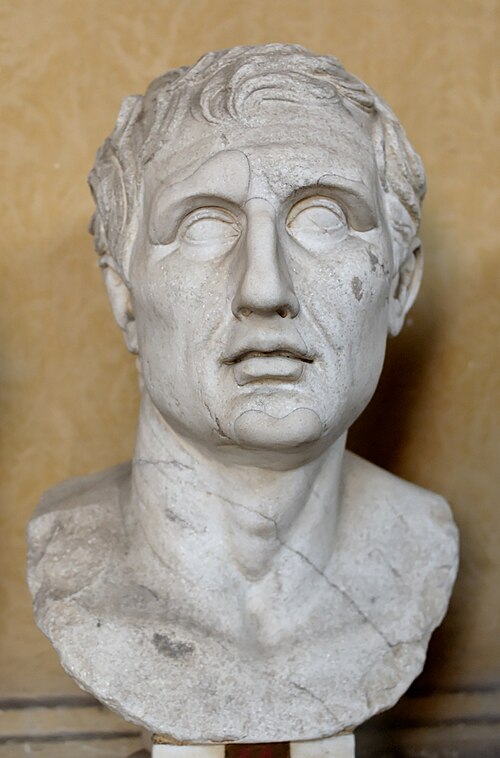
Corinna is associated with Tanagra, a town in Boeotia, and with the stories of its surrounding landscape. We cannot give secure dates for her birth or death. Ancient writers place her beside Pindar, sometimes as an adviser or a victorious rival, but their accounts were written much later. Pausanias, writing in the second century CE, reports her memorial and a picture at Tanagra. Such testimony shows how she was remembered; it does not turn every episode into a contemporary record.
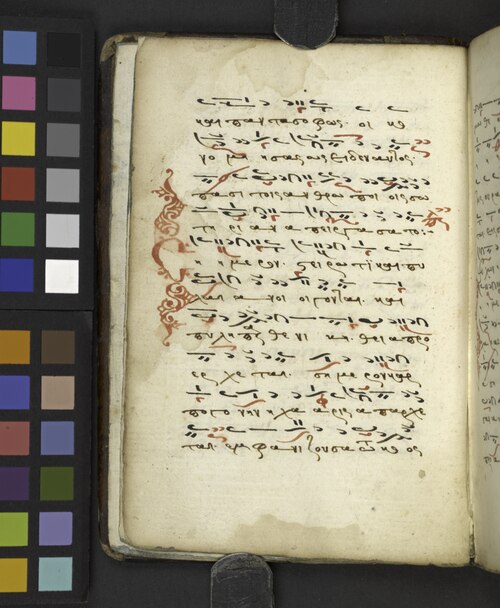
Modern scholars have proposed widely different dates. The traditional setting is the late sixth or early fifth century BCE, while linguistic and literary arguments have supported fourth-century or Hellenistic alternatives. A 2026 study argues that evidence for a statue by Silanion points to the fourth century BCE or earlier, challenging a Hellenistic date without proving that she was Pindar’s contemporary. This remains a scholarly debate. A surviving copy must also be distinguished from the poems’ composition: Berlin papyrus P. 13284 dates to the first or second century CE. It preserves much older poetry alongside explanatory notes. Corinna’s biography therefore begins with a place, a body of fragmentary writing and later memories, rather than a firmly dated sequence of personal events.
Works

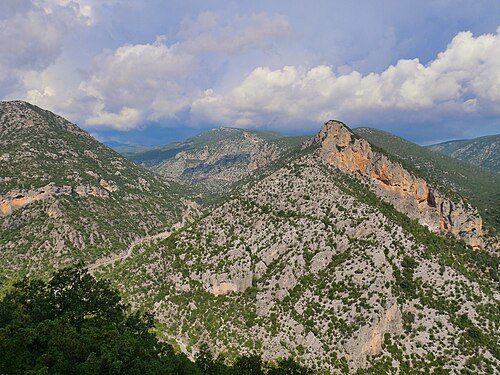
Corinna’s surviving poetry turns the Boeotian landscape into a place of voices and relationships. In the song contest of Cithaeron and Helicon, mountains behave as singers: a divine audience judges the performance, and the result brings a dramatic response. Another section of the Berlin papyrus tells of the daughters of the river-god Asopus. Geography and genealogy meet as local places become members of a story. These are mythical narratives, not accounts of actual mountains singing or a documented family history.
Other fragments bring the act of making poetry into view. The passage beginning with Terpsichore addresses women of Tanagra and connects song with the community. A short quotation preserved by the grammarian Apollonius Dyscolus refers to the excellence of heroes and heroines. The surviving evidence has prompted debate about performance and audience; it does not justify a fully reconstructed concert or a secure picture of who attended. Modern editions use numbers such as PMG 654 and 655 to identify fragments, and numbering should accompany a descriptive title. The poems’ Boeotian literary dialect, epic echoes and damaged transmission require explanation. A learner can first read a Modern Greek account of one myth, then compare a tiny supported ancient passage. Our B1 reading is newly written Modern Greek, not a simplified claim about the difficulty of the original poems.
Legacy in Greece today
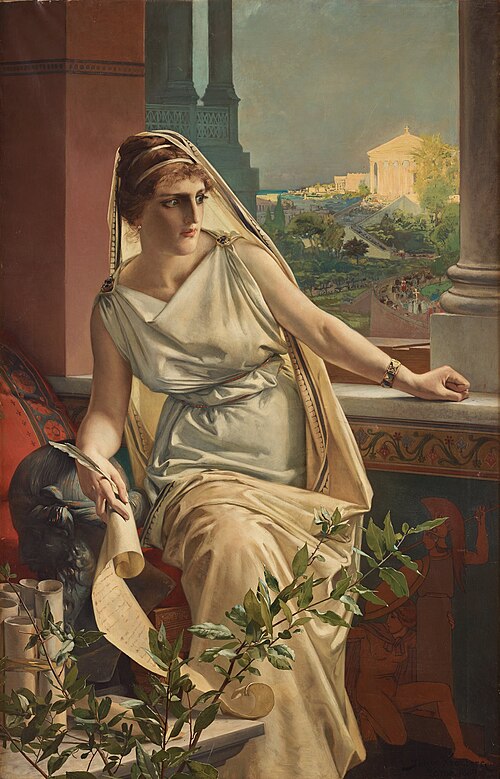
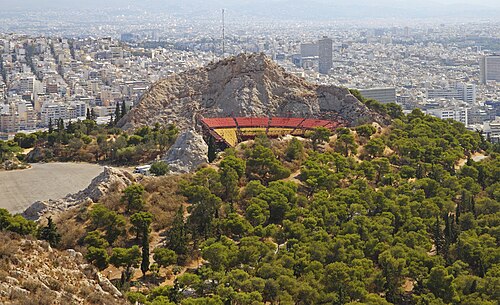
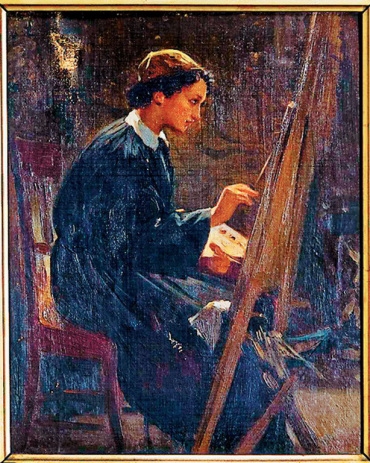
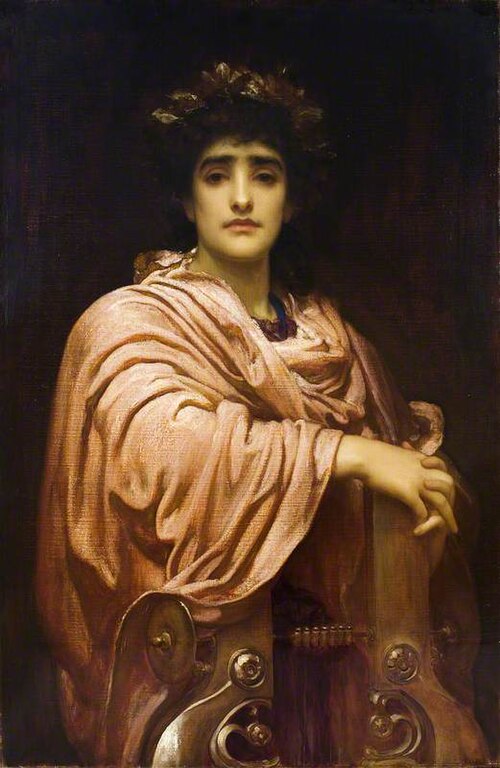
Open the Berlin museum’s record for papyrus P. 13284 and notice the columns and the smaller explanatory writing. Describe the object in Modern Greek: Είναι ένας πάπυρος με ποίηση και σχόλια. Then locate Tanagra, Helicon and Cithaeron on a map and use το βουνό and η κορυφή in two sentences. Read our modern rendering of Plutarch’s reported advice about sowing by hand. Choose one mythical event and tell it in three short Modern Greek sentences; this puts the idea of careful selection into practice. The anecdote is a later story about Corinna, not secure evidence of a meeting with Pindar. If you view Leighton’s Corinna of Tanagra, describe two visible colours while remembering that it is an imagined nineteenth-century portrait.
Did you know?
- The Berlin papyrus is centuries later than the poetry it copies.
- Mountains become singers in one surviving mythical story.
- Leighton’s 1893 portrait is an imagined later image.
Key works
| Greek title | Title | Year |
|---|---|---|
| Αγώνας Κιθαιρώνα και Ελικώνα — PMG 654.i | Song contest of Cithaeron and Helicon | undated |
| Κόρες του Ασωπού — PMG 654.ii–iv | Daughters of Asopus | undated |
| Τερψιχόρη και γυναίκες της Τανάγρας — PMG 655 | Terpsichore and the women of Tanagra | undated |
| Ήρωες και ηρωίδες — PMG 664 b | Heroes and heroines — brief fragment | undated |
A line to remember
τῆι χειρὶ δεῖν ἔφη σπείρειν, ἀλλὰ μὴ ὅλωι τῶι θυλάκωι
In today's GreekΈλεγε πως πρέπει να σπέρνεις με το χέρι και όχι με ολόκληρο το σακί.
tei cheiri dein ephe speirein, alla me holoi toi thylakoi
She said one should sow by hand, not with the whole sack.