Life
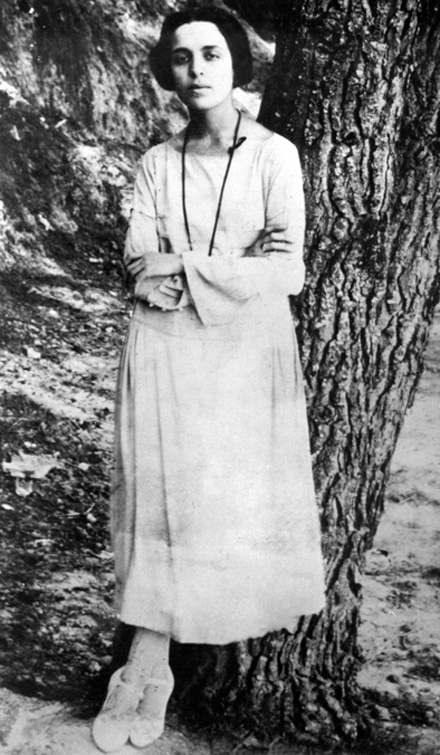
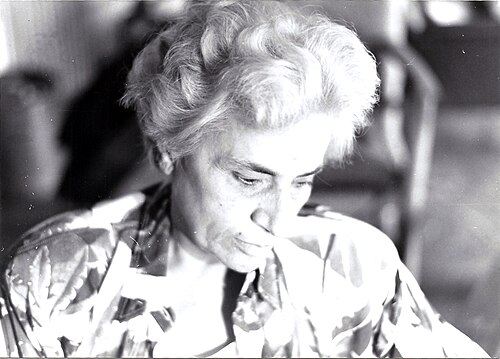
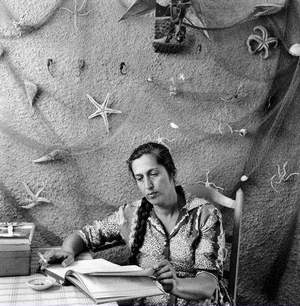
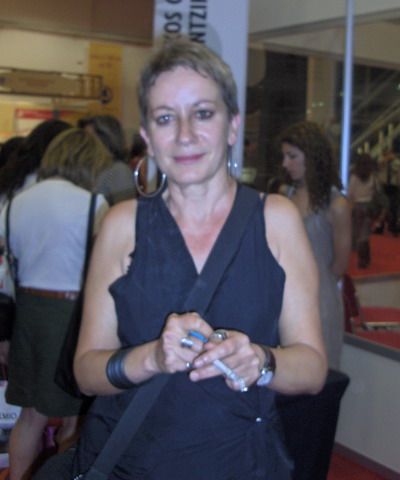
Aspasia Papathanassiou was born in Amfissa in 1918 and graduated from the National Theatre’s drama school in 1940. Her early work included Marika Kotopouli’s company. She participated in the wartime resistance, and political persecution interrupted her theatrical life. In 1952 she co-founded the Greek Theatre Company with Tzavalas Karousos, continuing to build collective forms of work alongside her acting.
From 1957 to 1966 she was a leading actress and founding member of Dimitris Rondiris’s Piraiko Theatre. The company took Greek tragedy on international tours. Her Electra received the first acting prize at the Theatre of Nations festival in 1960. Greek dramatic speech, movement and ensemble work travelled across different audiences and theatrical settings.
During the military dictatorship she lived in self-exile, based in London, and participated in opposition activities as well as European productions. In 1975 she co-founded the nonprofit organisation Δεσμοί (Bonds), working for theatrical and cultural decentralisation through tours and festivals. Its later research centre also organised acting courses and seminars. Her writing included Σελίδες μνήμης (Pages of Memory, 1996) and Γυναικείες μορφές της αρχαίας ελληνικής τραγωδίας (Female Figures of Ancient Greek Tragedy, 2010). She died in June 2020.
Works

Papathanassiou’s Electra in the Piraiko Theatre’s 1960 performances belonged to Rondiris’s sustained work on tragedy. She played the daughter confronting her family’s violence. Decades later, in the National Theatre’s Ηλέκτρα (Electra, 1996), she played Clytemnestra, while Lydia Koniordou performed Electra and directed. Giorgos Cheimonas’s translation provided the Modern Greek text. The change of role places her work on different sides of the same dramatic relationship.
Her performance in Επιτάφιος (Epitaphios, 1982) brought Giannis Ritsos’s poem to television. Stamatis K. Chondrogiannis directed the dramatisation, with music by Mikis Theodorakis. First broadcast on 1 May 1982, it joined a mother’s mourning with photographic and newspaper material concerning the Thessaloniki tobacco workers’ protests of 1936. The poet, screen director and performer shaped the production through different kinds of work.
In Η μελανόμορφη Κλυταιμνήστρα (The Black-figure Clytemnestra), presented at Topos Allou in 2005, she composed a route through Aeschylus’s Oresteia centred on Clytemnestra. She explained that she suggested situations and elements of different characters. This concentrated performance brings interpretation into focus: an audience can observe an action while forming several possible explanations of it.
Legacy in Greece today
Papathanassiou’s legacy combines performance, international touring and the creation of organisations that brought theatre beyond a single central stage. Her explanation of suggestion offers a useful Modern Greek exercise. After the adapted passage, draw two columns: what I see and what I suppose. Describe a person holding a paper beside a closed door. In the first column write a visible action with βλέπω or παρατηρώ. In the second, use υποθέτω or ίσως to offer one possible explanation. Add a different explanation and compare them. This is your own practice scene. It develops precise observation, verbs of interpretation and the ability to separate evidence from a possible reading of someone’s gesture.
Did you know?
- Born in Amfissa in 1918; died in June 2020.
- A founding member and leading actress of Piraiko Theatre, 1957–1966.
- Co-founded the nonprofit cultural organisation Desmoi in 1975.
- In the National Theatre’s 1996 Electra, she played Clytemnestra opposite Lydia Koniordou’s Electra.
Key works
| Greek title | Title | Year |
|---|---|---|
| Ηλέκτρα — Ηλέκτρα | Electra — title role (performance) | 1960 |
| Επιτάφιος — τηλεοπτική ερμηνεία | Epitaphios — television performance | 1982 |
| Ηλέκτρα — Κλυταιμνήστρα | Electra — Clytemnestra (performance) | 1996 |
| Η μελανόμορφη Κλυταιμνήστρα — παρουσίαση | The Black-figure Clytemnestra — composition and performance, 2005 presentation | 2005 |
A line to remember
Εδώ, αναγκαστικά, “υπονοώ” καταστάσεις, δεν τις αφηγούμαι.
Edo, anagkastika, “yponoo” katastaseis, den tis afigoumai.
Here, necessarily, I “suggest” situations; I do not narrate them.