Life
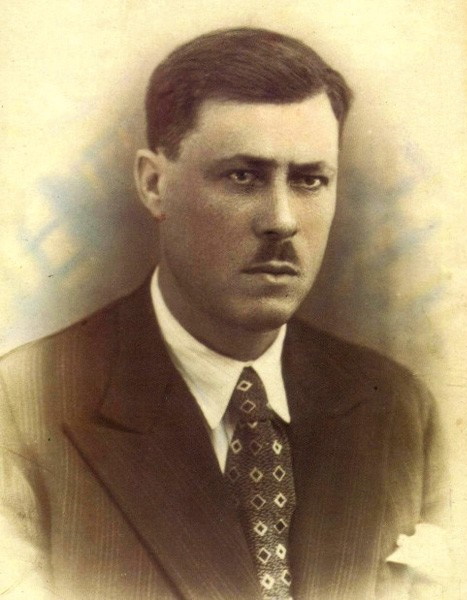
Tsitsanis was born on 18 January 1915 in Trikala, a market town on the plain of Thessaly. His father, a shoemaker from Epirus, played the mandolin, and the boy first learned the violin before picking up the bouzouki, then an instrument of the poor and the disreputable. In 1936 he went to Athens to study law, but instead he found the recording studios: his first records came out in 1937, and within two years he was writing for the best singers of the day. In 1938 he was called up for military service in Thessaloniki, and he stayed there through the German Occupation (1941–44), running a small ouzeri on Pavlou Mela Street where he played in the evenings. The hunger and fear of those years produced his most famous song.
In 1946 he returned to Athens, and the decade that followed was his golden age. With the singers Sotiria Bellou and Marika Ninou he played night after night at the club of «Τζίμης ο Χοντρός» (Jimmy the Fat), and the records they made together, dozens of them, fixed the sound of post-war Greek song: bouzouki, guitar, two voices, and lyrics about love, poverty and the night. Later Stelios Kazantzidis, Prodromos Tsaousakis and many others sang him. From 1967 until his last years he played at the club «Χάραμα» in Kaisariani, where people queued to hear him. He fell ill in 1983, went to London for an operation on his lungs, and died there on 18 January 1984, his sixty-ninth birthday. His funeral in Athens drew an enormous crowd.
Works

Before Tsitsanis, rebetiko was the music of the hashish dens and the refugee quarters, with lyrics about prison, drugs and knives; Markos Vamvakaris was its master. Tsitsanis kept the bouzouki and the dances, the ζεϊμπέκικο and the χασάπικο, but he changed almost everything else. His tunes borrowed from the Western minor and major scales as much as from the Eastern modes, his harmonies were richer, and his words spoke of things everyone had lived through: a lost love, an empty pocket, a mother waiting, a grey Sunday. The result was a music the whole country could own, and the Greek word for it changed from ρεμπέτικο to λαϊκό, popular song.
He wrote his first big hit, Αρχόντισσα (Archontissa, «Noble Lady»), in 1938. Συννεφιασμένη Κυριακή (Cloudy Sunday) was written in Thessaloniki around 1943 and recorded in 1948 with Prodromos Tsaousakis and Sotiria Bellou; a Sunday as grey as the singer's heart became the song Greeks sing when they are far from home. Μπαξέ τσιφλίκι (Baxe Tsifliki, 1946) is named after a neighbourhood of Thessaloniki and celebrates its taverns; Κάποια μάνα αναστενάζει (Some Mother Is Sighing, 1947) is a mother's lament for an absent son; Τα καβουράκια (The Little Crabs) is a comic song about tipsy revellers walking crab-wise home at dawn. Add Ό,τι κι αν πω δεν σε ξεχνώ (Whatever I Say, I Don't Forget You), Της γερακίνας γιος (The Falcon-Woman's Son), Νύχτες μαγικές (Magic Nights) and several hundred more, and you have a body of work that every Greek knows at least in fragments, whether or not they know who wrote it.
Legacy in Greece today
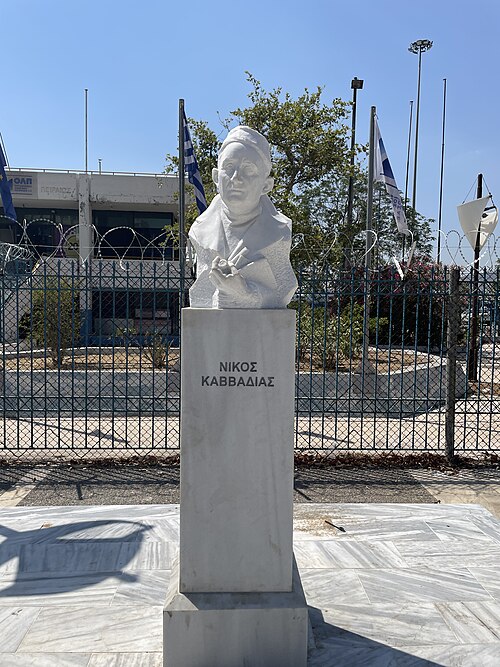
The easiest way to meet Tsitsanis is to walk into any Greek taverna with live music and wait: within the hour someone will play Συννεφιασμένη Κυριακή, and the whole room will sing it. Recordings by Bellou, Ninou and Kazantzidis are easy to find, and the 1948 original of Cloudy Sunday, with Tsaousakis and Bellou, is the one to start with. In Trikala a museum devoted to him opened in 2016 in a restored Ottoman bath-house, there is a statue of him with his bouzouki in the town, and the anniversary of his birth and death, 18 January, is marked there every year. Streets named Τσιτσάνη exist across Greece. The 2010 film Ουζερί Τσιτσάνης, based on Giorgos Skampardonis's novel, tells the story of the Thessaloniki years. His songs remain in copyright, but they are sung everywhere.
Did you know?
- He died on 18 January 1984, exactly sixty-nine years after he was born on 18 January 1915.
- He went to Athens in 1936 to study law and never finished; the bouzouki, then considered a low-life instrument, was already paying better.
- Cloudy Sunday was written in occupied Thessaloniki around 1943 but could only be recorded in 1948, after the war.
- Many of his best-known songs were first sung by women, Sotiria Bellou and Marika Ninou, at a time when the rebetiko world was almost entirely male.
Key works
| Greek title | Title | Year |
|---|---|---|
| Αρχόντισσα | Archontissa (Noble Lady) | 1938 |
| Μπαξέ τσιφλίκι | Baxe Tsifliki | 1946 |
| Κάποια μάνα αναστενάζει | Some Mother Is Sighing | 1947 |
| Συννεφιασμένη Κυριακή | Cloudy Sunday (written c. 1943) | 1948 |
| Τα καβουράκια | The Little Crabs | c. 1950 |
| Ό,τι κι αν πω δεν σε ξεχνώ | Whatever I Say, I Don't Forget You | c. 1950s |
From the works


Public-domain pictures from Wikimedia Commons.
A line to remember
Συννεφιασμένη Κυριακή, μοιάζεις με την καρδιά μου
Synnefiasmeni Kyriaki, moiazeis me tin kardia mou
Cloudy Sunday, you look like my heart