Life
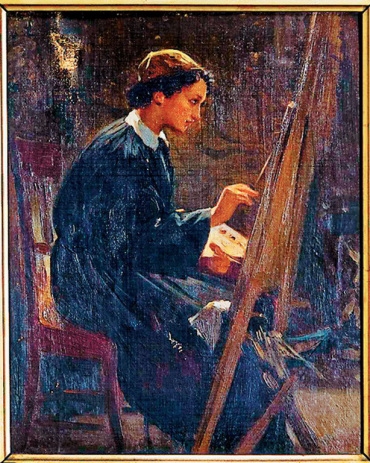
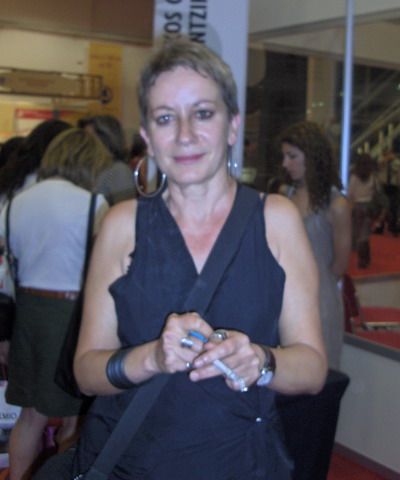
Laskaridou trained at the Athens School of Fine Arts between 1903 and 1907. Her teachers included Georgios Roilos, Nikephoros Lytras and Georgios Iakovidis; she also studied with Spyridon Vikatos. Her entry belongs to the broader struggle for women’s access to professional art education. Although often described as the school’s first woman student, archival research identifies earlier female enrolments and treats that familiar title cautiously. Her diploma records her own formal registration in October 1903 and graduation in July 1907.
She was already exhibiting before graduation. A joint presentation with Thaleia Flora in 1906 was followed by a solo show at Parnassos in 1907. A scholarship from the Bozeios Bequest supported further study in Munich, including the women artists’ association school. In Paris she attended the Grande Chaumière and Colarossi academies and participated in Salons and group exhibitions. Returning to Greece in 1916, she continued showing her work, with solo exhibitions in 1917, 1919, 1924, 1927 and 1952. She died in Athens in 1965. These documented movements and exhibitions place her within networks of training and artistic exchange across Europe. Her later autobiographical writing adds a personal voice to this professional history.
Works

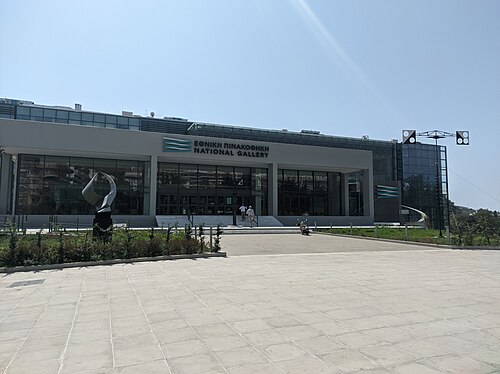
The National Gallery’s collection shows the breadth of Laskaridou’s practice. Portrait of Nikephoros Lytras, dated 1903, is charcoal on paper. Its medium connects her professional training with concentrated attention to a fellow artist. Messolonghi Lagoon (1905) and Landscape from Etoliko (1905–1906), both oil on cardboard, turn towards water and the built and natural surroundings of western Greece. Their titles give learners concrete places to connect with the Greek word τοπίο, landscape.
Boats on the Lido Canal, dated 1908–1912, belongs to her wider European experience. In front of the Fireplace (1910–1912) moves indoors, while the museum also records portraits, still lifes and other everyday subjects. This variety matters alongside her use of Impressionist lessons in colour and atmosphere. Her work cannot be reduced to the dramatic episodes that later accounts often foregrounded. Her memoirs, Από το ημερολόγιό μου, offer retrospective stories rather than a continuous contemporary diary. Art-historical research compares those recollections with school records and exhibition criticism. Paintings, catalogues and memories therefore illuminate different aspects of her career: what she made, where she exhibited and how she later chose to tell her experience.
Legacy in Greece today
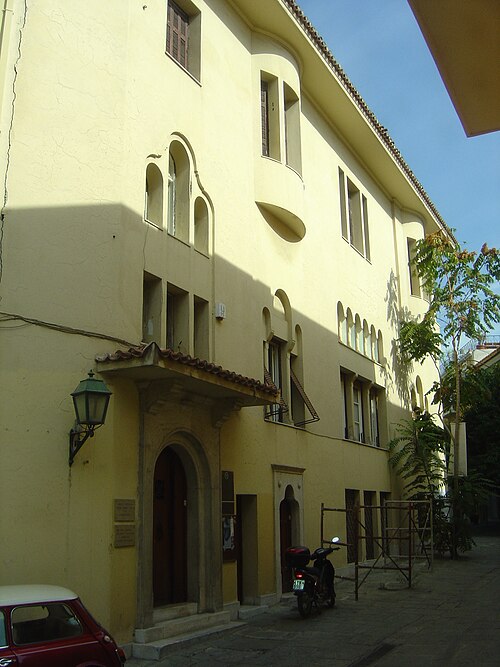
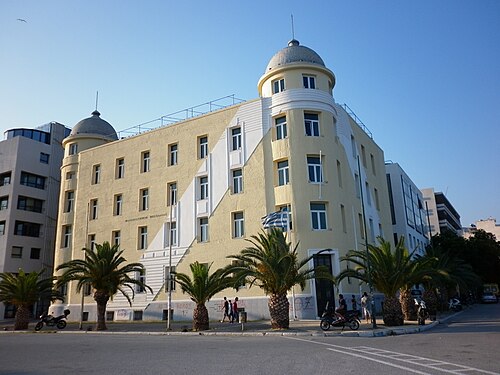
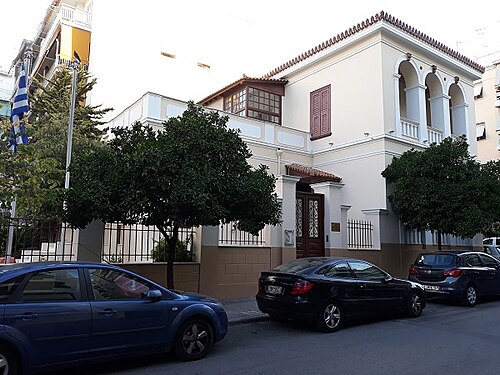
Her former family home in Kallithea has housed the municipal gallery bearing her name since December 2001. Together with works catalogued by the National Gallery, this local cultural setting keeps her painting available for study. Her career also helps explain how women entered professional artistic education through sustained study and public exhibitions.
Choose one museum image of her waterside landscapes. Write one Greek sentence with μπροστά and another with στο βάθος; name a βάρκα, ακτή or αντανάκλαση only when visible. Compare two colours and check adjective agreement. Then separate the museum’s date from your own description. Her short memoir epigraph introduces the vocabulary of memory. B1 refers to this supported Modern Greek practice, with help for unfamiliar artistic terms.
Did you know?
- Her diploma records studies from 1903 to 1907.
- The National Gallery holds paintings and a charcoal portrait.
- Her former Kallithea home became a municipal gallery.
Key works
| Greek title | Title | Year |
|---|---|---|
| Προσωπογραφία Νικηφόρου Λύτρα | Portrait of Nikephoros Lytras | 1903 |
| Λιμνοθάλασσα Μεσολογγίου | Messolonghi Lagoon | 1905 |
| Τοπίον Αιτωλικού | Landscape from Etoliko | 1905–1906 |
| Βάρκες στο κανάλι του Lido | Boats on the Lido Canal | 1908–1912 |
| Εμπρός στο τζάκι | In front of the Fireplace | 1910–1912 |
A line to remember
Όμως, η ωραιότερη θύμησι που είχα στη ζωή μου δεν γράφηκε ποτέ παρά μόνο στην ψυχή μου.
Ómos, i oraióteri thýmisi pou eícha sti zoí mou den gráfike poté pará móno stin psychí mou.
Yet the most beautiful memory I had in my life was never written anywhere except in my soul.