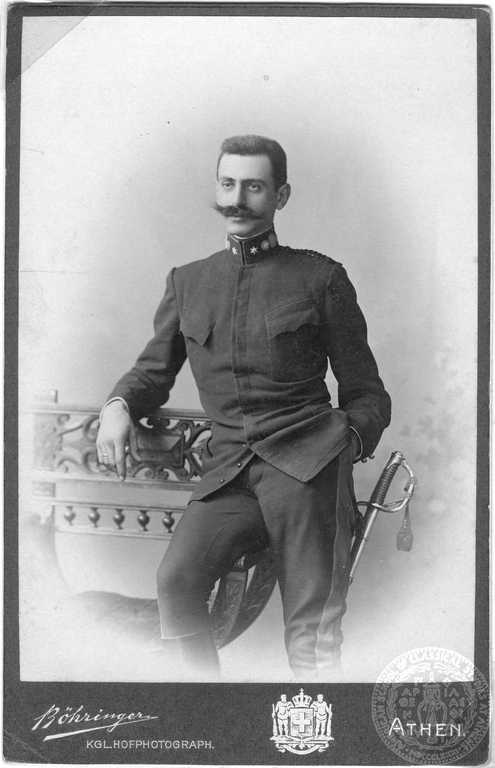
Life
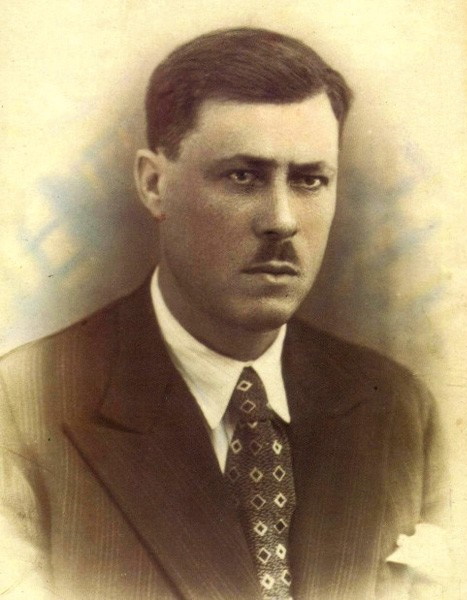
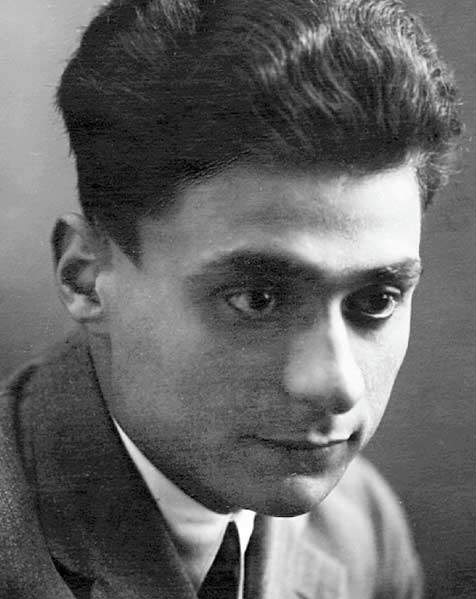
Pavlos Melas was born on 29 March 1870 in Marseille, where his father, Michail Melas, a merchant from a family of Epirote origin, was working. The family moved to Athens when Pavlos was a child; his father later became mayor of Athens and a member of parliament. Pavlos entered the Military Academy (Σχολή Ευελπίδων) and became an artillery officer in 1891. In 1892 he married Natalia Dragoumi, daughter of the politician Stefanos Dragoumis and sister of the writer and diplomat Ion Dragoumis. They had two children, Michail and Zoi.
At the turn of the century Macedonia was still part of the Ottoman Empire, and Greeks, Bulgarians and Serbs were competing, often with weapons, for the loyalty of its Christian villages. Melas, influenced by his brother-in-law Ion Dragoumis, became convinced that Greece had to act. In early 1904 he crossed secretly into Macedonia with a few other officers to study the situation, and in August of the same year he returned, at the head of a small armed band, under the name Kapetan Mikis Zezas (Καπετάν Μίκης Ζέζας), made from the names of his two children.
His campaign lasted only about two months. On 13 October 1904 his band was surrounded by Ottoman troops in the village of Statista, in the region of Kastoria, and Melas was killed in the fighting. He was thirty-four years old.
Works

Melas's importance lies less in what he achieved on the ground than in the effect of his death. When the news reached Athens, the shock was enormous: a well-born officer, a husband and father with a brilliant career ahead of him, had given his life for Macedonia. Public opinion, until then hesitant, turned decisively in favour of the struggle. Many officers and volunteers followed his example, and over the next years Greek armed bands, supported by the Greek consulate in Thessaloniki and by local fighters, became a real force in the region.
The Macedonian Struggle (Μακεδονικός Αγώνας), roughly 1904–1908, ended with the Young Turk revolution of 1908, and a few years later the Balkan Wars of 1912–1913 brought much of Macedonia, including Thessaloniki, into the Greek state. Greeks have always seen Melas as the first martyr of that story.
His letters to his wife Natalia, written during his missions, survive and were published by his family; they show a man full of doubt, tenderness and determination. His story also inspired literature. Penelope Delta, who knew the Melas and Dragoumis families, was deeply moved by his death; it led her to write about Macedonia, and her novel Τα μυστικά του βάλτου (The Secrets of the Swamp, 1937), set during the Macedonian Struggle, is still read by Greek children.
Legacy in Greece today
Pavlos Melas is everywhere in northern Greece. The village where he died, Statista, was renamed Μελάς (Melas) in 1927, and a monument stands there. In Thessaloniki a whole municipality is called Δήμος Παύλου Μελά, and the Museum of the Macedonian Struggle in the city tells his story. There are streets, squares and schools named after him all over Greece, and his statue stands in several towns. Greek schoolbooks tell his story in the history of the early twentieth century. A good way in is Delta's Τα μυστικά του βάλτου, or simply a walk down any Οδός Παύλου Μελά, of which there are hundreds.
Did you know?
- He was born in Marseille, France, not in Greece.
- His nom de guerre, Mikis Zezas, was made from the names of his son Michail (Mikis) and his daughter Zoi.
- His wife was the sister of Ion Dragoumis, one of the leading writers and nationalists of the time.
- The village where he was killed was renamed after him in 1927.
Key works
| Greek title | Title | Year |
|---|---|---|
| Αξιωματικός του Πυροβολικού | Commissioned as an artillery officer | 1891 |
| Πρώτη αποστολή στη Μακεδονία | First secret mission to Macedonia | 1904 |
| Ο Καπετάν Μίκης Ζέζας και το σώμα του | Kapetan Mikis Zezas and his armed band | August 1904 |
| Ο θάνατος στη Στάτιστα | Death at Statista | 13 October 1904 |
| Η Στάτιστα μετονομάζεται Μελάς | Statista is renamed Melas | 1927 |
From the works


Public-domain pictures from Wikimedia Commons.
A line to remember
Καπετάν Μίκης Ζέζας
Kapetan Mikis Zezas
Captain Mikis Zezas