Life
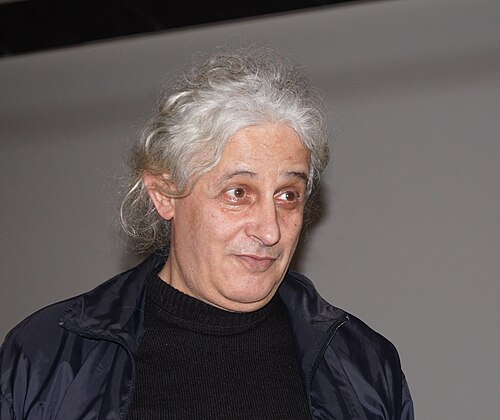
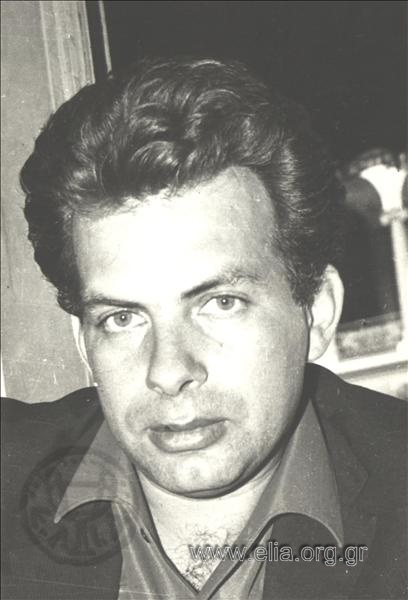
Terzopoulos trained at Kostis Michailidis’s drama school in Athens in 1965–1967 and continued his development at the Berliner Ensemble in the 1970s. He worked as an assistant director and encountered artists including Heiner Müller, an important mentor, Manfred Wekwerth and Ruth Berghaus. Back in Greece, he directed the drama school of the National Theatre of Northern Greece from 1981 to 1983.
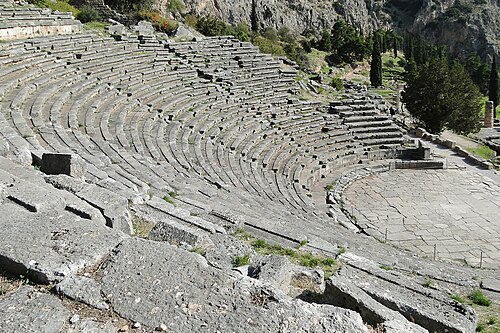
He founded Attis Theatre in Delphi in 1985. Its Bacchae in 1986 established a distinctive encounter with Euripides through concentrated physical and vocal work. The company’s journeys and his collaborations abroad made ancient tragedy part of an international artistic conversation. He also helped create spaces for exchange: the first Theatre Olympics took place in Delphi in 1995. Teaching remained closely connected with directing, with workshops transmitting a developed practice rather than merely the appearance of a finished performance. The Return of Dionysus, published in Greek in 2015, sets out aspects of that research. His 2025 World Theatre Day message places artistic questions alongside social experience, asking what theatre can illuminate beyond its own image and how it can meet the other person.
Works

Terzopoulos’s Bacchae of 1986 was a production of Euripides, bringing the newly founded Attis company into a wider theatrical conversation. The work brought bodily intensity, rhythm and voice into the centre of the encounter with tragedy. Attis became a continuing base for research, performances and teaching. The Return of Dionysus, 2015, is his book on acting practice, subsequently published in other languages.
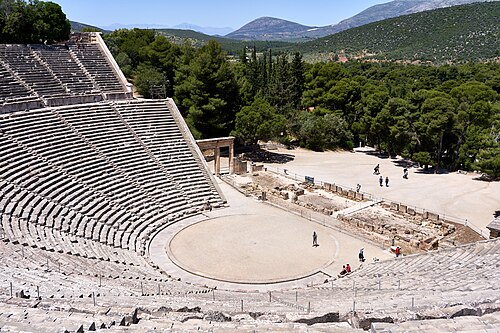
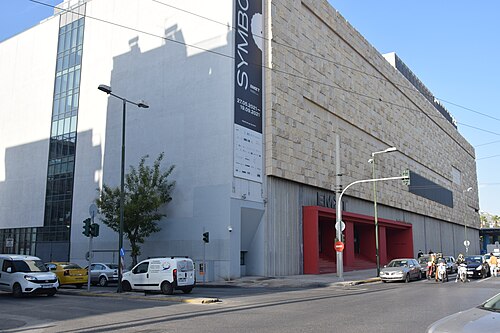
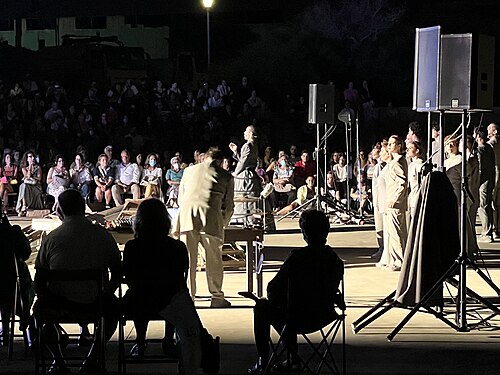
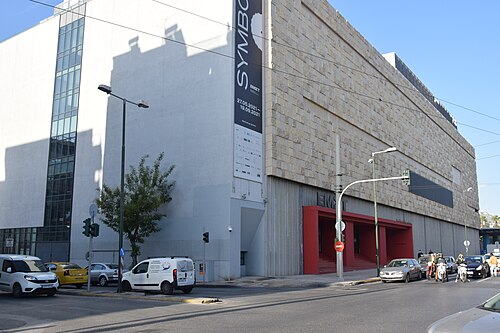
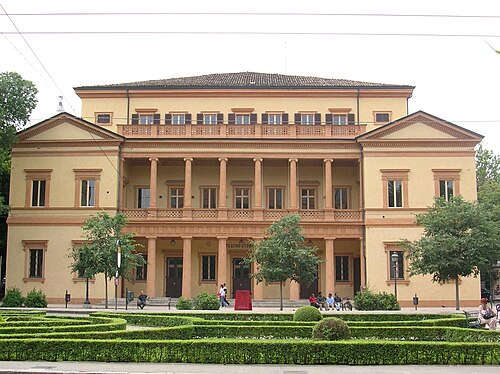
Waiting for Godot premiered at Teatro Storchi in Modena on 12 January 2023. This staging of Beckett used Carlo Fruttero’s Italian translation; its Athens presentation at Onassis Stegi in 2024 had Greek surtitles. His Oresteia for the National Theatre of Greece premiered at Epidaurus in July 2024, using Eleni Varopoulou’s Greek translation of Aeschylus. These productions show how a Greek director works through different spoken languages and theatrical traditions. Their credits also reveal theatre as collective labour: translation, performers, music and rehearsal work shape the encounter with the audience. The question in his World Theatre Day message concerns the theatre’s public responsibility. It invites attention to what performance can disclose about a wounded society as well as to its means of expression.
Legacy in Greece today
Terzopoulos has carried Greek theatrical research into international productions and teaching, while bringing other theatrical traditions into dialogue with tragedy. His writings give Greek learners access to a director’s own questions. A Greek artist’s international production may be performed in another language, as the Italian Godot demonstrates.
For immediate practice, use this page’s Greek commands on your own paper stage plan. Draw a mark and a chair, then move a paper token for the actor: «Πλησίασε το σημάδι» and «Στάσου δίπλα στην καρέκλα». Exchange instructions with a partner and explain the resulting position. This original language activity practises imperatives, προς and δίπλα σε. B1 describes the supported Modern Greek passage; the small paper exercise draws on attention to theatrical space.
Did you know?
- Attis Theatre was founded in 1985; its Bacchae followed in 1986.
- The Return of Dionysus was published in Greek in 2015.
- The 2023 Godot was performed in Italian; the 2024 Oresteia used a Greek translation.
Key works
| Greek title | Title | Year |
|---|---|---|
| Ίδρυση Θεάτρου Άττις | Founding of Attis Theatre | 1985 |
| Βάκχες — σκηνοθεσία | Bacchae — direction | 1986 |
| Η επιστροφή του Διόνυσου — βιβλίο | The Return of Dionysus — book | 2015 |
| Περιμένοντας τον Γκοντό — σκηνοθεσία | Waiting for Godot — direction | 2023 |
| Ορέστεια — σκηνοθεσία | Oresteia — direction | 2024 |
A line to remember
Μπορεί ο προβολέας του θεάτρου να φωτίσει το κοινωνικό τραύμα και να πάψει να φωτίζει παραπλανητικά τον εαυτό του;
Borí o provoléas tou theátrou na fotísei to koinonikó trávma kai na pápsei na fotízei paraplanitiká ton eaftó tou?
Can the theatre’s spotlight illuminate social trauma and stop misleadingly illuminating itself?