Life
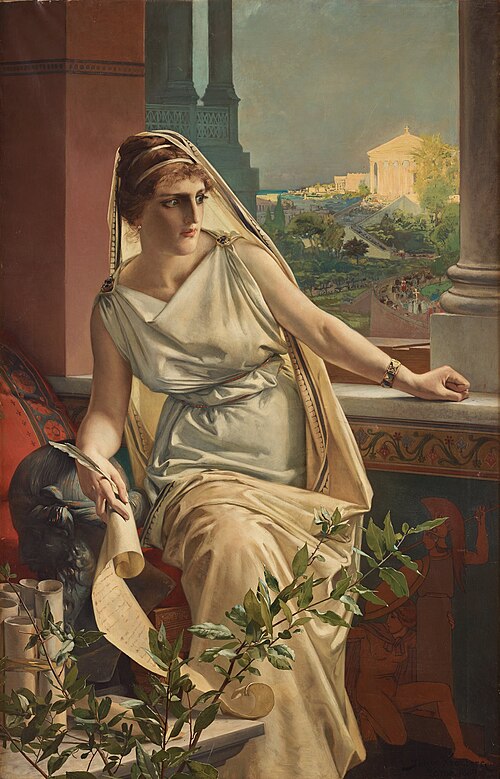
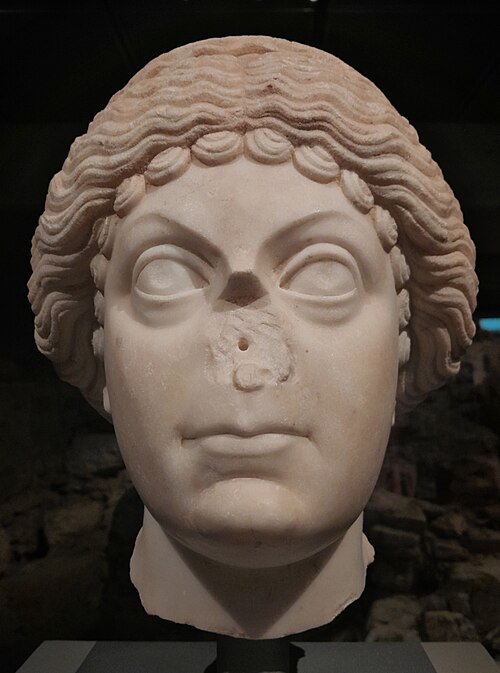
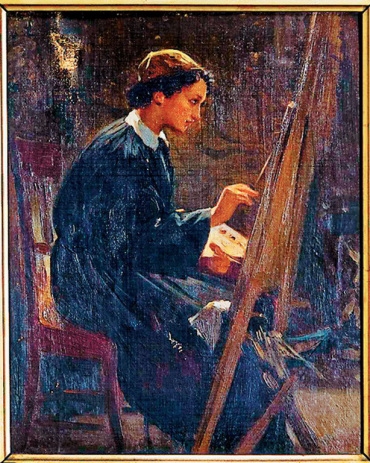
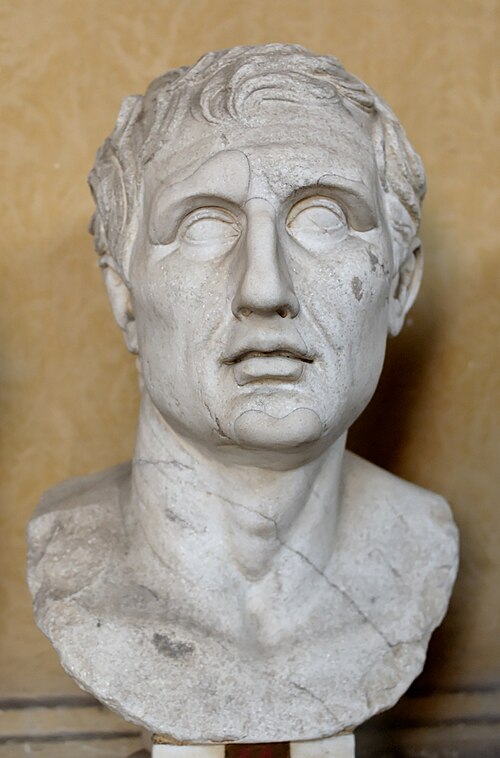
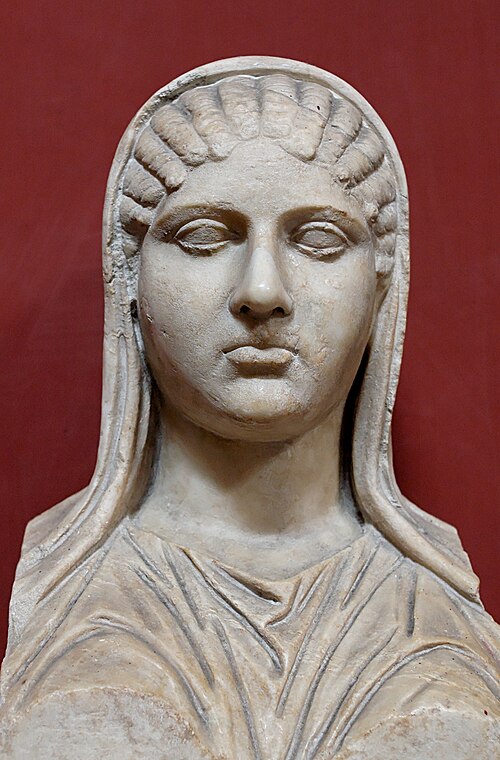
Aspasia belonged to the Greek-speaking world of the fifth century BC. Ancient tradition identifies her birthplace as Miletus, an Ionian city on the coast of Asia Minor, and places her later in Athens with the statesman Pericles. Her exact birth and death dates are not securely known. She was not an Athenian citizen woman, and that difference shaped the ways later authors discussed her place in the city. The basic outline is much shorter than the many stories told about her.
The surviving evidence comes through other people's writing. Comic poets used her association with Pericles for personal and political attack. Authors in the Socratic tradition gave her a reputation for insight into speech and human relationships. Plutarch assembled a fuller account in his Life of Pericles centuries later, combining earlier material of different kinds. This distance matters: an entertaining anecdote is not automatically a witnessed event. We cannot reconstruct a timetable of her teaching, prove the existence of a formal school, or treat every accusation as fact. Aspasia is historically important partly because these uneven sources reveal how a woman's intelligence and outsider status became subjects of public storytelling.
Works

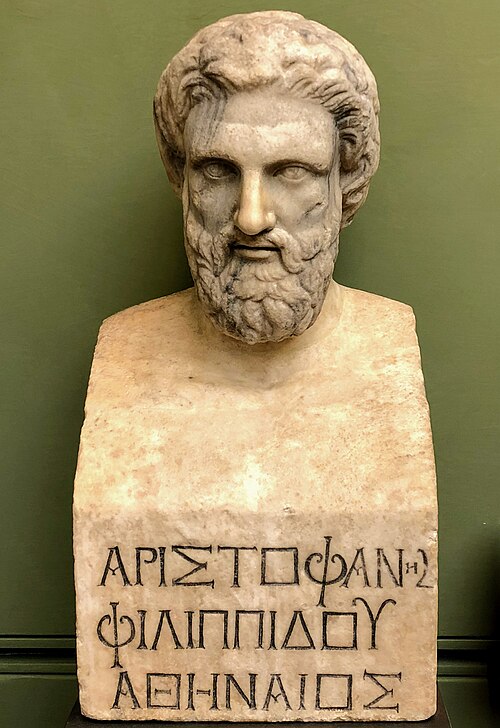
Aspasia's page has a table of ancient portrayals rather than a list of surviving works by her. In Ἀχαρνεῖς (The Acharnians, 425 BC), Aristophanes brings her into a deliberately comic explanation of the war. The play gives evidence for satire and political hostility; its exaggerations cannot simply become biography. In Plato's Μενέξενος (Menexenus), Socrates describes Aspasia as his teacher of rhetoric and recites a speech attributed to her within the dialogue. This is Plato's literary construction, not a transcript of Aspasia's voice.
Xenophon's Ἀπομνημονεύματα (Memorabilia) likewise presents Socrates recalling Aspasia in a discussion of truthful praise and bringing people together. Plutarch's Περικλῆς (Pericles) preserves further stories and comments on her rhetorical reputation, while writing long after her lifetime. These genres ask different questions and use her for different purposes. The quotation selected here is Plato's Socrates describing her ability in rhetoric; it is explicitly a statement about her. For a learner, ῥητορική provides a useful bridge to modern ρητορική. Reading the surrounding exchange also teaches a practical habit: identify who speaks, who is described, and which author arranged the conversation before accepting a sentence as historical testimony.
Legacy in Greece today
Aspasia offers a Greek-language lesson in reading carefully. Begin with the short exchange in Menexenus 235e and a Modern Greek rendering. Find the name Ἀσπασίαν, then compare its ancient ending with the modern name Ασπασία. Underline the word for rhetoric and identify Socrates as the speaker describing her. Next read a modern account and mark phrases such as “Plato presents” or “Plutarch reports”: these small expressions separate a claim from the person making it. You can repeat the exercise with a comic passage. Learning Greek here includes vocabulary and grammar, but also the ability to distinguish a character's voice, an author's choices and a historical person's own words.
Did you know?
- No surviving text is securely established as Aspasia’s own writing.
- The speech attributed to her in Menexenus belongs to Plato’s dialogue.
- Aristophanes mentioned her in a comedy performed in 425 BC.
- Plutarch wrote about her centuries after her lifetime.
Key works
| Greek title | Title | Year |
|---|---|---|
| Ἀχαρνεῖς — Ἀριστοφάνης | Aristophanes: The Acharnians (comic portrayal) | 425 BC |
| Μενέξενος — Πλάτων | Plato: Menexenus (literary portrayal) | 4th c. BC |
| Ἀπομνημονεύματα — Ξενοφῶν | Xenophon: Memorabilia (Socratic recollection) | 4th c. BC |
| Περικλῆς — Πλούταρχος | Plutarch: Pericles (later biography) | c. AD 100 |
A line to remember
οὐ πάνυ φαύλη περὶ ῥητορικῆς
In today's GreekΚαθόλου αδέξια στη ρητορική.
ou pany phaule peri rhetorikes
By no means unskilled in rhetoric.