Life
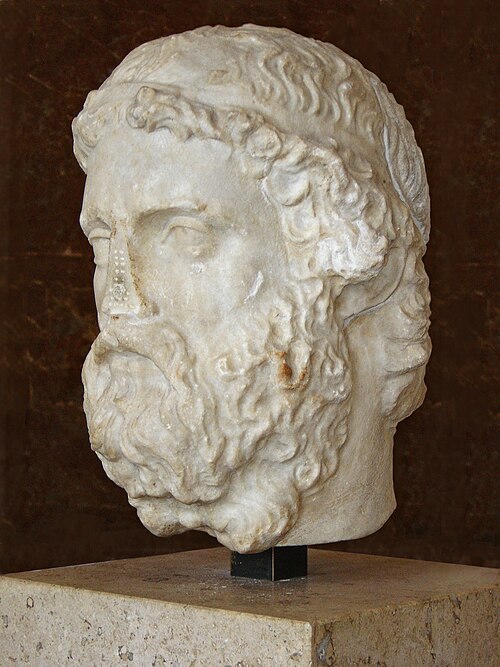
Anyte of Tegea is associated with Arcadia in the Peloponnese and is usually placed in the early third century BCE. Exact birth and death dates are unknown. Her surviving epigrams provide a much clearer meeting with her work than a detailed personal biography. They belong to the early Hellenistic development of a form once closely connected with inscriptions on tombs and offerings. Anyte made room within that short form for children’s play, animals, bereavement and welcoming rural places. Her use of Doric literary features is part of ancient poetic composition, not the language of a present-day beginner’s conversation.
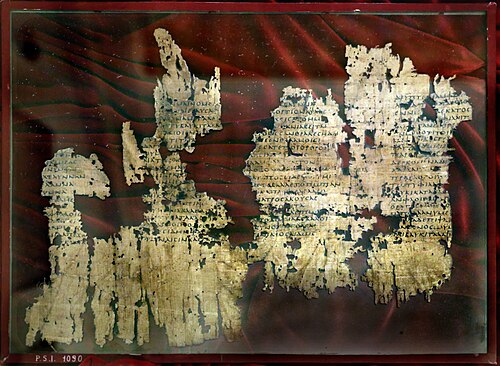
Later readers preserved her name alongside other Greek poets. In the opening poem of his anthology Στέφανος (Garland), Meleager represents her verses as lilies woven into a larger poetic wreath. Antipater of Thessalonica includes her in his poem honouring nine women poets. Such literary tributes document her reception; they do not supply missing family history or prove the setting of every epigram. Modern readers encounter the poems scattered through the Greek Anthology’s thematic books. The speakers vary: a traveller may receive an invitation, Hermes may speak at a crossroads, and a dead dolphin may recall the sea. Following those changes of voice lets us hear the range of a poet whose private life remains largely out of view.
Works

Anyte’s poems make small scenes carry changes of viewpoint. In Greek Anthology 6.312, children harness a goat and play at horse racing near a god’s temple. The miniature scene joins childish delight with a divine spectator. In 9.144, Aphrodite looks out over the shining sea, while the sea itself responds to her image. The poem turns a coastal sanctuary into a relationship between looking, protection and sailing. In 7.215, a dolphin speaks after being cast ashore; remembered movement at sea contrasts with its stillness on land. The animal’s imagined voice creates the feeling of loss.
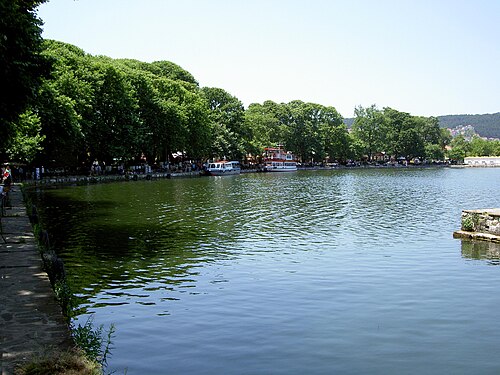
The invitation in 9.313 gathers laurel leaves, spring water, summer labour and a western breeze into four lines. It offers bodily relief rather than a list of landscape features. In 9.314, Hermes identifies himself beside a crossroads and promises rest to tired travellers near a fountain. These voices are poetic arrangements, not records of Anyte’s own journeys. The individual poems’ dates are unknown; the table follows their anthology references. For Modern Greek, the restful scene supports our new sentences Κάθομαι στη σκιά (I sit in the shade) and Πίνω δροσερό νερό (I drink cool water), distinct from the original Doric verse.
Legacy in Greece today
Open Greek Anthology 9.313 in the Anthologia Graeca digital edition and read the original beside our Modern Greek rendering of its opening. Identify the leaves, water and invitation to rest in the poem’s scene. Then draw one tree and one glass of water as a new present-day scene. Say Κάθομαι στη σκιά (I sit in the shade) and Πίνω δροσερό νερό (I drink cool water). Point to the drawn shade for στη σκιά (in the shade) and to the glass for δροσερό νερό (cool water). Add one sentence about how you feel after a rest. This makes a usable description of a pause outdoors; the ancient dialect and metre remain separate from the adapted A2 language.
Did you know?
- Meleager represents Anyte’s poems as lilies in his anthology’s opening wreath.
- The laurel invitation in Greek Anthology 9.313 occupies just four lines.
- The stranded dolphin in 7.215 speaks in the first person.
Key works
| Greek title | Title | Year |
|---|---|---|
| Ἑλληνικὴ Ἀνθολογία 6.312 | Children and a goat (epigram) | ? |
| Ἑλληνικὴ Ἀνθολογία 7.215 | A dolphin cast ashore (epigram) | ? |
| Ἑλληνικὴ Ἀνθολογία 9.144 | Aphrodite and the sea (epigram) | ? |
| Ἑλληνικὴ Ἀνθολογία 9.313 | Rest beneath the laurel (epigram) | ? |
| Ἑλληνικὴ Ἀνθολογία 9.314 | Hermes at the crossroads (epigram) | ? |
A line to remember
ἵζευ ἅπας ὑπὸ καλὰ δάφνας εὐθαλέα φύλλα,
In today's GreekΚάθισε, όποιος κι αν είσαι, κάτω από τα όμορφα, πυκνά φύλλα της δάφνης.
Ízev ápas ipò kalà dáfnas efthaléa fílla.
Whoever you are, sit beneath the lovely thick leaves of the laurel.