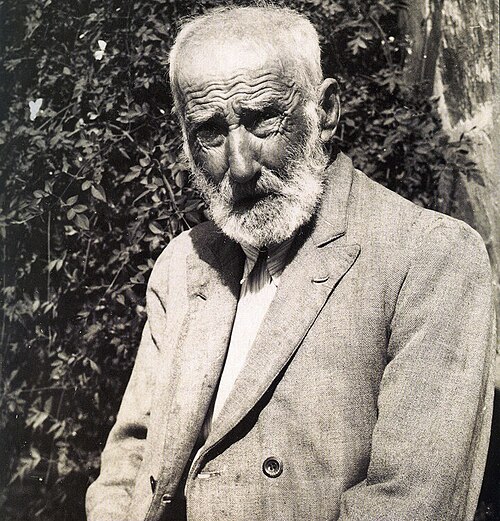
Life
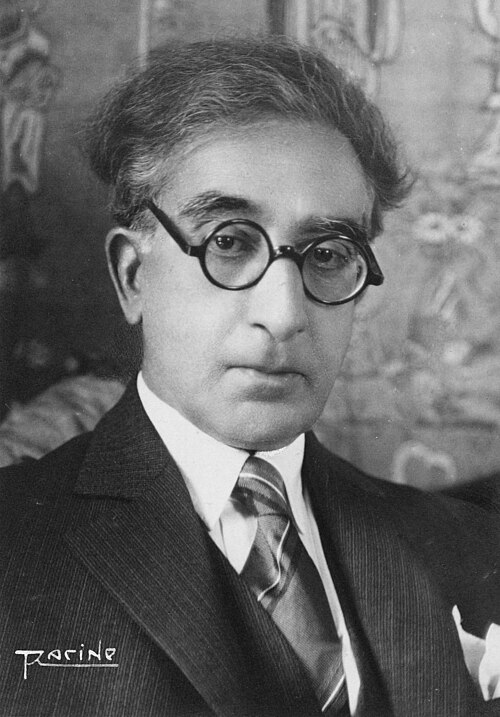
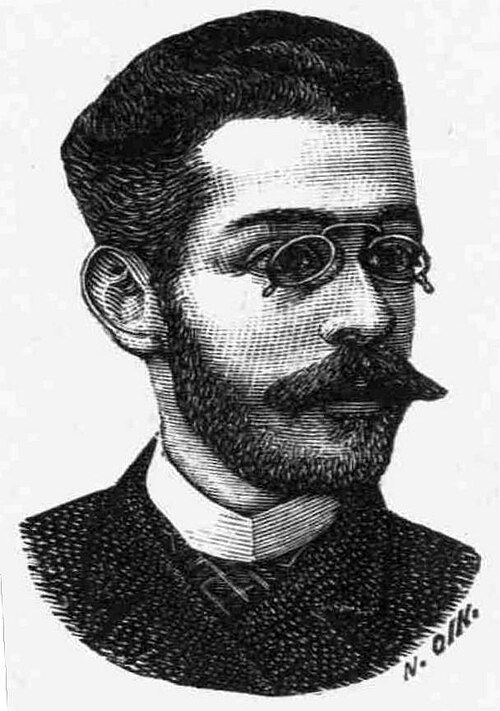
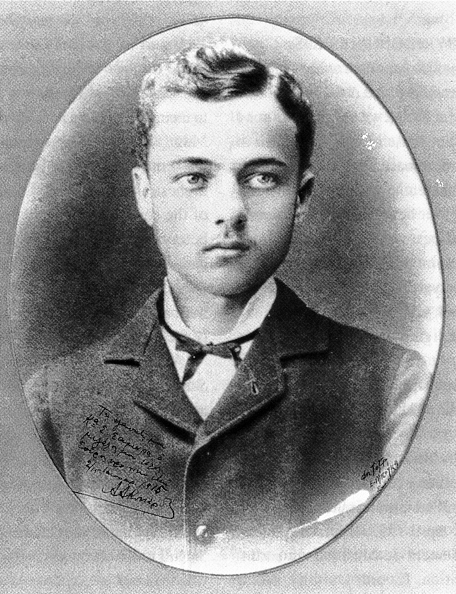
Chalepas was born on 24 August 1851 in Pyrgos (Panormos), a village of marble workers in the north of Tinos. His father ran a workshop of marble carving, and the boy grew up among chisels and blocks of stone. He studied at the School of Fine Arts in Athens, and in 1873 a scholarship from the church of the Evangelistria in Tinos sent him to the Academy of Fine Arts in Munich. He returned to Athens in 1876, opened a studio and, within two years, made his most famous works.
In 1878 his mind gave way. He destroyed sculptures, stopped working and tried several times to end his life. In 1888 his family placed him in the psychiatric hospital of Corfu, where he stayed until 1902. He then went home to Pyrgos, to live with his mother, who believed that sculpture had caused his illness and broke the figures he tried to make. For years he worked as a shepherd in the hills of Tinos and was the village's gentle «madman».
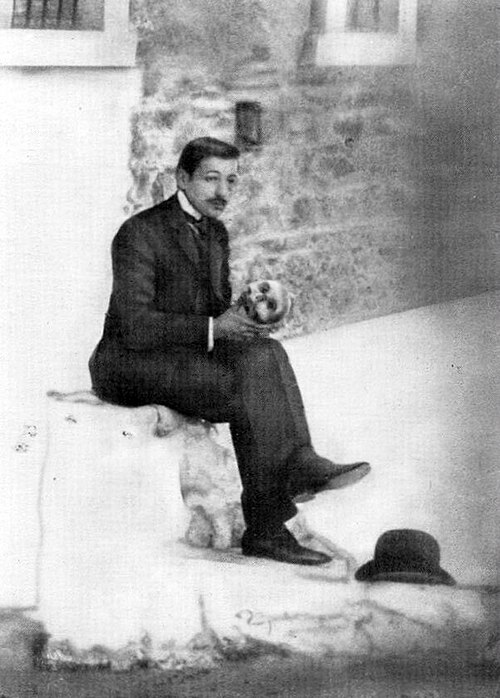
His mother died in 1916, and around 1918, at 67, Chalepas began to sculpt again, mostly in clay and plaster. Plaster casts of his work, shown at the Academy of Athens in 1925, and the Academy's Aristeion of Arts in 1927 brought late recognition. In 1930 he moved to Athens to live with relatives, and he worked almost to the end. He died there on 15 September 1938.
Works

The young Chalepas was a classical sculptor in the spirit of nineteenth-century Munich. His Σατυρίσκος παίζων με τον Έρωτα (Young Satyr Playing with Eros, 1877) shows a mythical satyr teasing the little god of love, full of movement and humour. Η Κοιμωμένη (The Sleeping Maiden, 1878) was made for the grave of Sofia Afentaki, a girl from a wealthy family who had died young of tuberculosis. Chalepas did not show death: he showed a young woman asleep on her bed, the sheet falling naturally over her body, one hand resting near her breast, as if she might wake at any moment. In the same year he began a Μήδεια (Medea), the mother of Greek tragedy who kills her children; it was left unfinished when his illness began.
The works of his old age are completely different. In small clay and plaster figures he returned again and again to the same subjects, the satyr and Eros, Medea, scenes from the Bible, but the classical calm is gone. The bodies are rough, the faces almost childlike, the forms simplified, as if he had forgotten the rules of the Academy and found his own language. Critics in the twentieth century saw in these late works a very modern sculptor, and today they are valued as highly as the marble masterpieces of his youth.
Legacy in Greece today
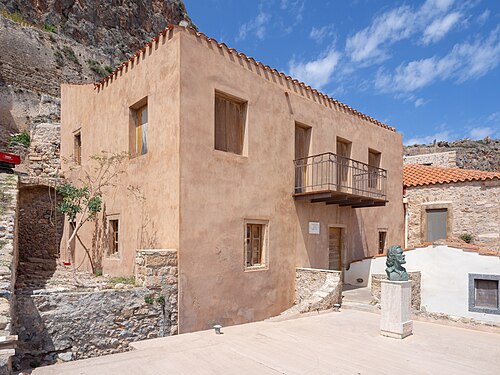
To meet Chalepas, go to the First Cemetery of Athens (Α΄ Νεκροταφείο), near the Panathenaic Stadium, and find the Sleeping Maiden: it is one of the most visited graves there. On Tinos, his family house in Pyrgos is a small museum, next to the Museum of Tinian Artists, and the village still has a school of marble carving. The National Gallery in Athens shows both his early marbles, among them the Satyr Playing with Eros of 1877, and his late clay figures. His life has inspired books and documentaries, and the Sleeping Maiden appears on many book covers.
Did you know?
- He was out of art for about forty years, from 1878 until around 1918, and still became the most admired Greek sculptor of his age.
- He began sculpting again at 67 and kept working until he was almost 87.
- The Sleeping Maiden is a real person's tomb: Sofia Afentaki, who died young in 1873.
- His native village, Pyrgos on Tinos, has produced generations of marble sculptors and still has a marble-carving school.
Key works
| Greek title | Title | Year |
|---|---|---|
| Σατυρίσκος παίζων με τον Έρωτα | Young Satyr Playing with Eros | 1877 |
| Η Κοιμωμένη | The Sleeping Maiden | 1878 |
| Μήδεια | Medea (unfinished) | 1878 |
| Σάτυρος και Έρως (πηλός) | Satyr and Eros (late clay versions) | c. 1920s–1930s |
From the works


Public-domain pictures from Wikimedia Commons.
A line to remember
Η Κοιμωμένη του Α΄ Νεκροταφείου
I Koimomeni tou Protou Nekrotafeiou
The Sleeping Maiden of the First Cemetery