Life
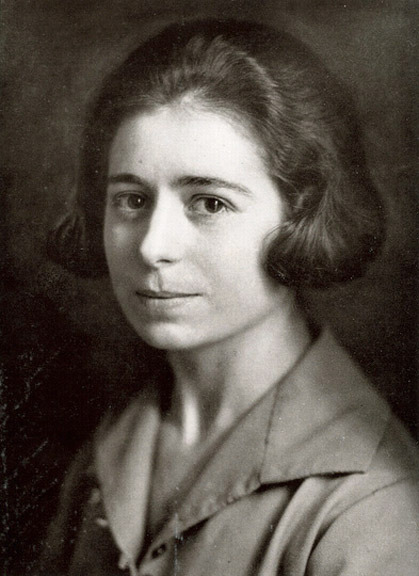
Fassianos was born in Athens in 1935 and grew up in the city's old neighbourhoods. As a boy he studied the violin at the Athens Conservatory, and music stayed with him all his life, but he soon chose painting. In the late 1950s he studied at the Athens School of Fine Arts, where his teacher was the painter Yiannis Moralis, one of the masters of Greek modern art.
In 1960 a French government scholarship took him to Paris, where he studied lithography at the École des Beaux-Arts. Paris became his second home: for the rest of his life he moved between a studio there and his house and studio in Athens, and he exhibited widely in France and across Europe as well as in Greece. French critics and collectors took him to their hearts, and in Greece he became something rare for a modern painter, a truly popular artist whose work ordinary people knew and liked.
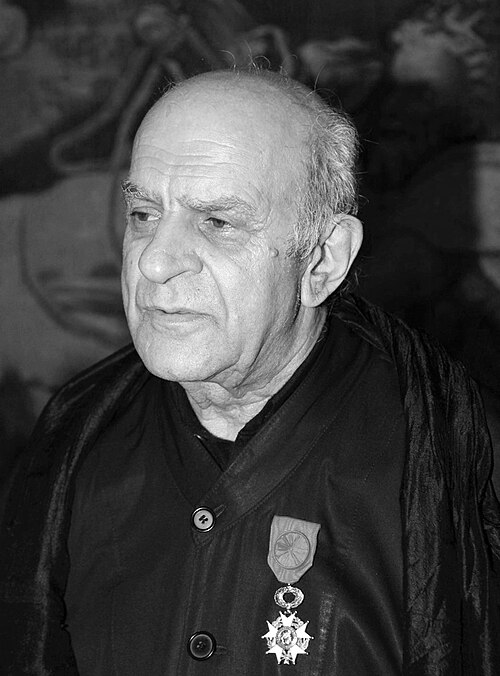
He worked almost every day into old age, painting, drawing, making lithographs and prints, designing posters and illustrating books, and he was often seen in the cafés of Athens, a cheerful, talkative figure. He died in Athens in January 2022, at the age of eighty-six, and his death was front-page news in Greece.
Works

A painting by Fassianos is easy to recognise. The figures are drawn with a strong, flowing outline and filled with flat, bright colour, above all a deep blue, together with red, black, white and touches of gold. They are almost always seen in profile, like the figures on ancient Greek vases, on Byzantine icons or in the shadow theatre of Karagiozis, and they have something of the folk painter Theophilos too. Fassianos took these Greek traditions and made them modern and personal.
His subjects are ordinary moments made poetic: a young man on a bicycle or a motorcycle, a man smoking a cigarette, lovers lying in the grass, a figure flying through the sky, a man with a bird on his hand, a table with a jug and flowers. Words in Greek letters, names of places or short phrases, often float in the picture. The mood is light, sensual and a little nostalgic, a dream of the Greek summer and of the Athens of his youth, and there is humour in it.
Besides paintings, he produced a huge number of lithographs and prints, which made his work affordable, as well as posters, book covers, theatre designs and public works, among them large works for the Metaxourgeio station of the Athens metro (2000).
Legacy in Greece today
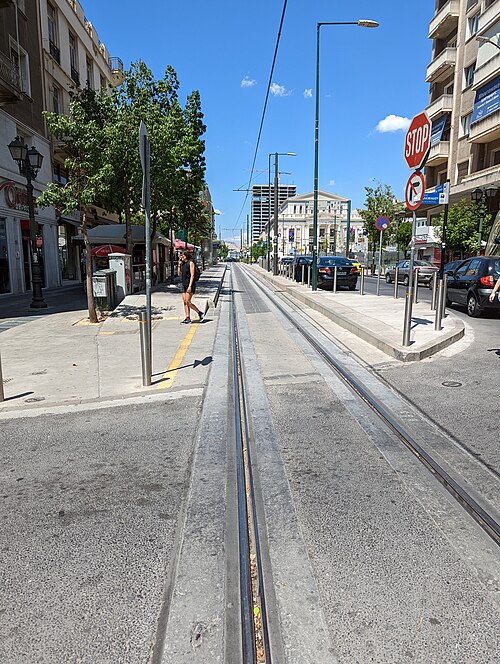
Fassianos's blue figures are part of the visual language of Greece today: you see them in metro stations, on book covers, on posters for festivals and in reproductions in thousands of homes. The easiest place to start is the Metaxourgeio metro station in Athens, where his work greets travellers every day. His work is in the National Gallery in Athens and in many Greek and French collections, and exhibitions of his paintings draw large crowds. For learners, his pictures are a good game: look at one and name everything you see in Greek, ο άνθρωπος, το ποδήλατο, το πουλί, το λουλούδι, το μπλε. His images are still in copyright, so look at them in galleries and books.
Did you know?
- Before he became a painter he trained as a violinist at the Athens Conservatory.
- His teacher at the Athens School of Fine Arts was Yiannis Moralis.
- A French government scholarship took him to Paris in 1960, and he kept a studio there for the rest of his life.
- His figures are almost always shown in profile, a habit he shared with ancient vase painters and the shadow theatre.
Key works
| Greek title | Title | Year |
|---|---|---|
| Σπουδές στην Ανωτάτη Σχολή Καλών Τεχνών, με δάσκαλο τον Γιάννη Μόραλη | Studies at the Athens School of Fine Arts under Yiannis Moralis | 1956–1960 |
| Υποτροφία και σπουδές λιθογραφίας στο Παρίσι | Scholarship and lithography studies in Paris | 1960 |
| Ο ποδηλάτης | The Cyclist (a theme he painted again and again) | |
| Οι ερωτευμένοι | The Lovers (a recurring theme) | |
| Έργα για τον σταθμό Μεταξουργείο του μετρό | Works for Metaxourgeio metro station, Athens | 2000 |
From the works


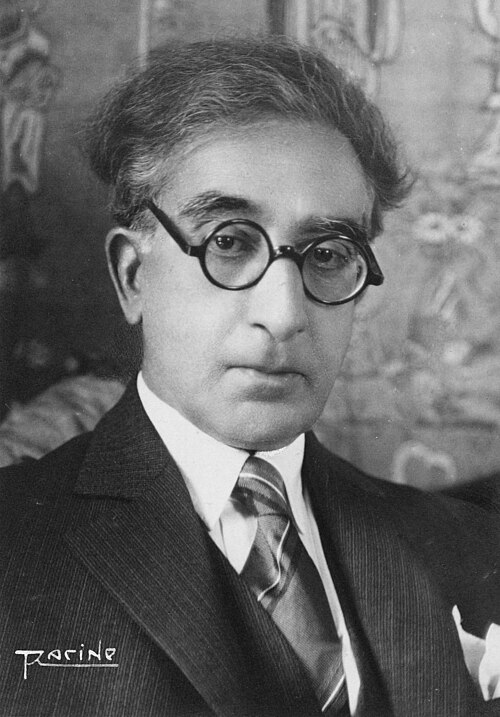
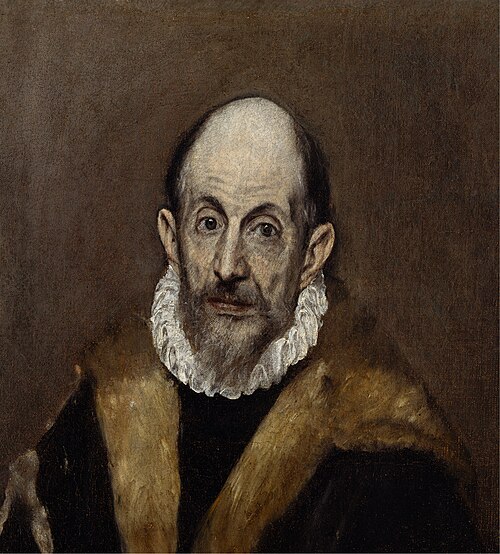
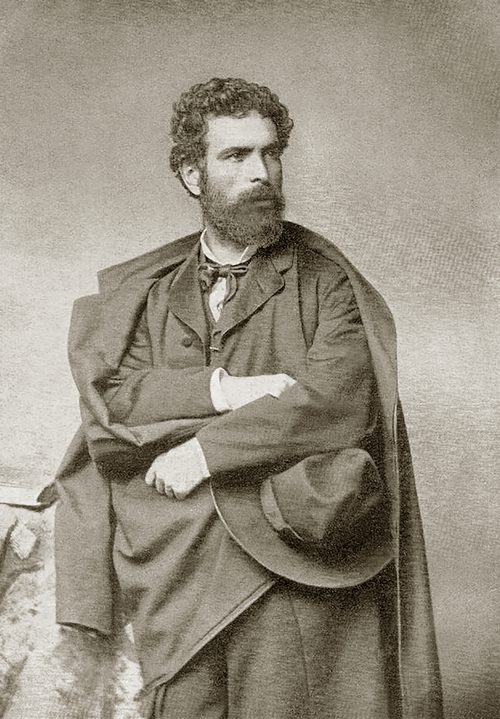
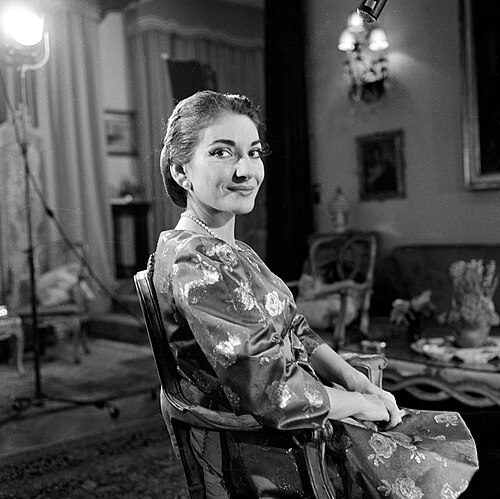
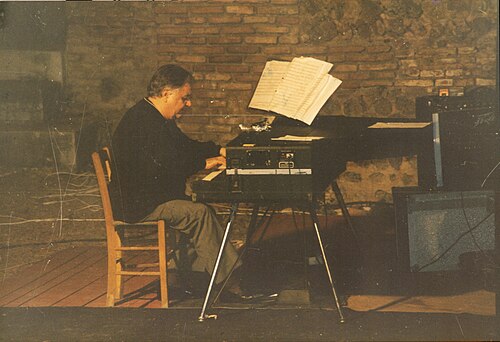
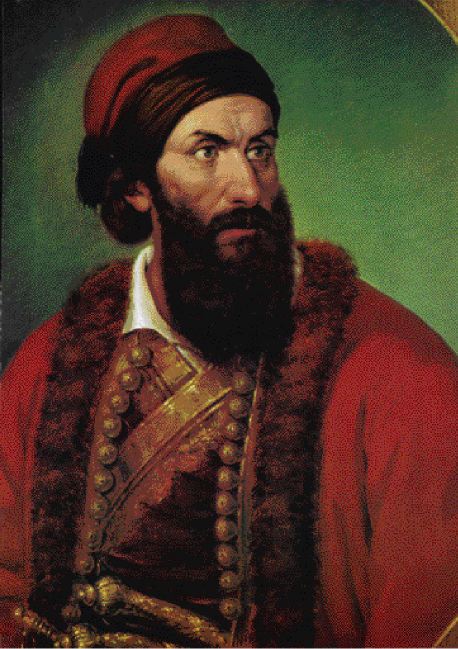
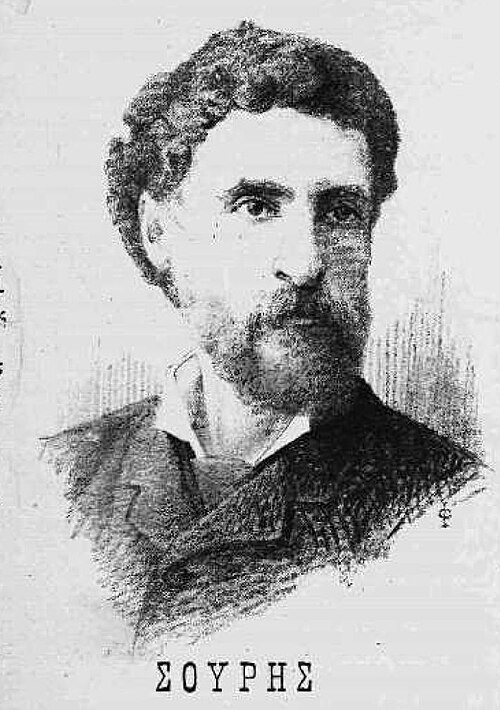
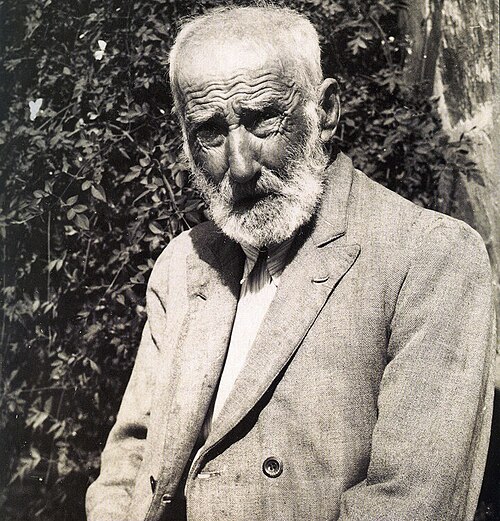
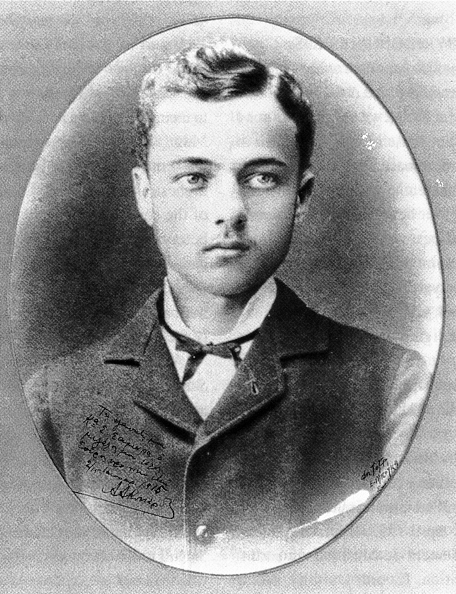
Public-domain pictures from Wikimedia Commons.
A line to remember
Όταν δεν ζωγραφίζω, είμαι δυστυχής.
Otan den zografizo, eimai dystychis.
When I am not painting, I am unhappy.