Life
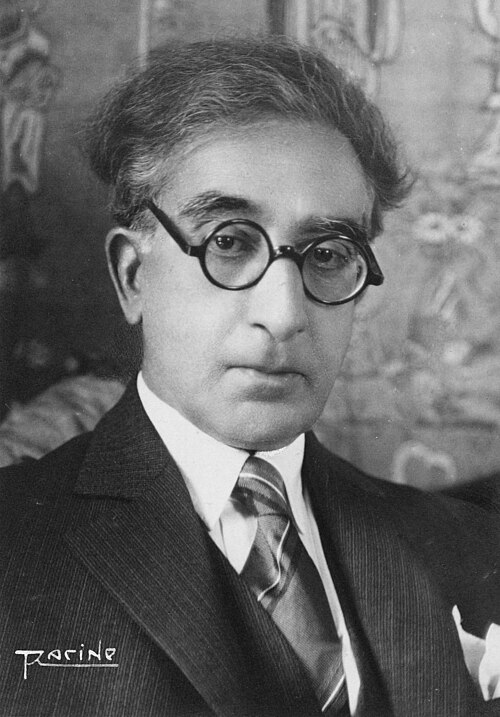
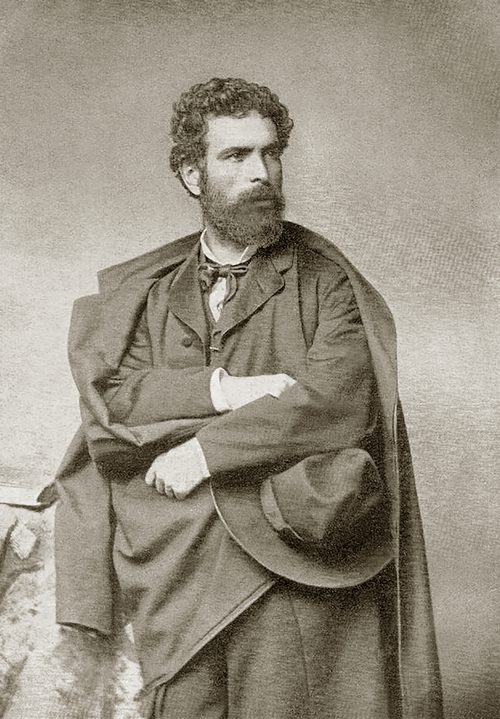
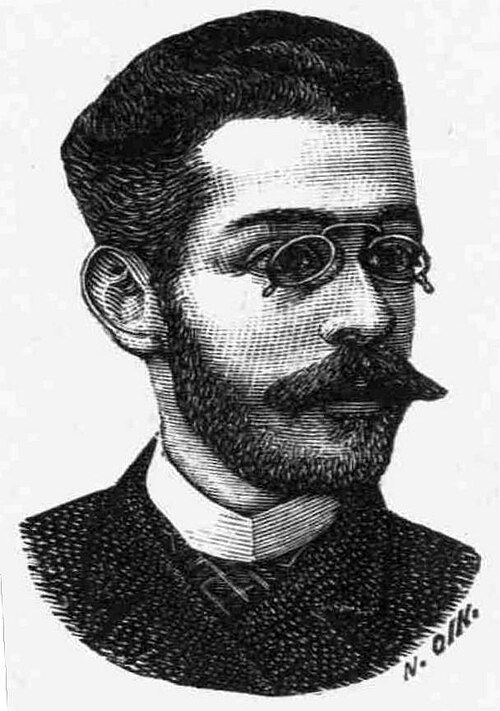
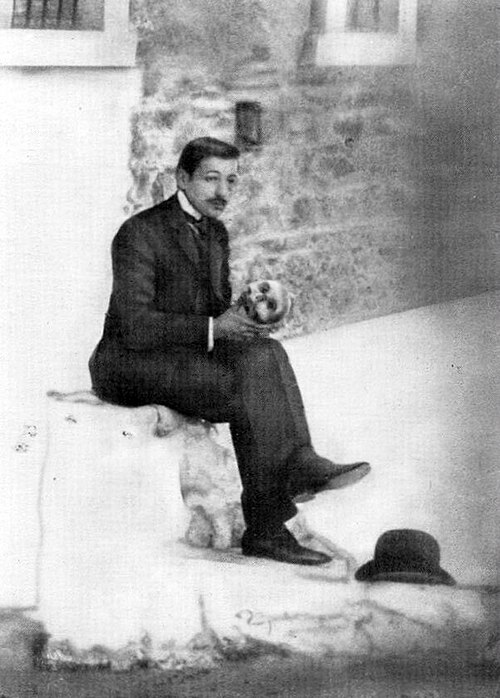
Papanikolaou was born on 13 May 1883 in Kymi, a small port on the island of Euboea, the son of a doctor who was also the town's mayor. He studied medicine at the University of Athens, graduating in 1904, but he did not want to be a country doctor like his father; he went to Germany to study biology and took a doctorate in zoology at Munich in 1910. That year he married Andromachi Mavrogeni, known as Mary, who would be his companion and collaborator for fifty-two years. He worked briefly as a physiologist on the oceanographic expedition of Prince Albert of Monaco, served as a medical officer in the Balkan Wars, and in October 1913 the couple sailed for New York with almost no money.
Their first months in America are a famous story: he sold carpets at Gimbels department store and played the violin in restaurants, while Mary sewed buttons. In 1914 he found a post in the anatomy department of Cornell University Medical College and at New York Hospital, and he stayed there for forty-seven years, with Mary as his technician and, every day, his experimental subject. Only in 1961 did he leave, to direct a new cancer research institute in Miami that was named after him. He died there of a heart attack on 19 February 1962, a few months after arriving.
Works

Papanikolaou's method grew out of basic research. In 1917, studying the reproductive cycle of guinea pigs, he showed that the cells in a vaginal smear change with the stages of the cycle, so that the cycle could be read under a microscope without harming the animal. He then applied the same technique to women, with Mary as his first subject, and in 1923 he noticed something unexpected: in a smear from a woman with cancer of the cervix, the abnormal cancer cells were clearly visible. He reported the finding in 1928 under the title «New Cancer Diagnosis», and almost nobody took notice; doctors trusted biopsies and saw no need for a smear.
He went back to the microscope. From 1939 he worked with the gynaecologist Herbert Traut, examining thousands of women at New York Hospital, and their 1941 paper and the 1943 monograph Diagnosis of Uterine Cancer by the Vaginal Smear finally convinced the profession. The crucial point was that the smear showed cancer, and even pre-cancerous changes, long before any symptoms, when the disease could still be cured. In the 1950s mass screening programmes began, and the death rate from cervical cancer fell dramatically wherever the Pap test was used. His Atlas of Exfoliative Cytology (1954) extended the method to other organs and founded a whole discipline, cytopathology. He received the Lasker Award in 1950 and was nominated for the Nobel Prize several times without receiving it.
Legacy in Greece today
In Greece Papanikolaou is a national hero of science. His portrait was on the 10,000-drachma banknote of 1995, the largest note in circulation before the euro, with the healing god Asklepios on the back. The general hospital of Thessaloniki is named «Παπανικολάου», as are streets, schools and medical societies across the country, and the Hellenic Cancer Society campaigns every year under his name for women to have their smear. In Kymi, his birthplace, the Folklore Museum devotes a room to him and there is a monument in his honour. The United States put him on a postage stamp in 1978. For a learner the useful phrase is simply «τεστ Παπ» (also «τεστ Παπανικολάου»), which every Greek woman knows, and the story of the carpet salesman who saved millions of lives.
Did you know?
- In his first months in New York he sold carpets in a department store and played the violin in restaurants to survive.
- His wife Mary was his laboratory assistant and his daily experimental subject for decades; the first human smears he studied were hers.
- His 1928 announcement of the test was ignored for more than ten years before the medical profession accepted it.
- He appeared on a United States postage stamp in 1978 and on the Greek 10,000-drachma note in 1995.
Key works
| Greek title | Title | Year |
|---|---|---|
| Το κολπικό επίχρισμα στο ινδικό χοιρίδιο | The vaginal smear in the guinea pig (with Charles Stockard) | 1917 |
| «Νέα διάγνωση του καρκίνου» | «New Cancer Diagnosis», first announcement of the test | 1928 |
| Η διάγνωση του καρκίνου της μήτρας με το κολπικό επίχρισμα | Diagnosis of Uterine Cancer by the Vaginal Smear (with Herbert Traut) | 1943 |
| Το τεστ Παπ | The Pap test, adopted for mass screening | 1950s |
| Άτλας αποφολιδωτικής κυτταρολογίας | Atlas of Exfoliative Cytology | 1954 |
From the works


Public-domain pictures from Wikimedia Commons.
A line to remember
Η πρώτη παρατήρηση καρκινικών κυττάρων σε επίχρισμα του τραχήλου της μήτρας μού χάρισε μία από τις μεγαλύτερες συγκινήσεις της επιστημονικής μου ζωής.
I proti paratirisi karkinikon kyttaron se epichrisma tou trachilou tis mitras mou charise mia apo tis megalyteres synkiniseis tis epistimonikis mou zois.
The first observation of cancer cells in a smear of the uterine cervix gave me one of the greatest thrills of my scientific life.