Life
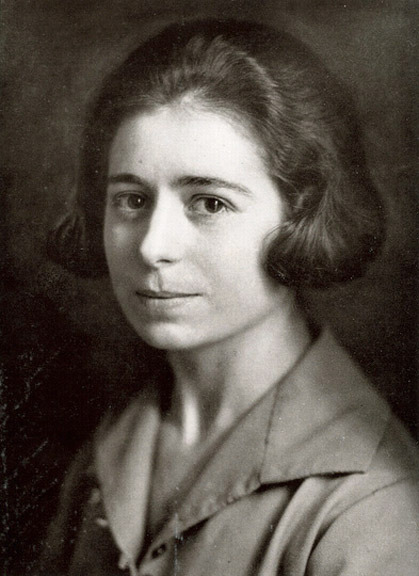
Elli Souyioultzoglou was born in 1899 in Aydın, a town in western Asia Minor with a large Greek community. Her family was well off, and in the early 1920s she went to Dresden in Germany to study painting and then photography, which was then becoming a modern art. While she was abroad, the Asia Minor Catastrophe of 1922 put an end to Greek life in her home region; her family, like many others, came to Greece as refugees.
In 1924 she settled in Athens and soon opened her own studio, signing her work with the name Nelly's, from Nelly, a pet form of Elli. She was a young woman running her own business, which was rare at the time, and she quickly became the photographer that Athenian society, artists and dancers wanted. She married the pianist Angelos Seraidaris. Through the 1930s she travelled all over Greece, from the islands to the mountain villages, and her photographs were used by the Greek state on posters and in publications to attract tourists.
In 1939 she went to New York to prepare the large photographic murals of the Greek pavilion at the World's Fair. The Second World War broke out and she stayed in the United States, working as a photographer there for more than twenty-five years. She returned to Greece only in 1966. In 1985 she gave her archive and her cameras to the Benaki Museum in Athens, and she died in 1998, aged almost one hundred.
Works

Nelly's photographed people and places, but her great subject was Greece itself, old and new. Her most famous pictures are those of the Acropolis. In 1927 she photographed the dancer Mona Paeva moving among the columns of the Parthenon in a light, almost transparent dress; the images were admired abroad and caused a scandal in Athens, where many thought the sacred monument should not be used in this way. She also photographed the Delphic Festivals organised by the poet Angelos Sikelianos and his wife Eva Palmer, with actors in ancient costumes in the theatre of Delphi.
Her photographs of the Greek countryside, shepherds, women at the well, fishermen, island churches, are carefully composed, with strong light and deep shadows. In some famous pairs she placed the face of a modern villager beside an ancient statue, to suggest that the Greeks of her day were the direct descendants of the ancients. That idea suited the ideology of the time, and historians today discuss it critically, but the pictures themselves remain beautiful.
Her work for tourism posters and for the World's Fair of 1939 made her images known around the world. Long before Instagram, Nelly's decided what a picture of Greece should look like: sun, marble, blue sky and dignified people, a vision that still lives in postcards and advertisements.
Legacy in Greece today
The archive of Nelly's, tens of thousands of negatives and prints, is kept at the Benaki Museum in Athens, which has organised exhibitions of her work and published books about her. Her photographs of the Parthenon dancers and of Greek villages appear again and again in books, magazines and documentaries about the 1920s and 1930s. When you look at a classic tourist poster of Greece, with columns against a blue sky, you are seeing a way of looking that she helped to invent. A learner can find her pictures online, choose one and describe it in Greek: who is in the photograph, where they are, what they are doing. It is a simple exercise and a good way to meet the Greece of a hundred years ago.
Did you know?
- Her professional name, Nelly's, comes from Nelly, a pet form of her first name Elli.
- Her 1927 photographs of a dancer on the Parthenon shocked many Athenians.
- She went to New York for the 1939 World's Fair and did not return to Greece until 1966.
- She lived to be almost one hundred years old.
Key works
| Greek title | Title | Year |
|---|---|---|
| Φωτογραφείο στην Αθήνα | Her own photographic studio in Athens | 1920s |
| Η Μόνα Παέβα στον Παρθενώνα | The dancer Mona Paeva on the Parthenon | 1927 |
| Οι Δελφικές Εορτές | Photographs of the Delphic Festivals | 1927–1930 |
| Τουριστικές αφίσες για την Ελλάδα | Tourism posters of Greece | 1930s |
| Το ελληνικό περίπτερο στην Παγκόσμια Έκθεση της Νέας Υόρκης | Photomurals for the Greek pavilion at the New York World's Fair | 1939 |
A line to remember
Η Μόνα Παέβα στον Παρθενώνα
I Mona Paeva ston Parthenona
Mona Paeva on the Parthenon