Life
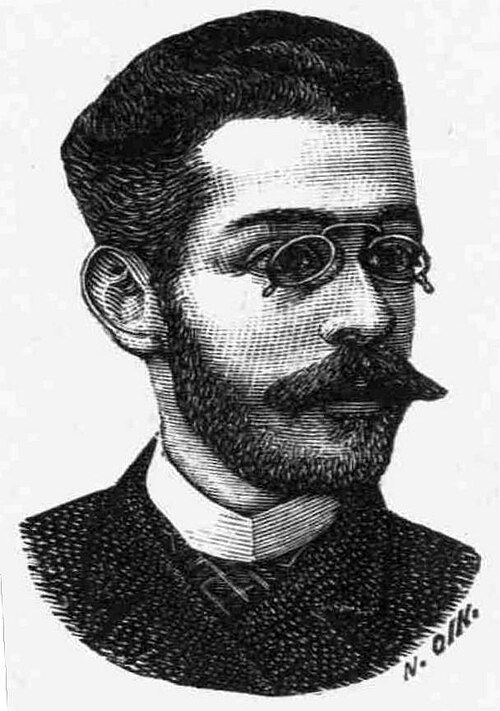
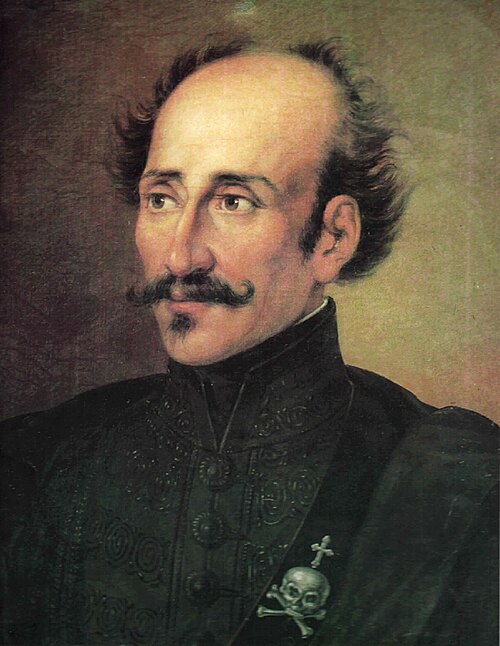
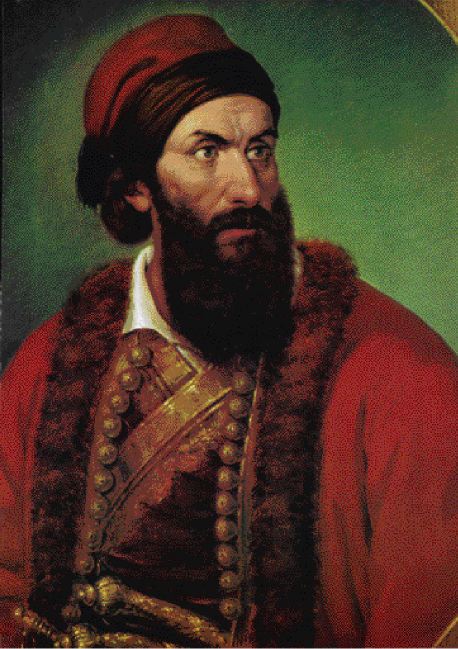
Georgios Flessas, later Grigorios Dikaios, was born around 1788 in the village of Poliani in Messinia, in the south-west Peloponnese. He studied at the famous school of Dimitsana and became a monk, taking the name Grigorios; the nickname Παπαφλέσσας simply means «Father Flessas». Proud and quarrelsome, he soon clashed with both the Ottoman authorities and his church superiors and had to leave the Peloponnese for Constantinople.
There, around 1818, he was initiated into the Φιλική Εταιρεία (Filiki Etaireia, the «Society of Friends»), the secret society preparing the revolution, and the Patriarchate made him an archimandrite. Sent back to the Peloponnese, he went from village to monastery recruiting fighters and collecting money. At the meeting of Peloponnesian notables and bishops at Vostitsa (today Aigio) in January 1821, when many wanted to wait, he insisted that the uprising should begin at once, promising support that did not really exist. On 23 March 1821 he was with Theodoros Kolokotronis and Petros Mavromichalis when the Greeks entered Kalamata.
In the free Greek state he served as minister of the interior and police, and in the civil strife of 1824 he sided with the government against Kolokotronis. When Ibrahim Pasha landed in Messinia with his Egyptian army in 1825, Papaflessas asked to fight. With a few thousand men he took position on the hill of Maniaki, and there, on 20 May 1825 (1 June in today's calendar), he and almost all his men were killed.
Works

Papaflessas did not write books or win long campaigns; his achievement was to make things happen. In the years before 1821 he was one of the Etaireia's most effective agents in the Peloponnese, a persuasive preacher who could talk a village into joining a conspiracy. At Vostitsa his impatience, and his exaggerated promises of Russian help, helped to push hesitant notables towards an uprising that began only weeks later.
As a politician he was energetic, ambitious and controversial, admired by some, distrusted by others, and he took a hard line in the quarrels between the Greek leaders. But it is Μανιάκι (Maniaki) that made him a legend. In spring 1825 Ibrahim's disciplined army was advancing through Messinia, and many Greek bands avoided open battle. Papaflessas, then a government minister, chose to stand and fight. Outnumbered several times over, his men held the position for hours before being overwhelmed.
According to Fotakos, a veteran of the war who wrote his biography, Ibrahim had the priest's body propped upright against a tree and paid tribute to his courage. Whether or not every detail is true, the story captures how Greeks see the battle: a defeat that became a moral victory, proof that the revolution would not simply give in. In Greek memory Papaflessas stands beside Athanasios Diakos and the bishop Germanos of Patras as one of the clergymen of 1821.
Legacy in Greece today
Every Greek child meets Papaflessas in the history lessons and school plays around 25 March, Independence Day. The 1971 film Παπαφλέσσας, with Dimitris Papamichail in the title role, is still shown on television on national holidays and is an easy way to see the story. At Maniaki, near Gargalianoi in Messinia, the battle is commemorated every year in late May. Kalamata, the first town freed in 1821, celebrates 23 March every year, and streets named Παπαφλέσσα exist in almost every Greek town. If you visit Messinia, combine Kalamata with Maniaki.
Did you know?
- «Παπαφλέσσας» is a nickname: «παπα-» means «Father» (a priest) and Flessas was his family name.
- He was a government minister when he chose to fight Ibrahim in person at Maniaki.
- At the Vostitsa meeting of January 1821 he was the loudest voice for an immediate uprising.
- Greeks still date the battle 20 May 1825, in the old Julian calendar.
Key works
| Greek title | Title | Year |
|---|---|---|
| Μύηση στη Φιλική Εταιρεία | Initiation into the Filiki Etaireia | c. 1818 |
| Η συνέλευση της Βοστίτσας | The Vostitsa meeting | 1821 |
| Η απελευθέρωση της Καλαμάτας | The liberation of Kalamata | 1821 |
| Υπουργός Εσωτερικών | Minister of the Interior | 1823–1825 |
| Η μάχη στο Μανιάκι | The Battle of Maniaki | 1825 |
From the works


Public-domain pictures from Wikimedia Commons.
A line to remember
Πράγματι αυτός ήτο ικανός και γενναίος άνθρωπος. Καλύτερα να επαθαίναμεν άλλην τόσην ζημίαν, αλλά να τον επιάναμεν ζωντανόν.
In today's GreekΠράγματι, αυτός ήταν ικανός και γενναίος άνθρωπος. Καλύτερα να παθαίναμε άλλη τόση ζημιά, αλλά να τον πιάναμε ζωντανό.
Pragmati aftos ito ikanos kai gennaios anthropos. Kalytera na epathainamen allin tosin zimian, alla na ton epianamen zontanon.
Truly, this was a capable and brave man. Better we had suffered as much loss again, and taken him alive.