Life
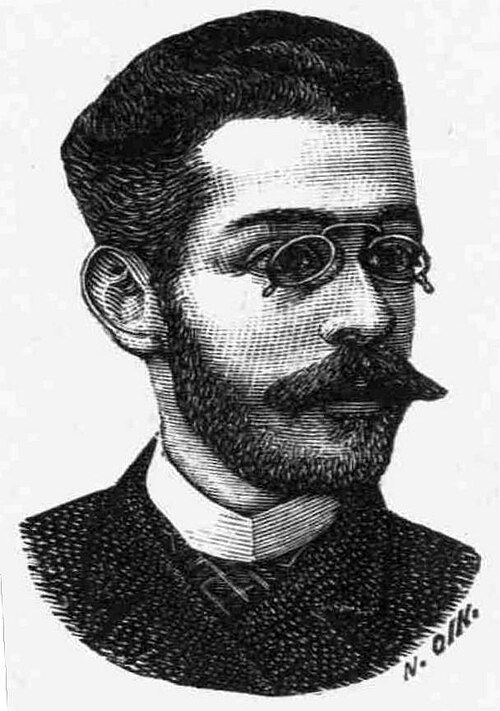
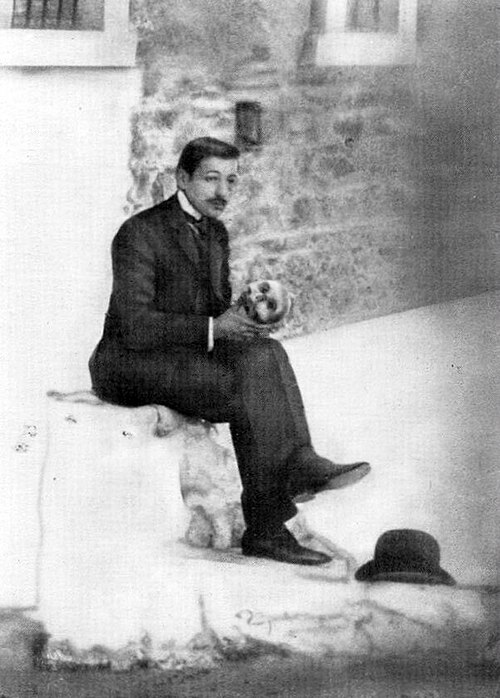
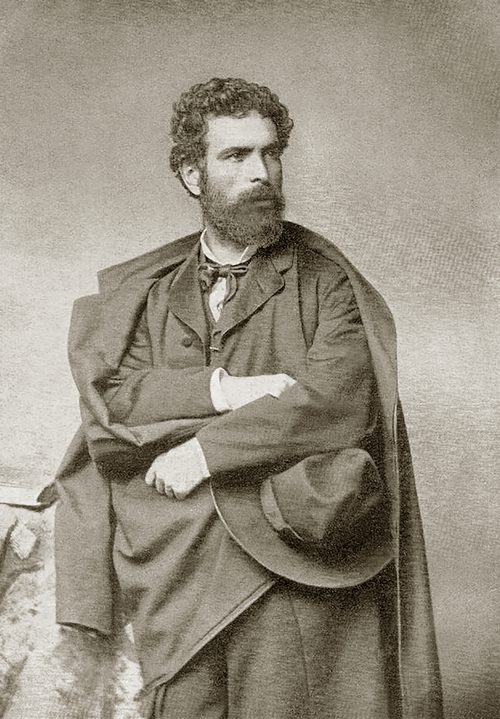
Gyzis was born on 1 March 1842 in Sklavochori on Tinos, the island of marble-carvers that also gave Greece Nikiforos Lytras and the sculptor Giannoulis Chalepas. In 1850 the family moved to Athens, where the boy was admitted to the School of Arts (Σχολείο των Τεχνών) and studied for more than a decade. In 1865 a scholarship from the Foundation of the Evangelistria, the great pilgrimage church of Tinos, sent him to the Academy of Fine Arts in Munich. He entered the studio of Karl von Piloty, as Lytras had done, and found the city that would be his home for the rest of his life.
He came back to Greece in 1872 and spent two years painting in Athens and travelling; in 1873 he and Lytras toured Smyrna and Asia Minor together, filling sketchbooks with scenes of eastern life. But in 1874 he returned to Munich for good. In 1877 he married Artemis Nazou, with whom he had five children. In 1882 the Munich Academy made him an honorary professor and in 1888 a full professor, a rare honour for a foreigner, and his studio became a meeting place for the Greek painters who came to study there.
In his last years his work turned mystical and religious, full of light and angels. He died in Munich on 4 January 1901, aged fifty-eight, leaving his last great canvas, Ιδού ο Νυμφίος έρχεται (Behold the Bridegroom Comes), unfinished.
Works

Gyzis began as a genre painter of Greek and oriental life, in the dark, polished Munich manner. Τα αρραβωνιάσματα των παιδιών (The Betrothal of the Children, 1877) shows a village ceremony in which two small children are promised to each other while the adults look on; it is one of the most loved paintings in the National Gallery in Athens. Το κρυφό σχολειό (The Secret School, 1885–86) shows an old monk teaching a group of children by the light of a candle, and became the image of a Greek legend: that under Ottoman rule priests taught Greek to children secretly at night. Historians doubt the legend, but the painting, and the children's rhyme «Φεγγαράκι μου λαμπρό» that is attached to it, are known to every Greek.
In Munich he also painted allegories and decorative work, such as Η τέχνη και τα πνεύματά της (Art and Its Spirits, c. 1876), and later, as his style grew looser and more luminous, visionary pictures of angels and light. Η Δόξα των Ψαρών (The Glory of Psara, c. 1898) turns the destruction of the island in 1824 into a winged figure rising over the ruins, and Ιδού ο Νυμφίος έρχεται (1899–1900) is a blaze of gold and figures that he did not live to finish. In 1896 he designed the commemorative diploma given to the winners of the first modern Olympic Games in Athens. Gyzis was a painter of mood and light more than of story, and the sketches and studies he left are often as prized as the finished canvases.
Legacy in Greece today
Το κρυφό σχολειό is the Gyzis everyone knows: it hung in schoolrooms for a century, it was printed on the back of the 200-drachma note of 1996, beside Rigas Feraios, and it is reproduced every 25 March, Greek Independence Day. The National Gallery in Athens holds a large collection of his work, including Τα αρραβωνιάσματα των παιδιών and many studies, and the Museum of Tinian Artists in Tinos town shows him beside Lytras and Chalepas. The Athens district of Gkyzi (Γκύζη) is usually said to take its name from him, and streets named Γύζη exist across Greece. A learner can look at The Secret School and then read the rhyme «Φεγγαράκι μου λαμπρό, φέγγε μου να περπατώ, να πηγαίνω στο σχολειό» (Little bright moon, light my way so I can walk to school), which Greek children still learn.
Did you know?
- He lived in Munich for about thirty-five years and signed his German works «Gysis»; Greek and German museums both claim him.
- His scholarship to Munich came from the church of the Evangelistria on Tinos, the island's famous pilgrimage shrine.
- Το κρυφό σχολειό was reproduced on the 200-drachma banknote issued in 1996, one of the last drachma notes before the euro.
- He designed the diploma of the 1896 Athens Olympics, the first Games of the modern era.
Key works
| Greek title | Title | Year |
|---|---|---|
| Η τέχνη και τα πνεύματά της | Art and Its Spirits | c. 1876 |
| Τα αρραβωνιάσματα των παιδιών | The Betrothal of the Children | 1877 |
| Το κρυφό σχολειό | The Secret School | 1885–86 |
| Το δίπλωμα των Ολυμπιακών Αγώνων | The diploma of the Olympic Games | 1896 |
| Η Δόξα των Ψαρών | The Glory of Psara | c. 1898 |
| Ιδού ο Νυμφίος έρχεται | Behold the Bridegroom Comes | 1899–1900 |
From the works


Public-domain pictures from Wikimedia Commons.
A line to remember
Ἰδοὺ ὁ Νυμφίος ἔρχεται ἐν τῷ μέσῳ τῆς νυκτός
In today's GreekΝα, ο Νυμφίος έρχεται μέσα στη νύχτα
Idou o Nymfios erchetai en to meso tis nyktos
Behold, the Bridegroom comes in the middle of the night