Life
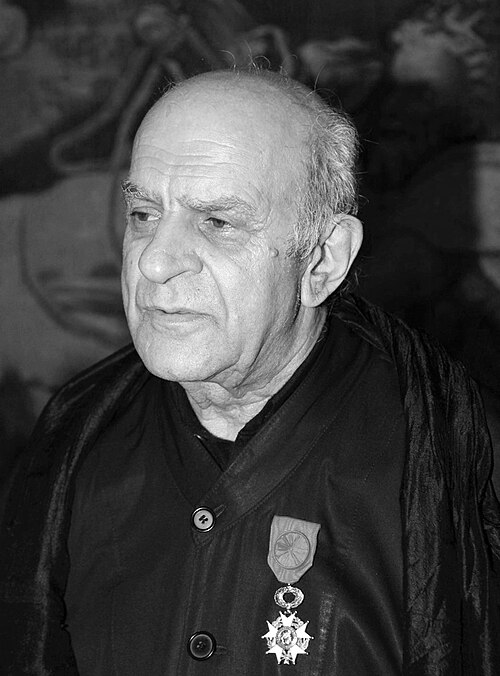
Mitropanos was born on 2 April 1948 in Trikala, the town of Thessaly that had already given Greece Vassilis Tsitsanis. His family was poor, and in 1964, at sixteen, he moved to Athens to live with an uncle, work and try his luck as a singer. Grigoris Bithikotsis sent him to the Columbia record company, where he met Giorgos Zambetas, whom he later called his great teacher. In 1966 a chance meeting with Mikis Theodorakis led him to sing parts of Ρωμιοσύνη and Το Άξιον Εστί in concerts, and in 1967 his first record came out, the song «Θεσσαλονίκη».
The military dictatorship of 1967 banned Theodorakis's music, and Mitropanos turned to the λαϊκό repertoire of the night clubs, the «πίστες» where Greeks went to hear live bouzouki music and singers. In the 1970s and 1980s he became one of the most popular singers in the country, recording with many leading composers and lyricists and singing night after night in Athens and Thessaloniki.
In 1996 he found a new audience, younger and more urban, through his album with the composer Thanos Mikroutsikos, Στου αιώνα την παράγκα, and he began to appear in big concert halls and open-air theatres as well as in clubs. He kept singing into the 2000s, admired by musicians of every style. He died in Marousi, Athens, on 17 April 2012, at sixty-four. His death was mourned across Greece, by fans of λαϊκό and by musicians of every style alike.
Works

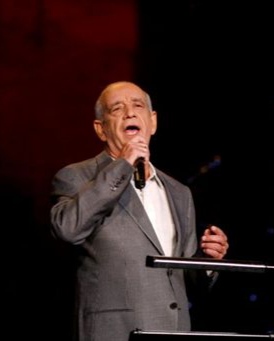
Mitropanos was a performer, not a composer: his art was the voice. It was a deep, dark baritone, rough at the edges and very steady, and he sang without tricks, standing almost still, letting the words carry the feeling. Greeks often describe his singing with the word «βαριά», heavy, in the sense of serious and full of weight, and a song in his voice sounds like a confession by a man who has lived.
His repertoire is classic λαϊκό: songs of love and loss, of leaving and coming home, of loneliness in the big city, of the sea and the emigrant's road. Among the best known are Άγιος Φεβρουάριος (Saint February, 1971), by Dimos Moutsis and Manos Eleftheriou, Σ' αναζητώ στη Σαλονίκη (I Look for You in Salonica), set in Thessaloniki, and Πάρε αποφάσεις (Make Up Your Mind, 1991), by Christos Nikolopoulos and Lefteris Papadopoulos. In 1996, with Thanos Mikroutsikos as composer and Alkis Alkaios as lyricist, he recorded Ρόζα (Roza), a song with a more modern, poetic text that won him a new generation of listeners and became one of his signatures.
He also sang the work of Theodorakis throughout his life, and his concerts mixed the old night-club songs with this more «artistic» repertoire, showing how thin the line between the two can be in Greek music.
Legacy in Greece today
Mitropanos is one of the voices Greeks name first when they talk about λαϊκό song, together with Stelios Kazantzidis and Grigoris Bithikotsis. His recordings are played constantly on Greek radio and in tavernas, and live singers still cover his songs every night. To meet him, listen to «Ρόζα» and «Σ' αναζητώ στη Σαλονίκη»: the language is simple, the singing slow and clear. In Trikala he is remembered with pride as the town's second great musician after Tsitsanis, and the two names are often spoken together. His songs are in copyright, so look for the original recordings.
Did you know?
- He was born in Trikala, the same town as the composer Vassilis Tsitsanis.
- His first record, the song «Θεσσαλονίκη», came out in 1967, when he was nineteen.
- He was a singer, not a songwriter: his fame rests entirely on his voice and his choice of songs.
- His 1996 album with Thanos Mikroutsikos brought him a young audience thirty years into his career.
Key works
| Greek title | Title | Year |
|---|---|---|
| Θεσσαλονίκη | Thessaloniki (his first record) | 1967 |
| Άγιος Φεβρουάριος | Saint February (song, music Dimos Moutsis, lyrics Manos Eleftheriou) | 1971 |
| Σ' αναζητώ στη Σαλονίκη | I Look for You in Salonica (song) | |
| Πάρε αποφάσεις | Make Up Your Mind (song, music Christos Nikolopoulos, lyrics Lefteris Papadopoulos) | 1991 |
| Ρόζα | Roza (song, music Thanos Mikroutsikos, lyrics Alkis Alkaios) | 1996 |
A line to remember
Ρόζα
Roza
Rosa