Life
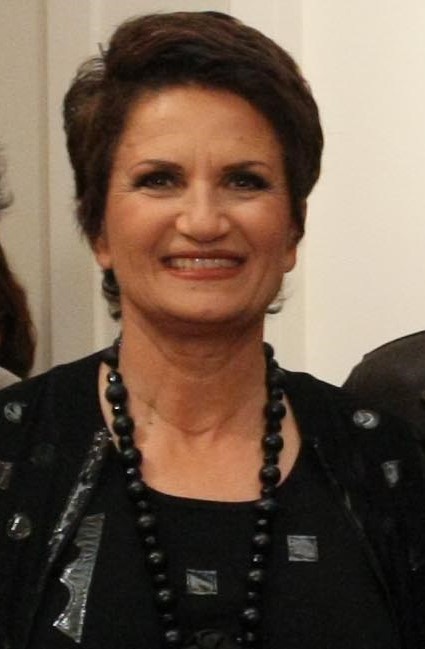
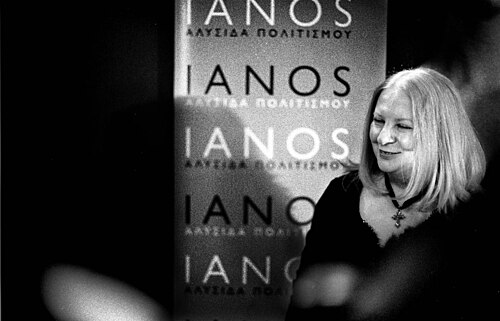
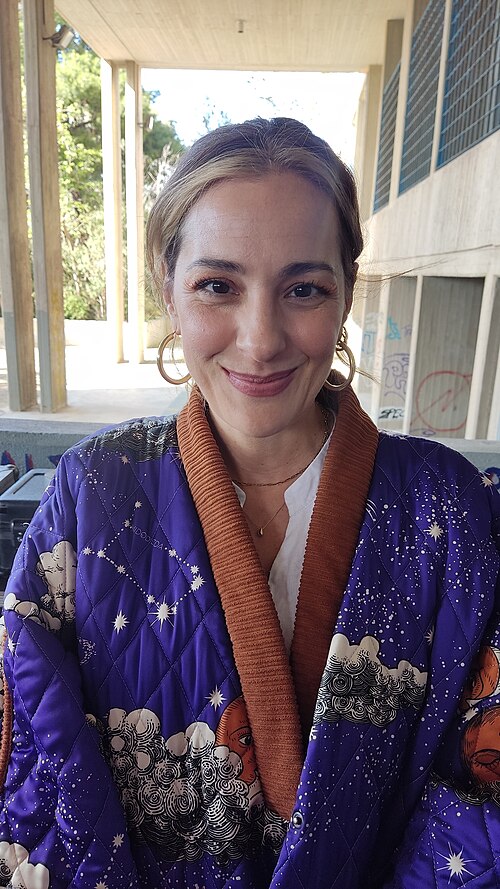
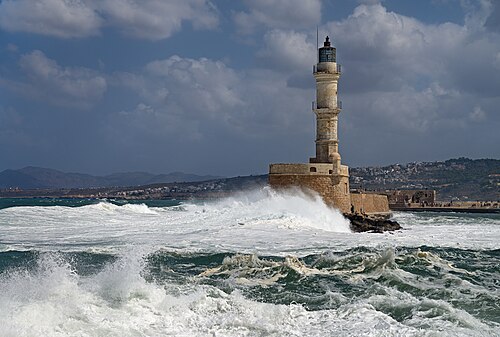
Maro Douka was born in Chania, Crete, in 1947 and moved to Athens in 1966. Both cities remain important to her literary imagination: one holds the streets and voices of childhood, while the other offers the changing life of the capital. She began publishing books in 1974 with Η πηγάδα (The Well). Her first novel, Η αρχαία σκουριά (Ancient Rust), followed in 1979. It placed a woman’s personal recollection alongside the political experiences of a generation shaped by dictatorship, resistance and disappointed expectations. The narrator is a fictional character, even when the historical pressures belong to the writer’s own time.
Douka has continued to work across novels, novellas and short stories, moving between intimate relationships and collective history. In a 2022 interview she described writing as a way of life, including long periods of thinking and preparing before sentences reach the page. She also explained how Crete colours her language, even when she is not writing explicitly in Cretan dialect. Her career received the Grand State Prize for Literature for 2019, awarded for her overall contribution to letters. The distinction recognises an extended body of work whose individual voices resist reducing political experience or family life to a single, uncomplicated version.
Works

Η αρχαία σκουριά (Ancient Rust) gives political history a personal, questioning voice rather than a smooth public account. Η πλωτή πόλη (The Floating City, 1983) turns towards a love affair and its unequal emotional positions. Its figurative title accompanies a story of relationships, desire and memory across different places. Αθώοι και φταίχτες (Innocent and Guilty, 2004) returns to Chania, where contemporary encounters bring the city’s different historical layers into view. Reading these books together shows how Douka changes narrative scale without abandoning the complicated lives of individuals.
Πύλη εισόδου (Entrance Gateway, 2019) uses a woman’s monologue to move through present and remembered Athens. The publisher’s description also connects its gateway to cyberspace and uses the Greek viewpoint words εδώ and εκεί. Να είχα, λέει, μια τρομπέτα (If Only I Had a Trumpet, 2022) follows a woman’s movement through squares and neighbourhoods. Φελιτσιτά (Felicità, 2023) places a homeless man beside conflicting family accounts; his own violence is part of the family’s rupture. These are demanding novels. For an A2 reader, the title Πύλη εισόδου provides a smaller starting point: describe an entrance and an exit in your own drawing, then practise locating them from a speaker’s position.
Legacy in Greece today
Douka’s contribution lies in making public history answerable to particular voices: a woman remembering, a lover speaking, a family disagreeing. Her books let a city hold several experiences at once. To connect this writing with everyday Greek, open the Patakis presentation of Πύλη εισόδου (Entrance Gateway) and find εδώ (here) and εκεί (there). Draw a house and courtyard with a separate entrance and exit. Stand your imagined speaker near the entrance and say Η είσοδος είναι εδώ (The entrance is here). Point farther away and say Η έξοδος είναι εκεί (The exit is there). Let a partner choose another position and describe the same drawing. You practise useful spatial language while recognising that the full novel requires more advanced reading.
Did you know?
- Η πηγάδα (The Well, 1974) preceded her first novel by five years.
- The Grand State Prize for Literature for 2019 honoured her overall contribution.
- In her 2022 interview, she explained that Crete colours her language even beyond explicit dialect.
Key works
| Greek title | Title | Year |
|---|---|---|
| Η αρχαία σκουριά | Ancient Rust | 1979 |
| Η πλωτή πόλη | The Floating City | 1983 |
| Αθώοι και φταίχτες | Innocent and Guilty | 2004 |
| Πύλη εισόδου | Entrance Gateway | 2019 |
| Να είχα, λέει, μια τρομπέτα | If Only I Had a Trumpet | 2022 |
| Φελιτσιτά | Felicità (Happiness) | 2023 |
A line to remember
να δω και να αποτυπώσω την εποχή μου.
na do ke na apotipóso tin epochí mou.
to see and capture my time.