Life
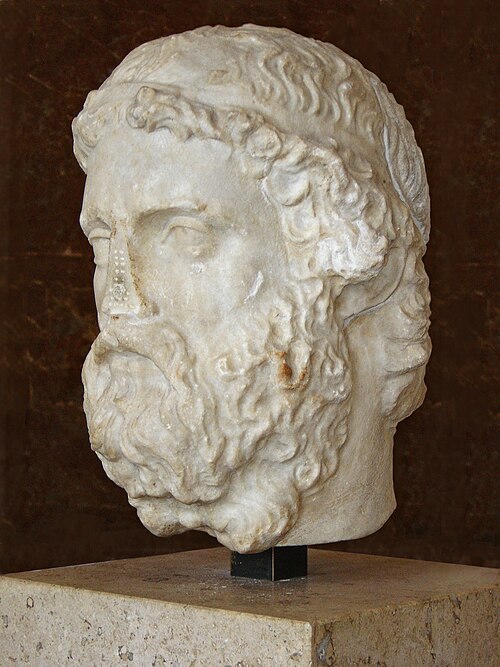
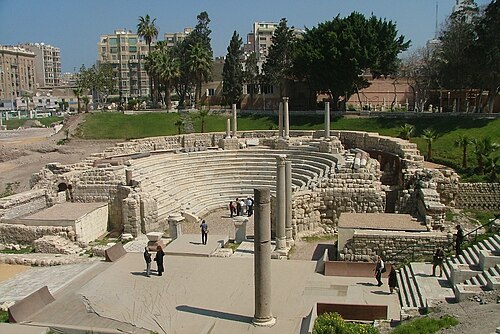
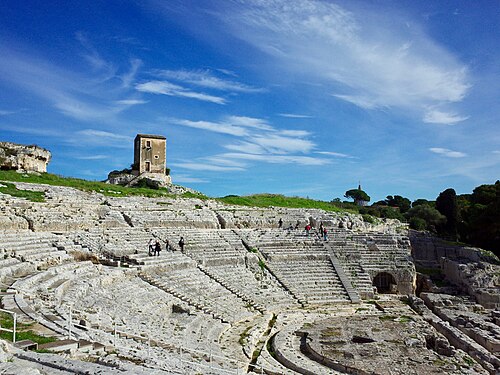
Theocritus came from Syracuse, a Greek city in Sicily with a strong tradition of comic and mimetic performance. He was active in the first half of the third century BCE; exact birth and death dates cannot be securely recovered. His poetry belongs to the Hellenistic world, when Greek literary culture connected Sicily, the Aegean islands and Egypt. Ancient biographical traditions and the poems associate him with Kos and Alexandria, although a poem’s setting does not by itself prove where its author lived. His writing includes praise of Ptolemy II and an address to Hieron of Syracuse, revealing how poets negotiated recognition and support from rulers.
His surviving work offers constructed voices rather than a continuous autobiography. In Θαλύσια (Harvest Festival), the narrator Simichidas walks through a landscape on Kos and meets the goatherd Lycidas. Their encounter stages an exchange of songs before a rural celebration. Scholars explore the narrator’s relationship to the poet, but the episode should not become a literal diary entry. The broader collection likewise combines shepherds, mythic figures and city dwellers. Its transmission under Theocritus’s name includes poems that modern scholarship considers inauthentic. Recognising this mixed collection helps separate the historical poet from the much wider pastoral tradition that gathered around him.
Works

The Idylls are short poems with strikingly different settings and speakers. Θύρσις ἢ Ὠιδή (Thyrsis, or the Song), Idyll 1, makes a song about Daphnis central to an encounter between rural singers. Θαλύσια (Harvest Festival), Idyll 7, sets an exchange of songs within a journey and a celebration of Demeter. Συρακόσιαι ἢ Ἀδωνιάζουσαι (Syracusan Women, or Women at the Adonis Festival), Idyll 15, instead follows two women through Alexandria to a royal festival. These urban voices show why the collection cannot be reduced to peaceful countryside scenes.
Theocritus writes crafted verse, often in literary Doric and the hexameter associated with epic. Everyday gestures and conversation coexist with mythology and learned allusion. His shepherds belong to an artistic world, rather than to a documentary transcript of rural speech. In Idyll 7, the final landscape appeals to hearing, smell and sight: insects and birds sound, summer ripeness fills the air, and pears and apples lie abundantly nearby. Our short quotation comes from line 143. The next lines inspire a separate Modern Greek task: ένα μήλο / δύο μήλα (one apple / two apples), ένα αχλάδι / δύο αχλάδια (one pear / two pears). These are contemporary forms, not claims that the ancient fruit words or dialect are A2 Greek.
Legacy in Greece today
The Centre for the Greek Language presents Theocritus through its ancient literature anthology and Hellenistic literature guide, making the difference between rural and urban Idylls visible to readers today. For a small practical exercise, find the final landscape of Θαλύσια, Idyll 7, lines 135–147, with a translation. Notice the pears and apples in lines 144–145. Then use real fruit or a drawing: label one apple ένα μήλο and two apples δύο μήλα; do the same with ένα αχλάδι / δύο αχλάδια. Ask a partner Πόσα μήλα έχεις; (How many apples do you have?). The task transfers the poem’s abundant fruit into useful Modern Greek counting, while the ancient Doric remains a separate supported reading.
Did you know?
- The Idylls include city scenes as well as shepherds.
- Idyll 7 celebrates Demeter, the goddess of grain and harvest.
- Some poems transmitted under his name are considered inauthentic.
Key works
| Greek title | Title | Year |
|---|---|---|
| Θύρσις ἢ Ὠιδή (Εἰδύλλιον 1) | Thyrsis, or the Song (Idyll 1) | Early 3rd century BCE |
| Θαλύσια (Εἰδύλλιον 7) | Harvest Festival (Idyll 7) | Early 3rd century BCE |
| Κύκλωψ (Εἰδύλλιον 11) | Cyclops (Idyll 11) | Early 3rd century BCE |
| Συρακόσιαι ἢ Ἀδωνιάζουσαι (Εἰδύλλιον 15) | Syracusan Women, or Women at the Adonis Festival (Idyll 15) | Early 3rd century BCE |
A line to remember
πάντʼ ὦσδεν θέρεος μάλα πίονος, ὦσδε δʼ ὀπώρας.
In today's GreekΌλα μύριζαν πλούσιο καλοκαίρι, μύριζαν την εποχή των ώριμων καρπών.
pánt’ ôsden théreos mála píonos, ôsde d’ opṓras.
Everything smelled of abundant summer, smelled of the season of ripe fruit.