Life
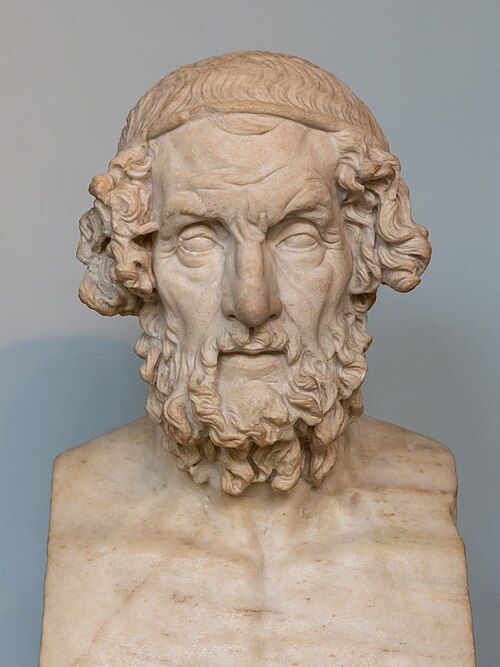
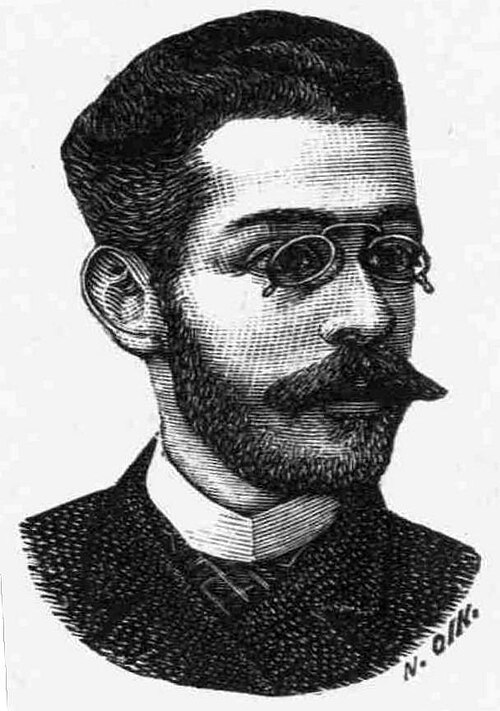
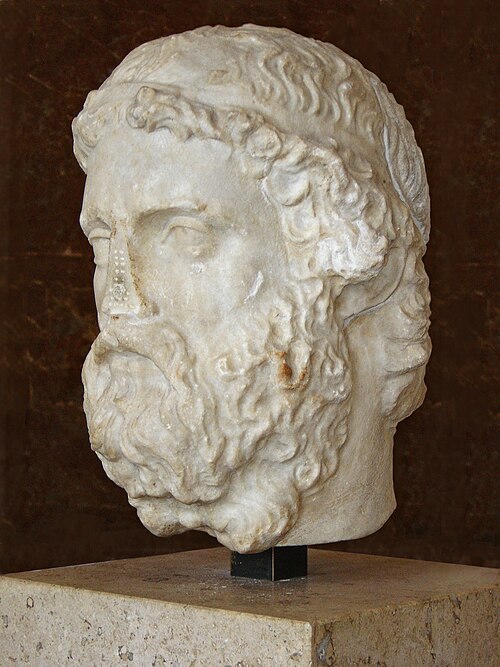
Apollonius of Rhodes, also called Apollonius Rhodius, worked in the Greek literary world of the third century BCE. Alexandria in Ptolemaic Egypt was central to that world: poetry, collecting books and studying older texts belonged to the same intellectual environment. Ancient accounts associate him with its royal library. The evidence for his career is scattered, however, and his birth and death cannot be fixed securely. The name Rhodius connects him with Rhodes, but does not establish an island birthplace. Accounts of a failed public reading, departure for Rhodes and a quarrel with Callimachus require caution rather than a seamless life story.
His lasting presence comes from the epic Αργοναυτικά (Argonautica), preserved in four books. He returned to the old myth of Jason’s expedition in the Argo and made it a sustained narrative shaped by reading and interpretation. Other poetry and scholarly writings survive only fragmentarily or through references. The complete epic therefore supplies a firmer starting point than colourful biographical anecdotes. It also reveals the breadth of his interests: voyages, local traditions, relationships between characters and the language inherited from Homer. The narrator’s attention to Medea’s anxious feelings belongs to the imagined story. It gives no direct account of the poet’s own romantic life.
Works

The epic Αργοναυτικά (Argonautica) follows the expedition for the Golden Fleece. Books I and II carry the company from their Greek departure to Colchis, across a sea full of encounters and obstacles. In Book III, Medea’s love for Jason and her help with the tasks imposed by King Aeetes become central. Book IV brings the seizure of the fleece, escape and a complicated return. These are four parts of one poem, presented below in narrative order. Their separate composition dates are unknown.
Apollonius writes in hexameters and a learned epic language shaped by Homer. He combines descriptions of places and traditions with close observation of hesitation, desire and fear. Medea’s waiting before she meets Jason is rendered through restless looking, sounds and bodily reactions. The quoted line describes the pair’s silence before conversation. Such scenes make emotional vulnerability part of an adventure usually remembered for heroic action. The return voyage also combines geography with myth; it is a literary itinerary, not a reliable modern sailing guide. Our A2 task therefore uses only a simplified outward arrow. The Modern Greek words από / προς (from / towards) describe its starting point and direction. They are newly supplied practice language, not a quotation from the ancient poem.
Legacy in Greece today
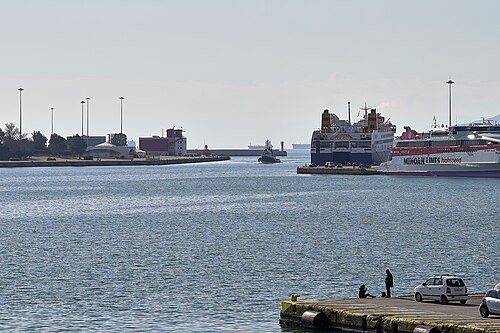
Open the Centre for the Greek Language’s account of the Argonautica’s four books and use its Modern Greek summary alongside the ancient text. Draw two dots for Iolcus and Colchis, joined by one outward arrow. Say Η Αργώ ταξιδεύει από την Ιωλκό προς την Κολχίδα (The Argo travels from Iolcus towards Colchis). Mark από (from) beside the departure and προς (towards) beside the arrowhead. Then make a present-day route with two places you know, keeping the same Greek pattern. Add Το πλοίο φεύγει από το λιμάνι (The ship leaves the harbour). This practises origin and direction in Modern Greek; the ancient hexameters remain supported reading with a rendering, not A2 conversational material.
Did you know?
- The four entries in the works table are books of a single epic, not four independent poems.
- The name Rhodius connects Apollonius with Rhodes, but does not securely establish his birthplace.
- The quoted silence belongs to the narrator’s description of Jason and Medea, not to a personal confession.
Key works
| Greek title | Title | Year |
|---|---|---|
| Ἀργοναυτικά, βιβλίο Α΄ | Argonautica I: departure and first encounters | 3rd c. BCE |
| Ἀργοναυτικά, βιβλίο Β΄ | Argonautica II: onward to Colchis | 3rd c. BCE |
| Ἀργοναυτικά, βιβλίο Γ΄ | Argonautica III: Medea and Jason’s tasks | 3rd c. BCE |
| Ἀργοναυτικά, βιβλίο Δ΄ | Argonautica IV: escape and return | 3rd c. BCE |
A line to remember
τὼ δ᾽ ἄνεῳ καὶ ἄναυδοι ἐφέστασαν ἀλλήλοισιν,
In today's GreekΟι δυο τους στέκονταν αντικριστά, σιωπηλοί και άφωνοι.
Tò d’ áneo kaì ánavdi eféstasan allíloisin.
The two stood facing each other, silent and speechless.