grecfacilegrecfacile
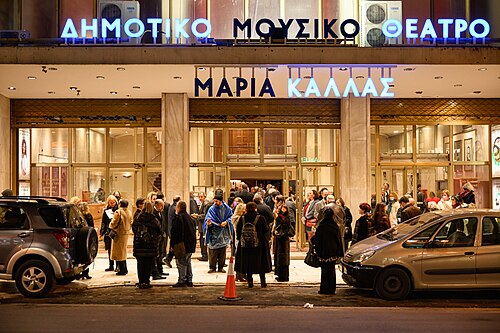
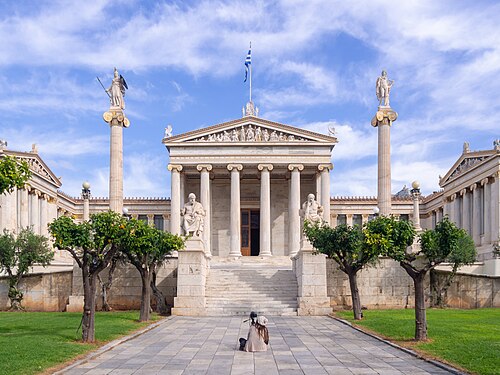
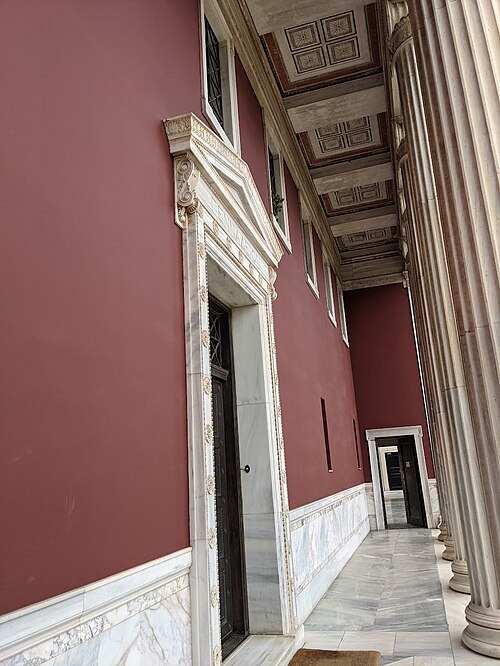
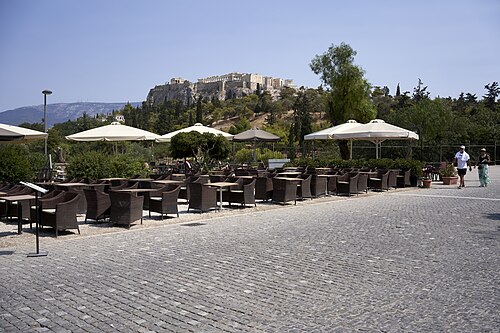
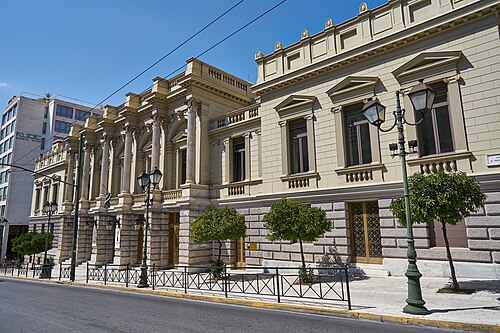
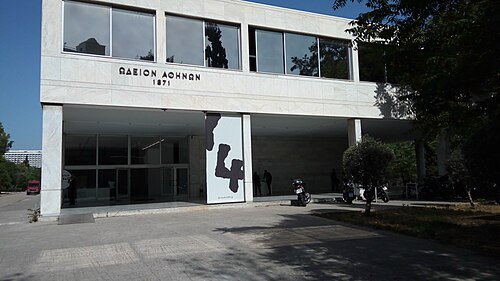
Το κτίριο του Εθνικού Θεάτρου στην οδό Αγίου Κωνσταντίνου στην Αθήνα, το 2020· εδώ βρίσκεται η κρατική σκηνή όπου εργάστηκε η Μαίρη Αρώνη. Σύγχρονη φωτογραφία του κτιρίου, όχι πορτρέτο της ηθοποιού.
Το κτίριο του Εθνικού Θεάτρου στην οδό Αγίου Κωνσταντίνου στην Αθήνα, το 2020· εδώ βρίσκεται η κρατική σκηνή όπου εργάστηκε η Μαίρη Αρώνη. Σύγχρονη φωτογραφία του κτιρίου, όχι πορτρέτο της ηθοποιού. · George E. Koronaios · CC0 · Wikimedia Commons

B2Modern Greece · Actress · acting teacher

Mary Aroni

Μαίρη Αρώνη

c. 1914 – 1992 · Athens

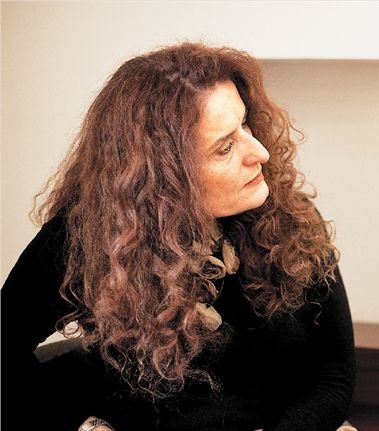
Mary Aroni was an Athenian stage actress whose career ran from the mid-1930s to the early 1980s, mostly at the National Theatre of Greece. Audiences remember her above all as Lysistrata in Alexis Solomos’s 1957 staging of Aristophanes, performed in a Modern Greek version. She also played major roles from European and American drama in Greek translation and taught acting to younger generations of Greek actors.

Life

Mary Aroni was born Maria Arvanitaki. The National Theatre archive dates her birth to 1914, while other reference works give December 1916, so the exact year remains uncertain. She studied acting and began her professional career in the mid-1930s; some biographies date her debut to 1935, in the company of Marika Kotopouli, the leading Greek actress of the time. Throughout her career she moved between independent companies and the state stage.

In 1946 she joined the National Theatre in Athens. She returned to independent theatre for some periods, but the National Theatre remained the centre of her work. In the mid-1950s the director Alexis Solomos cast her in his first productions of Aristophanes: Praxagora in Αι Εκκλησιάζουσαι (Women at the Assembly) in 1956 and the title role of Λυσιστράτη (Lysistrata) in 1957. From the 1960s into the early 1980s she played leading roles from world drama on the National Theatre stage, from Shaw to Tennessee Williams and Chekhov.

Alongside performing she taught acting at the National Theatre’s Drama School for about twenty-five years. The ERT archive also records that the Academy of Athens honoured her contribution to theatre. She made only a handful of films, because the stage was the core of her career. She died on 16 July 1992.

Works

Aroni’s best-known work brought ancient comedy to a modern Greek audience. Solomos’s Aristophanes productions at the National Theatre used a Modern Greek version rather than the ancient text, with music by Manos Hadjidakis and sets and costumes by Giorgos Vakalo. The choice of words mattered: in 1956 one newspaper asked why a translation of Women at the Assembly by Fotos Giofyllis had not been chosen. As Praxagora, Aroni led the women who take over the Athenian assembly; as Lysistrata, she led the women who refuse their husbands until the war ends. In summer 1957 Lysistrata was played at Epidaurus and at the Odeon of Herodes Atticus, and it returned in later seasons. In 1975 she told the newspaper Ελεύθερος Κόσμος (Free World) that she would keep playing the role as long as she had the stamina.

Her other great roles came from foreign plays performed in Greek translation. In 1966 she played the title role in Shaw’s Το επάγγελμα της κυρίας Γουώρεν (Mrs Warren’s Profession) at the National Theatre, and in 1977 she repeated it for ERT television in a translation by Stathis Spiliotopoulos. She was Serafina delle Rose in Tennessee Williams’s The Rose Tattoo in 1971, Arkadina in Chekhov’s The Seagull in 1976 and Lady Torrance in Orpheus Descending in 1981.

Legacy in Greece today

Aroni belongs to the generation that made Aristophanes popular again in Modern Greek and gave foreign classics a Greek stage voice. The National Theatre’s digital archive keeps photographs, programmes and press cuttings of her productions, and the ERT archive preserves her 1977 television performance of Mrs Warren’s Profession. Start there: watch a few minutes and remember that this is Shaw’s English play heard in Greek translation, not an original Greek text. Then practise reported speech with her own 1975 words. Change Όσο έχω αντοχή, θα υποδύομαι τη Λυσιστράτη into Δήλωσε ότι, όσο είχε αντοχή, θα υποδυόταν τη Λυσιστράτη (She declared that, as long as she had the stamina, she would play Lysistrata), and notice how έχω becomes είχε.

Did you know?

  • The music for her 1957 Lysistrata was composed by Manos Hadjidakis.
  • In 1956 the press debated which Modern Greek translation of Women at the Assembly should have been used.
  • A 1981 magazine headline called her the “iron lady” of Greek theatre, while contrasting this with her great sensitivity.
  • Sources disagree on her birth year: 1914 or 1916.

Key works

Greek titleTitleYear
Αι ΕκκλησιάζουσαιWomen at the Assembly — as Praxagora1956
ΛυσιστράτηLysistrata — title role1957
Το επάγγελμα της κυρίας ΓουώρενMrs Warren’s Profession — title role1966
Τριαντάφυλλο στο στήθοςThe Rose Tattoo — as Serafina delle Rose1971
Ο γλάροςThe Seagull — as Arkadina1976
Ο Ορφέας στον ΆδηOrpheus Descending — as Lady Torrance1981

A line to remember

Όσο έχω αντοχή, θα υποδύομαι την Λυσιστράτη.

Óso écho antochí, tha ypodýome tin Lysistráti.

As long as I have the stamina, I will go on playing Lysistrata.
Μαίρη Αρώνη, συνέντευξη στην Κίτσα Καράμπελα, «Ελεύθερος Κόσμος», 5 Αυγούστου 1975 (Ψηφιακό Αρχείο Εθνικού Θεάτρου)
B2

Read about Mary Aroni in Greek (B2)

Words from the passage

  • acting (the art)
  • rendering, version
  • stamina
  • the original
  • I declare
  • I play (a role)
  • I translate
  • foreign

Try a free B2 lessonNo account needed for the first three exercises.
Others at level B2

Modern Greece · PoetKiki Dimoula1931 – 2020Modern Greece · PoetAngelos Sikelianos1884 – 1951Antiquity · TragedianEuripidesc. 480 BC – 406 BCModern Greece · PoetKostis Palamas1859 – 1943Modern Greece · Short-story writer and poetGeorgios Vizyinos1849 – 1896Antiquity · Historian and soldierXenophonc. 430 BC – c. 354 BCAntiquity · Biographer and essayistPlutarchc. 46 – c. 120Antiquity · PhilosopherHeraclitusc. 535 BC – c. 475 BCAntiquity · StatesmanPericlesc. 495 BC – 429 BCModern Greece · StatesmanEleftherios Venizelos1864 – 1936Modern Greece · First Governor of GreeceIoannis Kapodistrias1776 – 1831Modern Greece · PoetLorentzos Mavilis1860 – 1912Modern Greece · Novelist, short-story writerAndreas Karkavitsas1865 – 1922Modern Greece · Film and theatre directorMichael Cacoyannis1922 – 2011Modern Greece · ComposerVangelis1943 – 2022Modern Greece · NovelistDido Sotiriou1909 – 2004Modern Greece · Playwright and lyricistIakovos Kambanellis1922 – 2011Modern Greece · Prime minister, reformerCharilaos Trikoupis1832 – 1896Modern Greece · Novelist, essayistGiorgos Theotokas1905 – 1966Modern Greece · NovelistPantelis Prevelakis1909 – 1986Modern Greece · PoetTasos Livaditis1922 – 1988Modern Greece · MathematicianConstantin Carathéodory1873 – 1950Modern Greece · PainterKonstantinos Parthenis1878 – 1967Modern Greece · PainterYannis Moralis1916 – 2009Modern Greece · SculptorTakis (Panagiotis Vassilakis)1925 – 2019Modern Greece · ConductorDimitri Mitropoulos1896 – 1960Modern Greece · Stage actressMarika Kotopouli1887 – 1954Modern Greece · Writer, art criticZacharias Papantoniou1877 – 1940Modern Greece · ArchaeologistSpyridon Marinatos1901 – 1974Modern Greece · BenefactorEvangelos Zappas1800 – 1865Modern Greece · Rock singer, songwriterPavlos Sidiropoulos1948 – 1990Modern Greece · Rebetiko composer, bouzoukiYannis Papaioannou1913 – 1972Modern Greece · ChemistLeonidas Zervas1902 – 1980Modern Greece · ArchaeologistGeorge Mylonas1898 – 1988Modern Greece · PainterAglaia Papa1904 – 1984Antiquity · Choral poetAlcmanModern Greece · Stage actressAmalia MoutousiModern Greece · Choreographer · dancerAngeliki Stellatou1963Antiquity · Literary compilerAthenaeus2nd c. ADAntiquity · Biographer · history of philosophyDiogenes Laertius3rd c. ADModern Greece · Historian · ByzantinistEleni Glykatzi-Arveler1926 – 2026Modern Greece · AutobiographerElisavet Moutzan-Martinengou1801 – 1832Antiquity · Comic poetEpicharmusc. 540 BC – c. 460 BCModern Greece · Novelist · poetErsi Sotiropoulou1953Modern Greece · Novelist; short-story writerGalateia Saranti1920 – 2009Modern Greece · Film director · screenwriterYorgos Lanthimos1973Modern Greece · Speculative novelist and storytellerIoanna Bourazopoulou1968Modern Greece · Actress · theatre managerKakia Analyti1934 – 2002Modern Greece · Stage and TV actorKatia Dandoulaki1948Antiquity · Bronze sculptorLysipposModern Greece · NovelistMargarita Karapanou1946 – 2008Modern Greece · Poet, playwright and translatorMaria Laina1947 – 2023Modern Greece · Singer · songwriterMaria PapageorgiouModern Greece · Novelist · essayistMaro Vamvounaki1948Modern Greece · Poet; translatorMatsi Hatzilazarou1914 – 1987Modern Greece · Singer · composerMichalis Hatzigiannis1978Modern Greece · Composer and music teacherNikolaos Mantzaros1795 – 1872Modern Greece · Film directorNikos Panagiotopoulos1941 – 2016Modern Greece · Painter · sculptorOpy Zouni1941 – 2008Antiquity · Historian · political inquiryPolybiusc. 200 BC – c. 118 BCModern Greece · Novelist · historical fictionRea Galanaki1947Modern Greece · Novelist · playwrightRina Katselli1938 – 2021Modern Greece · Poet · translatorRita Boumi-Papa1906 – 1984Modern Greece · Stage actress · director · translatorSofia FilippidouAntiquity · Lyric poetStesichorusc. 630 BC – c. 555 BCModern Greece · Novelist · short-story writerTatiana Gritsi-Milliex1920 – 2005Modern Greece · Novelist · journalistVassilis Alexakis1943 – 2021Antiquity · Philosopher · Stoic founderZeno of Citiumc. 334–333 BC – c. 262–261 BCModern Greece · Film and stage actressZoe Laskaric. 1942 – 2017Modern Greece · Novelist · short-story writerZyranna Zateli1951

All personalities →