Life
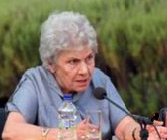
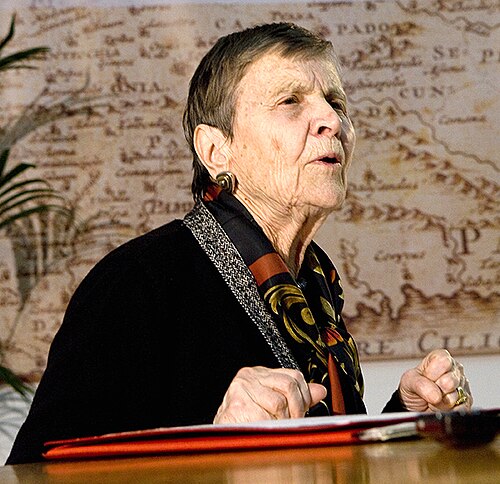
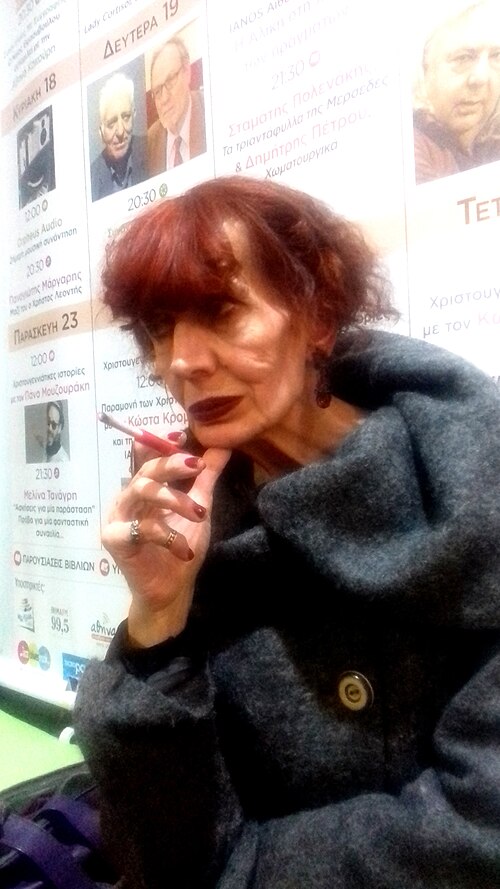
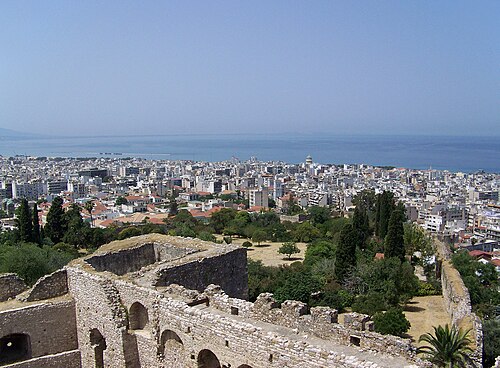
Maria Laina was born in Patras in 1947 and graduated in law from the University of Athens. Her working life developed around literature and the arts: she translated essays and fiction, edited books, prepared radio and television programmes, and taught Greek language, poetry and translation. Teaching Modern Greek placed the practical movement between languages alongside her own literary writing.
Her first poetry collection, Ενηλικίωση (Coming of Age), appeared in 1968. Further collections included Επέκεινα (Beyond, 1970), Σημεία στίξεως (Punctuation Marks, 1979) and Δικό της (Her Own, 1985). She was a founding member of the Society of Authors and contributed to Greek literary life through criticism, translation and anthologies as well as poetry and theatre. Her translations included writing by T. S. Eliot and Ezra Pound.
Ρόδινος φόβος (Rose-coloured Fear, 1992) received the State Poetry Prize in 1993. The collected volume Σε τόπο ξερό (In a Dry Place, 2015) gathered eight poetic works from 1970 to 2012. She later published the novella Τι όμορφη που είναι η ζωή (How Beautiful Life Is, 2020). The 2022 Grand Prize for Letters, announced in 2023, recognised her overall contribution. She died in Athens in December 2023.
Works

Laina’s poetry often makes a small image carry a large emotional movement. In Δ΄ Θριαμβικό (Fourth Triumphal), from Επέκεινα (Beyond, 1970), a speaker addresses a beloved person across the possibility of death. Wind, spring and rain turn remembrance into something sensed. Repetition and direct address hold the poem together, giving its reflections a recognisable movement without a long explanatory narrative.
Her books also move across literary forms. Μικτή τεχνική (Mixed Technique, 2012) brings the vocabulary of visual art into a poetry title. Σε τόπο ξερό (In a Dry Place, 2015) lets readers follow several decades of poems together. In the theatre, Το δέντρο (The Tree), staged in 2013, presents people who see and respond to the same tree differently. Laina linked those different views with human opposition, unexpected friendship and the absurd.
In her 2013 Bookpress interview, she explained that completing a text meant finding its rhythm and allowing it to find hers. She recalled a week spent looking for an adjective with four syllables and a particular stress pattern. This attention to a word’s shape makes sound, grammar and meaning part of the same act of writing.
Legacy in Greece today
Laina joined Greek poetry to theatre, translation and the teaching of language. Her example makes careful word choice a useful learning practice. After the adapted passage, write ο κήπος είναι ήσυχος, then replace ήσυχος with αμίλητος. Count the syllables: three and four. Explain why “quiet” can describe a garden directly while “speechless” gives it a human quality. Read both sentences and notice their different rhythm. Then choose your own noun and two agreeing adjectives, and explain what changes. These are original practice sentences inspired by her account of writing. The task develops adjective agreement, syllable awareness and the ability to discuss literal and figurative meaning in Modern Greek.
Did you know?
- Born in Patras in 1947; died in Athens in December 2023.
- Rose-coloured Fear appeared in 1992 and won the State Poetry Prize in 1993.
- The 2015 collected volume covers poems from 1970 to 2012.
- The 2022 Grand Prize for Letters was announced in 2023.
Key works
| Greek title | Title | Year |
|---|---|---|
| Ενηλικίωση | Coming of Age | 1968 |
| Επέκεινα | Beyond | 1970 |
| Ρόδινος φόβος | Rose-coloured Fear | 1992 |
| Μικτή τεχνική | Mixed Technique | 2012 |
| Σε τόπο ξερό. Ποιήματα 1970–2012 | In a Dry Place — collected poems 1970–2012 | 2015 |
A line to remember
Όταν έχω βρει το ρυθμό του κι αυτό τον δικό μου.
Otan echo vrei to rythmo tou ki afto ton diko mou.
When I have found its rhythm and it has found mine.