Life
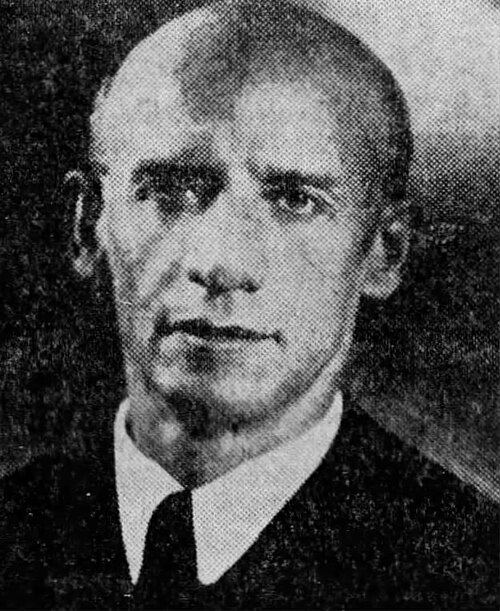
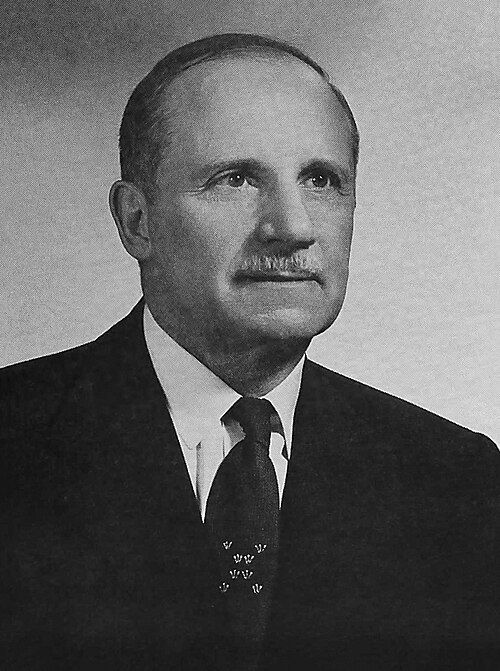
Zervas was born in 1902 in Megalopolis, in Arcadia, in the central Peloponnese. He began chemistry at the University of Athens in 1918 and in 1921 moved to Germany, the world centre of chemistry at the time; he graduated from the University of Berlin in 1924 and took his doctorate there in 1926 under Max Bergmann, a student of the great Emil Fischer. He followed Bergmann to Dresden, where Bergmann directed a research institute of the Kaiser Wilhelm Society devoted to leather and proteins. It was in Dresden that the two men made their famous discovery, published in 1932.
When the Nazis came to power, Bergmann, who was Jewish, was forced out of Germany and moved to the Rockefeller Institute in New York in 1934; Zervas worked with him there from 1934 to 1937 before returning to Greece. He taught first at the University of Thessaloniki (1937–1939) and then, from 1939 until the military junta removed him in 1968, as professor of organic chemistry at the University of Athens, where he built up a research school in a country with very few resources for science.
He was elected a member of the Academy of Athens in 1956 and served as its president in 1970. He died in Athens on 10 July 1980.
Works

Proteins and the smaller chains called peptides are built from amino acids joined together. Every amino acid has two reactive ends, so when chemists tried to link two of them in a particular order, the molecules reacted in all directions and produced a useless mixture. The problem was to protect one end temporarily, make the bond, and then remove the protection without destroying the fragile bond just made.
The solution of Bergmann and Zervas, published in 1932, was the carbobenzoxy group. Attached to the amino end of an amino acid with benzyl chloroformate, it blocks that end; once the peptide bond is formed, it can be removed gently, by catalytic hydrogenation, leaving the peptide intact. For the first time chemists could add amino acids one by one, like beads on a string. For about two decades it was the basic method of peptide synthesis, and it made possible the work that led to the laboratory synthesis of hormones such as oxytocin in the 1950s. Chemists still use the group, abbreviated as Cbz or simply Z.
In Athens Zervas and his collaborators, among them Iphigenia Photaki, went on to develop further protecting groups, such as the o-nitrophenylsulfenyl (Nps) group in the 1960s, and studied the chemistry of amino acids such as cysteine. His laboratory became the first Greek school of peptide chemistry.
Legacy in Greece today
Every chemistry student who learns about protecting groups meets his name: the Bergmann–Zervas method is in the textbooks of organic chemistry and biochemistry around the world, and the letter Z for the carbobenzoxy group is often explained as a tribute to Zervas. In Greece he is remembered as one of the founders of modern chemical research, together with the generation of scientists, such as the physician Georgios Papanikolaou, who carried Greek names into the history of twentieth-century science. Peptide chemistry remains a strong field in Greek universities and research centres, partly thanks to the school he founded. A good exercise for a learner is to read his story in Greek and notice how much of the vocabulary of science, from χημεία to πρωτεΐνη, comes from Greek words.
Did you know?
- The protecting group he invented with Bergmann is still written Z in chemistry, a letter often linked to his name.
- The discovery was made in Dresden, at an institute devoted to leather research, because leather is made of protein.
- He was elected to the Academy of Athens in 1956 and was its president in 1970.
- Words like chemistry, protein and peptide all have Greek roots: πεπτός means «digested».
Key works
| Greek title | Title | Year |
|---|---|---|
| Η μέθοδος του καρβοβενζοξυ- (Bergmann–Zervas) | The carbobenzoxy (Bergmann–Zervas) method of peptide synthesis | 1932 |
| Συνεργασία με τον Bergmann στο Ινστιτούτο Ροκφέλερ | Work with Bergmann at the Rockefeller Institute, New York | 1930s |
| Καθηγητής Οργανικής Χημείας στο Πανεπιστήμιο Αθηνών | Professor of Organic Chemistry, University of Athens | 1939–1968 |
| Η προστατευτική ομάδα Nps | The o-nitrophenylsulfenyl (Nps) protecting group | 1960s |
| Πρόεδρος της Ακαδημίας Αθηνών | President of the Academy of Athens | 1970 |
From the works

Public-domain pictures from Wikimedia Commons.
A line to remember
Η ομάδα Ζ
I omada Z
The Z group