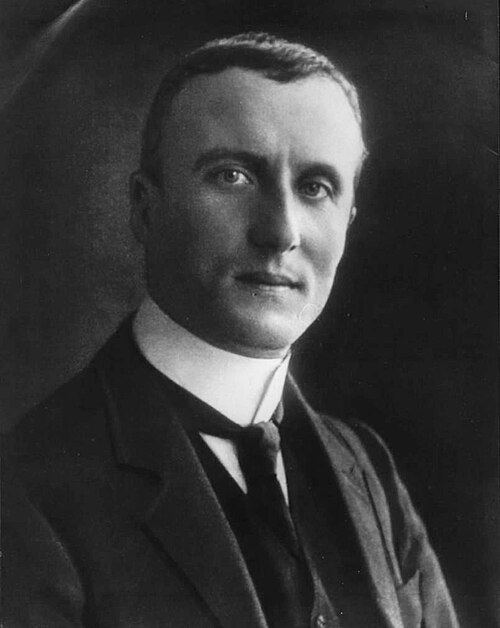
Life
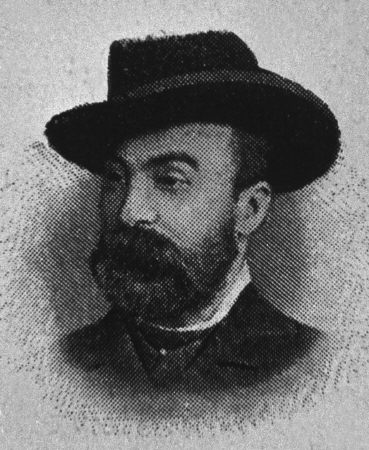
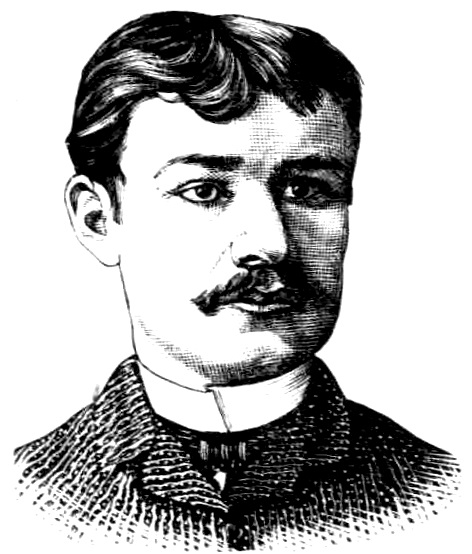
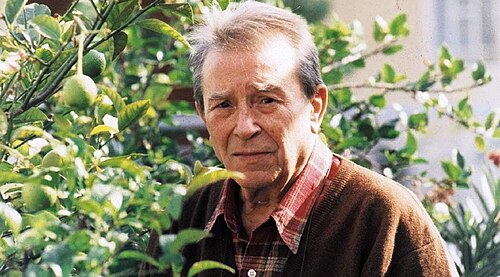
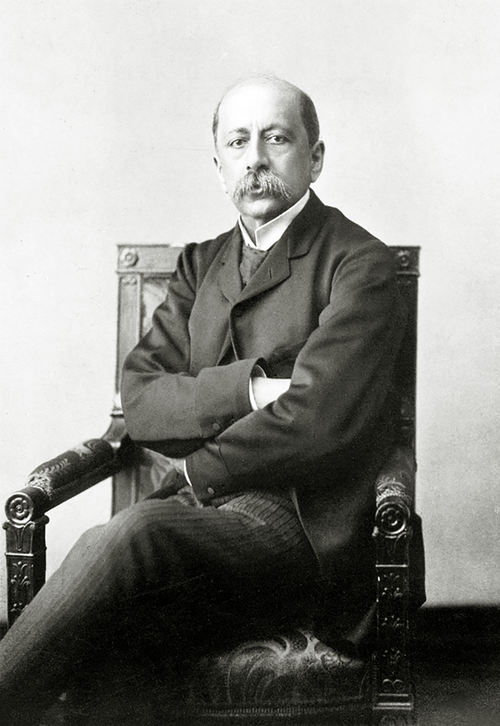
Carathéodory was born in Berlin on 13 September 1873 into a distinguished Greek family of Constantinople. His father, Stefanos Karatheodoris, was an Ottoman diplomat posted in Berlin and later in Brussels, so the boy grew up in Belgium, speaking Greek, French and German. He studied at the military school in Brussels and became an engineer, and around 1900 he worked for the British on dam construction on the Nile in Egypt. There, in his spare time, he read mathematics, and he decided to change his life.
At almost twenty-seven he enrolled at the University of Berlin, then moved to Göttingen, the world capital of mathematics, where he took his doctorate in 1904 under Hermann Minkowski. His rise was rapid: after posts in Hannover, Breslau and elsewhere, in 1913 he succeeded Felix Klein in Göttingen, and at the end of the First World War he moved to a chair at the University of Berlin.
In 1920 Prime Minister Eleftherios Venizelos invited him to organise a new Greek university in Smyrna, the Ionian University. Carathéodory threw himself into the project, but in September 1922 the Greek army was defeated in Asia Minor and Smyrna burned. He saved what he could and came to Athens, where he taught at the University and the Polytechnic until 1924. When the Academy of Athens was founded in 1926, he became one of its members, in the class of sciences. From 1924 until his death he was professor in Munich, where he lived through the Nazi years and the war. He died in Munich on 2 February 1950.
Works

Carathéodory's mathematics is abstract, but its influence is everywhere. In the calculus of variations, the branch that looks for curves and surfaces that make a quantity as small or as large as possible, he developed what is now called the «royal road» to the subject, set out in his book of 1935. In measure theory, which defines length, area and probability rigorously, his method of constructing a measure from an outer measure, published in his lectures on real functions of 1918, is the standard approach taught in every university; students meet it as «Carathéodory's criterion» or «Carathéodory's extension theorem». He also made fundamental contributions to complex analysis and conformal mapping.
Outside mathematics proper, his paper of 1909 on the foundations of thermodynamics gave the second law an axiomatic form based on a single geometric principle: near any state of a system there are states that cannot be reached without exchanging heat. Physicists still discuss this «Carathéodory principle».
In 1916, while Albert Einstein was completing the general theory of relativity, the two men exchanged letters about problems of mechanics and the calculus of variations, a correspondence that survives and is still studied by historians of science. Carathéodory also wrote in Greek, and to the end he considered himself a Greek scholar who happened to work in Germany.
Legacy in Greece today
In Greece Carathéodory is a symbol of Greek excellence in science, and his name appears in school mathematics books and in popular writing about Greek scientists. In Komotini, in Thrace, a museum devoted to him exhibits his books, letters and personal objects and is a place of pilgrimage for Greek mathematicians. The Academy of Athens, which counted him among its members from its foundation in 1926, honours him as one of the great Greek scientists of the modern age. Streets and schools across Greece carry his name, Οδός Καραθεοδωρή. Any learner who studies mathematics or physics at university will meet his name in a textbook, often without knowing that the man behind it was Greek.
Did you know?
- He trained as an engineer and worked on dams on the Nile before switching to mathematics at almost twenty-seven.
- In 1913 he succeeded Felix Klein, one of the most famous mathematicians of the age, at Göttingen.
- Einstein wrote to him in 1916, while finishing general relativity.
- The Greek university he founded in Smyrna was ready to open when the city was destroyed in 1922.
Key works
| Greek title | Title | Year |
|---|---|---|
| Διδακτορική διατριβή στο Γκέτινγκεν | Doctorate at Göttingen, under Minkowski | 1904 |
| Τα θεμέλια της θερμοδυναμικής | Investigations on the Foundations of Thermodynamics | 1909 |
| Διαλέξεις για τις πραγματικές συναρτήσεις (θεωρία μέτρου) | Lectures on Real Functions (measure theory) | 1918 |
| Το Ιωνικό Πανεπιστήμιο της Σμύρνης | The Ionian University of Smyrna | 1920–1922 |
| Λογισμός των μεταβολών | Calculus of Variations | 1935 |
From the works


Public-domain pictures from Wikimedia Commons.
A line to remember
Σε κάθε γειτονιά μιας οποιασδήποτε αρχικής κατάστασης υπάρχουν καταστάσεις που δεν μπορούν να προσεγγιστούν όσο κοντά θέλουμε με αδιαβατικές μεταβολές.
Se kathe geitonia mias opoiasdipote archikis katastasis yparchoun katastaseis pou den boroun na prosengistoun oso konta theloume me adiavatikes metavoles.
In every neighbourhood of any initial state there are states that cannot be approached arbitrarily closely by adiabatic changes.