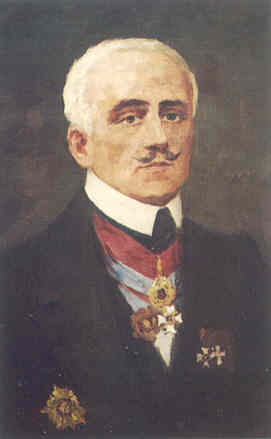
Life
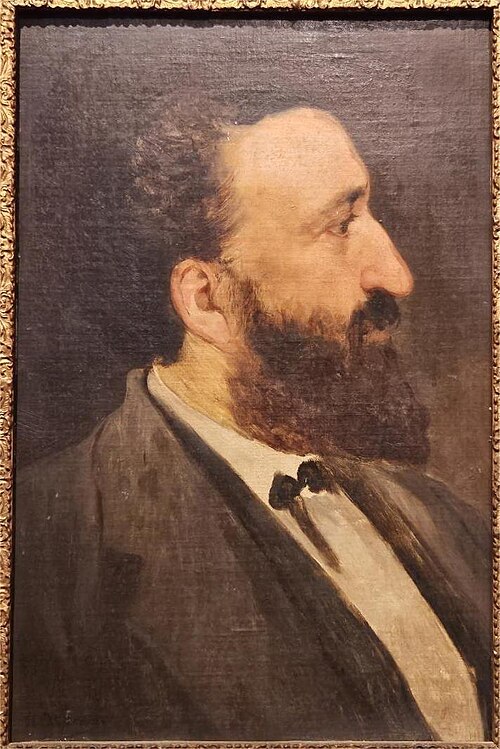
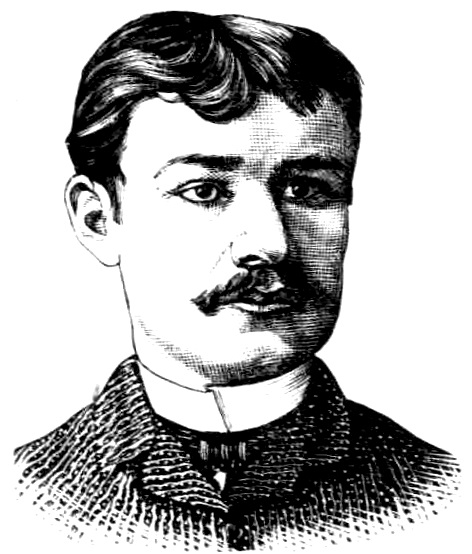
Zappas was born in 1800 in Labovo, a Greek village of Epirus near Argyrokastro, in what is today southern Albania. As a boy of about thirteen he joined the militia of Ali Pasha of Ioannina, and when the Revolution broke out in 1821 he fought on the Greek side; a close friend of Markos Botsaris, he served after Botsaris's death in 1823 under other chieftains such as Kitsos Tzavelas, and rose to the rank of major. After the war he did not stay in the new Greek state. In 1831 he settled in Wallachia, in today's Romania, where many Greeks lived and traded. There he bought and leased land, farmed it on a large scale and became one of the richest men in the country.
In the 1850s, a wealthy man without children, he turned his mind to Greece. In 1856 he wrote to King Otto offering to pay for a revival of the ancient Olympic Games, and in 1859 the first «Ολύμπια» were held in Athens with his money. He died in Broşteni, in Romania, on 19 June 1865. His will left the bulk of his fortune to the Greek state for the Olympic project and for a building to house it; his cousin Konstantinos Zappas, who managed the estate, saw to the work. According to his wishes his body was later reburied in his native Labovo, while his head was brought to Athens and laid beneath his statue in front of the Zappeion, on the day the building opened in 1888.
Works

Zappas's achievement was to give the idea of a modern Olympics a concrete form, a generation before Pierre de Coubertin. The idea itself had been in the air: the poet Panagiotis Soutsos had called for a revival of the Games in the 1830s. Zappas supplied the money and the stubbornness. The first Zappas Olympics, in November 1859, were held in a square in central Athens; they were a modest affair, with athletic events but also prizes for agriculture and industry, since the Games were meant to show off the progress of the young nation.
After his death his bequest paid for more. For the Games of 1870 the ancient Panathenaic Stadium was partly excavated and cleared, and the events were held there before a large crowd; this was the first time the stadium had been used for games since antiquity. Its full rebuilding in white marble came later, paid for by another benefactor, Georgios Averof, for the Games of 1896. The Zappeion itself, designed by the Danish architect Theophil Hansen, was begun in 1874 and inaugurated in 1888: a neoclassical building with a Corinthian portico and a round inner courtyard, often described as the first building in the world erected for the Olympic idea. When the modern Games were born in 1896, it hosted the fencing.
Legacy in Greece today
The Zappeion still stands in the National Garden, between the Parliament and the Panathenaic Stadium, and is used for conferences, exhibitions and official ceremonies. It was there, on 28 May 1979, that Greece signed its treaty of accession to the European Community. The gardens around it are one of the favourite walks of Athens, and the café beside it is a classic meeting place. Zappas's statue stands at the entrance, and his name is remembered whenever the history of the Olympics is told in Greek schools. A good thing to do: walk from Syntagma through the National Garden to the Zappeion, stop at his statue, then continue to the marble stadium of 1896, the Καλλιμάρμαρο, a ten-minute walk away.
Did you know?
- The Zappas Olympics of 1859 came thirty-seven years before the first international Olympic Games of 1896.
- His head lies beneath his statue at the Zappeion, while his body rests in his native village, Labovo, in today's Albania.
- The marble Panathenaic Stadium was paid for not by Zappas but by Georgios Averof; Zappas's money had cleared the ancient site for the Games of 1870.
- Greece's treaty of accession to the European Community was signed in the Zappeion in 1979.
Key works
| Greek title | Title | Year |
|---|---|---|
| Αγωνιστής του 1821 | Fighter in the War of Independence | 1821 |
| Επιστολή στον βασιλιά Όθωνα για την αναβίωση των Ολυμπιακών Αγώνων | Letter to King Otto proposing an Olympic revival | 1856 |
| Τα πρώτα Ζάππεια Ολύμπια | The first Zappas Olympics, Athens | 1859 |
| Τα Ολύμπια στο Παναθηναϊκό Στάδιο | Games of 1870 in the Panathenaic Stadium (from his bequest) | 1870 |
| Ζάππειο Μέγαρο | The Zappeion hall (from his bequest) | 1874–1888 |
From the works


Public-domain pictures from Wikimedia Commons.
A line to remember
Ζάππεια Ολύμπια
Zappeia Olympia
The Zappas Olympics