Life
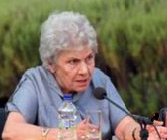
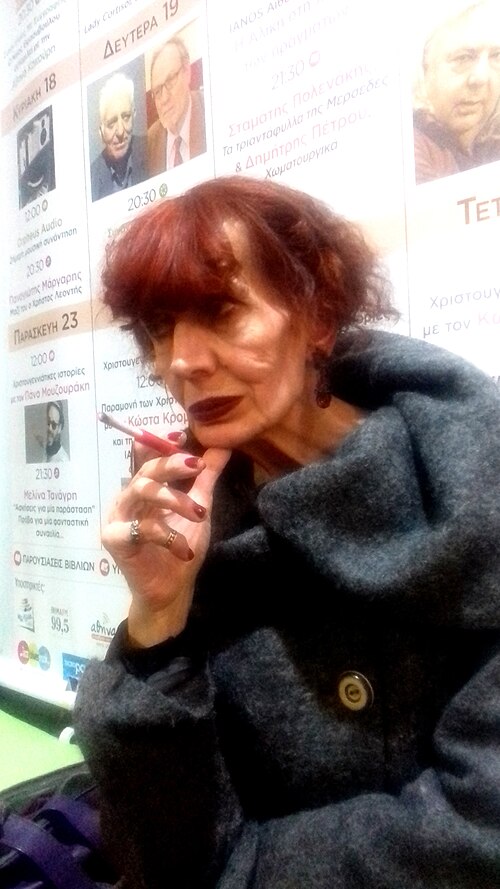
Ioanna Bourazopoulou was born in Athens in 1968 and studied public administration and hotel management in Greece and England. Before her first novel appeared in 2003, she had already been writing plays. Her published work developed across novels, short fiction, theatre and articles, reaching readers through Greek and international magazines, anthologies and translated editions.
Τι είδε η γυναίκα του Λωτ; (What Lot’s Wife Saw), published in 2007, received the Athens Prize for Literature in 2008. Its French, English and Bulgarian translations carried her imagined political world beyond Greek. Rather than confining invention to extraordinary creatures, her writing gives institutions, economies and collective beliefs a central place. A society’s explanations of the unusual become as important as the unusual event itself.
The Dragon of Prespa occupied a long period of work, with volumes appearing in 2014, 2019 and 2023. A 2017 residency at Villa Concordia in Bamberg supported work on the second volume. Η μνήμη του πάγου (The Memory of Ice) shared the 2024 State Novel Prize with Ilias Papamoschos’s Ανάληψη (Ascension). In October 2026 she published Φτερούγες κι οπλές στο αστικό δάσος (Wings and Hooves in the Urban Forest), extending her work in interconnected myths.
Works

Τι είδε η γυναίκα του Λωτ; (What Lot’s Wife Saw, 2007) introduces mysterious violet salt near the Dead Sea. The substance transforms geography and markets, turning an extraordinary premise into questions about dependency and domination. Biblical imagery frames a new imaginary society.
Ο Δράκος της Πρέσπας (The Dragon of Prespa) builds three competing accounts around a lake shared by Greece, North Macedonia and Albania. Η Κοιλάδα της Λάσπης (The Valley of Mud, 2014) presents a rain-soaked southern shore and research communities struggling over explanations. Κεχριμπαρένια Έρημος (Amber Desert, 2019) and Η Μνήμη του Πάγου (The Memory of Ice, 2023) change the perspective. Politics, climate and economic life are transformed inside the fiction, while the shores interpret the same mysterious presence differently. The reader must compare explanations rather than accept one account automatically.
Φτερούγες κι οπλές στο αστικό δάσος (Wings and Hooves in the Urban Forest, 2026) uses a travelling creature’s workshop of myths and riddles to explore the first quarter of the twenty-first century. It is an interconnected mythography. Across these books, invention creates distance from familiar arrangements, making choices and their consequences easier to question.
Legacy in Greece today
Bourazopoulou gives Greek speculative fiction an expansive social imagination. Her worlds also offer a clear way to practise conditional reasoning in Modern Greek. After listening to the adapted passage, invent a small village beside a lake and choose one condition: rain continues or a path closes. Write an αν sentence and a consequence with θα. Then change one condition and explain which consequence remains possible. Compare your two versions aloud and distinguish a condition from a prediction. This is your own imagined village, not a claim about actual Prespa weather or a quotation from the novels. The task develops conditional clauses, consequence vocabulary and a short argument about what follows from an assumption.
Did you know?
- The Prespa trilogy’s original volumes date from 2014, 2019 and 2023.
- The first volume’s Academy award followed in 2015.
- The Memory of Ice shared the 2024 State Novel Prize with Ilias Papamoschos’s Ascension.
- Wings and Hooves in the Urban Forest appeared in October 2026.
Key works
| Greek title | Title | Year |
|---|---|---|
| Τι είδε η γυναίκα του Λωτ; | What Lot’s Wife Saw | 2007 |
| Ο Δράκος της Πρέσπας Ι – Η Κοιλάδα της Λάσπης | The Dragon of Prespa I – The Valley of Mud | 2014 |
| Ο Δράκος της Πρέσπας ΙΙ – Κεχριμπαρένια Έρημος | The Dragon of Prespa II – Amber Desert | 2019 |
| Ο Δράκος της Πρέσπας ΙΙΙ – Η Μνήμη του Πάγου | The Dragon of Prespa III – The Memory of Ice | 2023 |
| Φτερούγες κι οπλές στο αστικό δάσος | Wings and Hooves in the Urban Forest | 2026 |
A line to remember
Είμαστε πλάσματα ατελή και δεν πειράζει καθόλου.
Eimaste plasmata ateli kai den peirazei katholou.
We are imperfect creatures, and that is quite all right.