Life
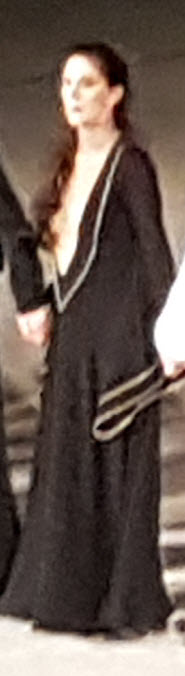
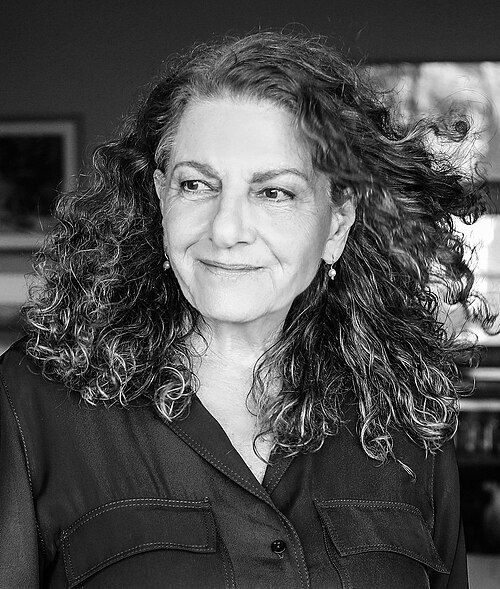
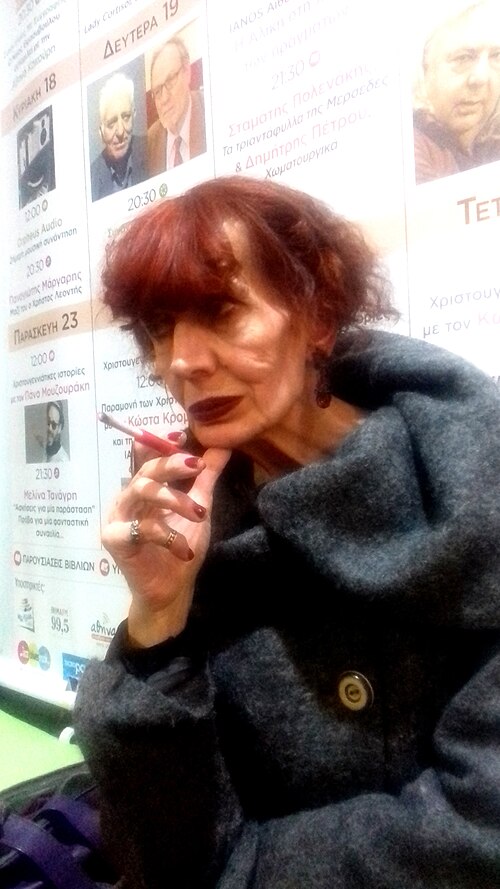
Angeliki Stellatou was born in Athens in 1963. She trained in classical ballet and graduated with honours from the State School of Dance, where the teacher Mary Tsouti asked dancers to notice what they feel inside each movement, not only to carry it out. In a 2015 interview she also remembered seeing Pina Bausch’s company at the Odeon of Herodes Atticus as “something like a revelation”. An Onassis Foundation scholarship then took her to New York, where she studied at the Merce Cunningham studios and attended seminars in contact improvisation and release technique.
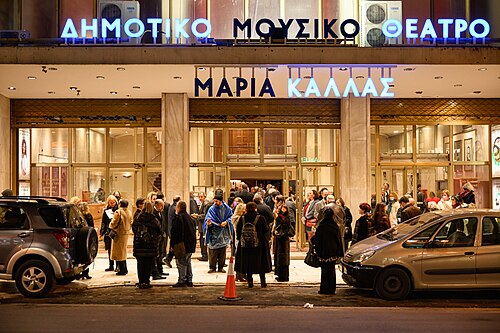
Back in Athens, she founded Edafos Dance Theatre with Dimitris Papaioannou; the group’s own history gives 1986, while other sources give 1987. She was its leading dancer and also assistant choreographer on productions such as Medea and Dracula, until she left after For Ever in 2001. She also danced with other independent companies, including Sine Qua Non, Analia and Zouzou Nikoloudi’s Choriká. In theatre she worked as a choreographer and movement adviser for directors at the National Theatre, the Neos Kosmos Theatre, the Athens Concert Hall and the Athens Festival, among others. She later directed her own pieces, including work with her own company, Ypsilon.
Works

Stellatou’s work moves between performing, choreographing and shaping how actors move on stage. In Edafos’s Ανθρώπινη δίψα (Human Thirst, 1999) her solo Σκαλοπάτια (Steps) won her the award for best female performance at the Greek national dance awards. In 2004 she was a choreographer in Papaioannou’s creative team for the opening and closing ceremonies of the Athens Olympic Games. Her movement work for Motortown, Simon Stephens’s play directed by Vangelis Theodoropoulos, received the Koula Pratsika award for choreography in 2008.
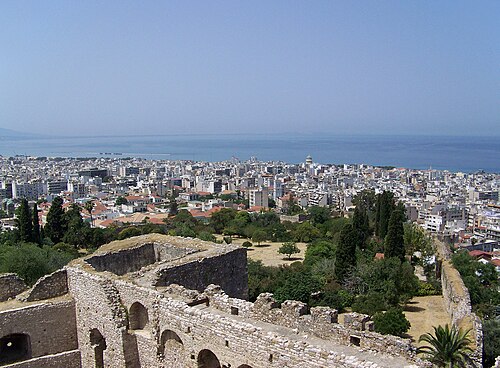
As a director and choreographer she created a little before ( ) a little after for Patras, European Capital of Culture, in 2006, and cann.ib.als with Ypsilon at the Neos Kosmos Theatre in 2009. A later duet, little lives or the body I inhabit, presented in Athens and Kalamata, made the effort of two bodies to move in exact synchrony its subject. In March 2015 the Greek National Opera commissioned her first work for its ballet: two scores by Manos Hadjidakis, Το χαμόγελο της Τζοκόντας (The Smile of the Gioconda) and the rarely staged Μαρσύας (Marsyas), at the Olympia Theatre. She told LiFO that she has no fixed choreographic code and prefers abstract expression to storytelling: movement, like music, can create feeling without explaining a plot.
Legacy in Greece today
Stellatou belongs to the generation that built Greek contemporary dance in independent groups during the 1980s and 1990s. In 2015 she noted that this flowering concerned particular choreographers rather than dance as a whole, because the structures to sustain it were missing. Today her name appears in programmes of Greek theatres and festivals, often in the line “movement” or “choreography”. Read her 2015 Greek interview in LiFO and find the verbs she uses for rehearsal: χορεύω, δοκιμάζω, προχωρώ. Then stand up, lean slowly to one side, straighten, stop, and report the sequence: Η δασκάλα είπε ότι γέρνουμε αργά, σηκωνόμαστε και σταματάμε (The teacher said that we lean slowly, rise and stop). Move only within a comfortable range.
Did you know?
- She trained in classical ballet and says she wore pointe shoes as comfortably as slippers.
- She films every rehearsal and makes her corrections after watching the video.
- Her 1999 solo in Human Thirst was called Σκαλοπάτια (Steps).
- Hadjidakis wrote Marsyas for Rallou Manou’s Greek Choreodrama.
Key works
| Greek title | Title | Year |
|---|---|---|
| Ομάδα Εδάφους | Edafos Dance Theatre — co-founder | 1986–87 |
| Ανθρώπινη δίψα | Human Thirst — solo Σκαλοπάτια (Steps) | 1999 |
| Τελετές Ολυμπιακών Αγώνων Αθήνα 2004 | Athens 2004 Olympic ceremonies — choreographer | 2004 |
| a little before ( ) a little after | a little before ( ) a little after — Patras | 2006 |
| Motortown | Motortown — movement, Koula Pratsika award | 2008 |
| Το χαμόγελο της Τζοκόντας · Μαρσύας | The Smile of the Gioconda · Marsyas | 2015 |
A line to remember
Η χορογραφία είναι για μένα σαν παζλ.
I chorografía íne giá ména san pazl.
For me, choreography is like a puzzle.