Life
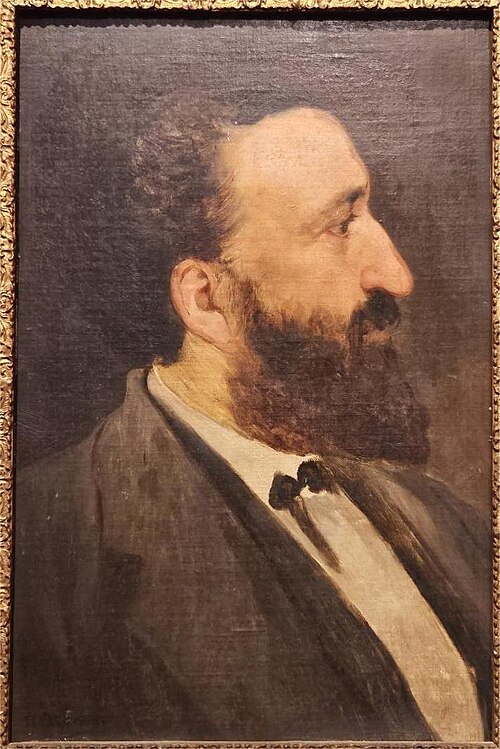
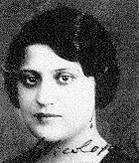
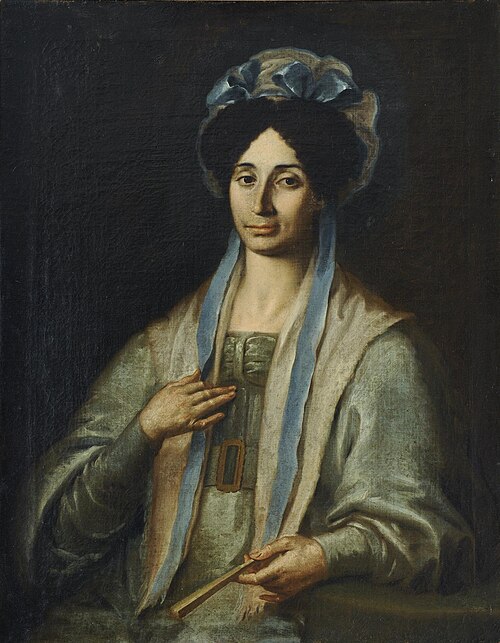
Aglaia Papa, also spelled Aglaia Pappa, was born on Corfu in 1904, according to the National Gallery of Greece; a few other sources give 1903. On the island she took her first painting lessons with Markos Zavitsianos and Konstantinos Parthenis. She then studied at the Athens School of Fine Arts, where her teachers included Nikolaos Lytras, Parthenis and Thomas Thomopoulos. Around 1925 the painter Spyros Vassiliou painted a large portrait of her, which she later gave to the National Gallery.
After graduating, she continued her studies in Trieste and Milan, and in Vienna she attended courses in the history of art. Teaching and vocational art schools interested her from early on. Back in Greece, she taught painting and decorative art at the vocational school of the Amalieio Orphanage. She was a member of the art groups Τέχνη (Art) and Στάθμη (Level), of the Chamber of Fine Arts of Greece and of the Association of Greek Women Artists.
She held several solo exhibitions and took part in group shows in Greece and abroad, including the Venice Biennale in 1934 and 1936 and the Alexandria Biennale in 1957. Critics of her time received her work favourably. On 14 November 1980 the National Gallery opened a retrospective of her work. She died in Piraeus in 1984.
Works

According to the National Gallery, landscapes and portraits were her main subjects. In both she used the firm, geometrically based way of composing a picture that she had learned from Parthenis. Early works in the Gallery include an oil Αυτοπροσωπογραφία (Self-Portrait) of around 1932 and Δύο αδερφές (Two Sisters), painted around 1935 in gouache and tempera on card. Portraits of named sitters, such as Η Γιαννούλα (Giannoula) and Καπετάν Τσόχας (Captain Tsochas, around 1950), show her interest in individual people.
Several landscapes take their titles from places and trees: Μπατσί Άνδρου (Batsi on Andros, 1940–1950), Ελιές (Olive Trees, around 1940–1950) and, much later, Πεύκα στην Κέρκυρα (Pine Trees on Corfu, 1976–1978), a large oil on canvas of 85 × 118 cm. From the 1960s her compositions became abstract. Works such as Σύνθεση Γ΄ (Composition C, 1963–1967), in oil on hardboard, and Φτερά (Feathers, 1963–1967) no longer name a place or a person. Her career links the teaching of Parthenis, the art groups of the interwar years and the turn to abstraction in post-war Greek painting. The catalogue of the 1980 retrospective, with a foreword by Dimitris Papastamos, gathered 136 plates of her work.
Legacy in Greece today
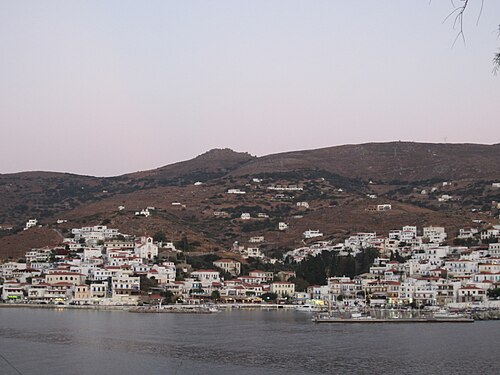
Aglaia Papa's paintings remain in public collections. The National Gallery of Greece lists sixteen of her works, many of them donated by the artist herself, and its online collection shows her Self-Portrait on display in the Central Building in Athens, as is Spyros Vassiliou's portrait of her. The Municipal Gallery of Corfu holds a collection of 23 of her works. For a Greek task, open the National Gallery's online record of Μπατσί Άνδρου (Batsi on Andros) and look closely at the image. Write three sentences about what you see with βρίσκεται (is located) and δίπλα σε (next to), starting with Στο κέντρο βρίσκεται… (In the centre there is…). Then report the museum's view in one sentence: Η Πινακοθήκη γράφει ότι… (The Gallery writes that…).
Did you know?
- Spyros Vassiliou painted her portrait around 1925; she later donated it to the National Gallery.
- She exhibited at the Venice Biennale twice, in 1934 and 1936.
- Besides painting, she attended courses in art history in Vienna.
- She was a member of the Association of Greek Women Artists.
Key works
| Greek title | Title | Year |
|---|---|---|
| Αυτοπροσωπογραφία | Self-Portrait | c. 1932 |
| Δύο αδερφές | Two Sisters | c. 1935 |
| Μπατσί Άνδρου | Batsi on Andros | 1940–1950 |
| Ελιές | Olive Trees | c. 1940–1950 |
| Σύνθεση Γ΄ | Composition C | 1963–1967 |
| Πεύκα στην Κέρκυρα | Pine Trees on Corfu | 1976–1978 |
A line to remember
το στέρεο, γεωμετρικών αναφορών συνθετικό κανόνα, που διδάχτηκε από τον Παρθένη
to stéreo, geometrikón anaforón synthetikó kanóna, pou didáchtike apó ton Parthéni
the solid compositional rule, with geometric references, that she learned from Parthenis