Life
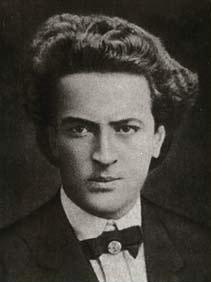
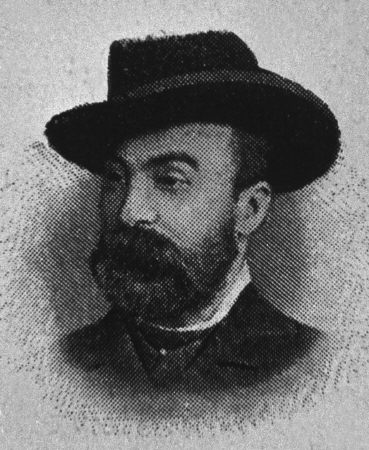
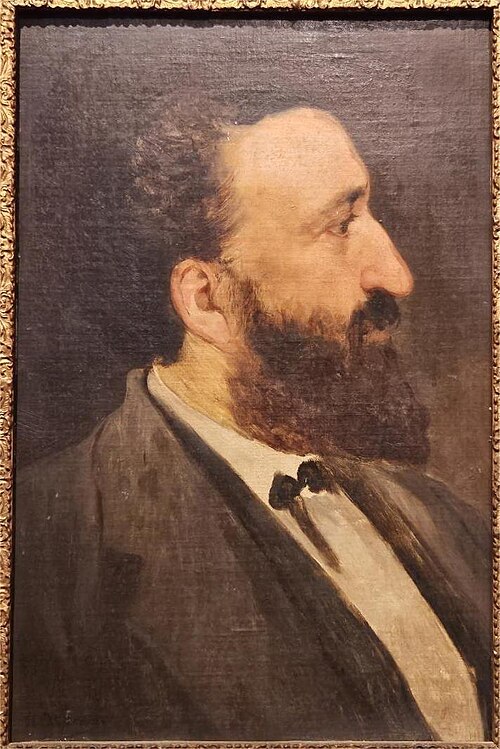
Mavilis was born on 6 September 1860 on Ithaca, where his father was a judge; the family, of Spanish origin, had settled in Corfu, and Corfu was his home. He grew up in the circle of the Ionian or Heptanesian school, the Corfiot tradition that descended from Solomos and was kept alive by Iakovos Polylas, who became his mentor. After a short time at the University of Athens he went to Germany in 1878 and stayed, with interruptions, for over a decade: Munich, Erlangen, Freiburg, studying philosophy, classical and Indian philology, and taking a doctorate at Erlangen in 1890. He learned Sanskrit well enough to translate episodes from the Mahabharata, read Kant and Schopenhauer, and composed chess problems that were published in European chess magazines.
Back in Corfu in the 1890s he wrote most of his sonnets and lived as a gentleman scholar, but the national cause kept pulling him away from his desk. In 1896 he joined the Cretan uprising against the Ottomans, and in the war of 1897 he fought as a volunteer in Epirus and was wounded in the hand. In 1910 he was elected to the Revisionary Parliament as a deputy for Corfu, and there, in 1911, he gave the speech for which he is remembered beyond poetry, defending the spoken language against those who called it vulgar.
When the First Balkan War broke out in October 1912, Mavilis, aged fifty-two, volunteered again, joining the corps of Garibaldini red-shirts fighting in Epirus. On 28 November 1912 he was fatally wounded at the battle of Driskos, on the heights above Ioannina. His last recorded words were that he had expected many honours from this war, but not the honour of dying for Greece.
Works

Mavilis is the sonneteer of Greek poetry. He took the fourteen-line Italian form, which the Ionian islands knew from their Venetian centuries, and gave it a density of sound and thought that nobody in Greek had managed before: every rhyme is natural, every line carries weight, and the final tercet turns the whole poem. His language is the rich demotic of Corfu, with island words and bold inversions, and his themes are those of a man who read Schopenhauer and watched the sea: the peace of death, the beauty of the natural world, the homeland, memory.
The best-known sonnets are Λήθη (Oblivion), which opens with the line every Greek knows, that the dead are fortunate because they forget the bitterness of life, and asks the living not to weep for them at dusk; Ελιά (Olive Tree), in which a swarm of bees nests in the hollow of an ancient olive and the dying tree is consoled by the life inside it; Καλλιπάτειρα, about the noblewoman of Rhodes who, disguised as a trainer, entered the men-only Olympic Games to see her son crowned; Πατρίδα (Homeland), written on his return from Germany; and Μούχρωμα (Dusk) and Έρμονες, named after a bay on the west coast of Corfu. He also left translations: from Sanskrit, from Shelley, from German poets.
His parliamentary speech of 1911 belongs with the poems. In the debate on whether the constitution should proclaim katharevousa, the archaising written language, as the official language of the state, Mavilis declared that there is no such thing as a vulgar language, only vulgar people, and that many vulgar people speak katharevousa. The sentence, delivered in the formal Greek of parliament, is still the demotic movement's best-known one-liner.
Legacy in Greece today
Λήθη, Ελιά and Καλλιπάτειρα are fixtures of the Greek school anthologies, and «Καλότυχοι οι νεκροί που λησμονάνε» is one of the lines of poetry Greeks most often recite at funerals and memorials. Corfu honours him with a bust and a street, and streets named Μαβίλη exist in Athens, Thessaloniki and many other towns; the Μαβίλη square in central Athens is a well-known meeting point. At Driskos, near Ioannina, a monument marks the place where he fell. His speech on language is quoted whenever Greeks argue about correct and incorrect Greek. A learner can read Λήθη, just fourteen lines, aloud: the sound is the point.
Did you know?
- He held a German doctorate in philosophy and could read Sanskrit, from which he translated episodes of the Mahabharata into Greek verse.
- He composed chess problems that appeared in European chess magazines, a rare hobby for a poet.
- He fought in three wars as a volunteer, in Crete in 1896, in Epirus in 1897 and again in 1912, and was killed in the last of them at fifty-two.
- His whole poetic output is about fifty sonnets and a handful of other poems, yet three or four of them are in every Greek school anthology.
Key works
| Greek title | Title | Year |
|---|---|---|
| Μεταφράσεις από τα σανσκριτικά (Μαχαμπχαράτα) | Translations from Sanskrit (episodes of the Mahabharata) | 1880s–1890s |
| Ελιά | Olive Tree (sonnet) | 1890s |
| Λήθη | Oblivion (sonnet) | 1890s |
| Καλλιπάτειρα | Kallipateira (sonnet) | c. 1900 |
| Η αγόρευση για τη δημοτική στη Βουλή | The parliamentary speech for demotic Greek | 1911 |
| Η μάχη του Δρίσκου | The battle of Driskos, where he fell | 1912 |
From the works


Public-domain pictures from Wikimedia Commons.
A line to remember
Καλότυχοι οι νεκροί, που λησμονάνε / την πίκρια της ζωής.
Kalotychoi oi nekroi, pou lismonane / tin pikria tis zois.
Fortunate are the dead, who forget / the bitterness of life.
From the original
The text as Lorentzos Mavilis wrote it, out of copyright, with our own translation beside it.
«Λήθη»Oblivion
The whole sonnet, in the polytonic spelling of its 1936 printing: at dusk the dead go to drink from the spring of Lethe, and a tear shed by the living clouds its water. The page's quote is its opening line and a half.
«Λήθη» (sonnet, 1890s; text of the 1936 printing in «Μπουκέτο»), complete · Public-domain text, source: el.wikisource.org