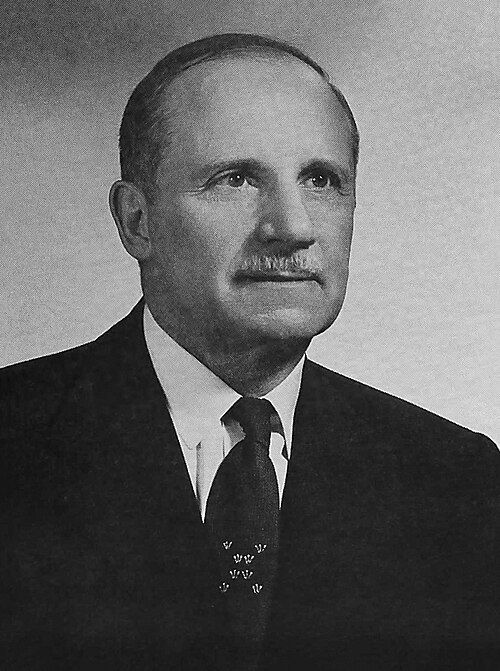
Life
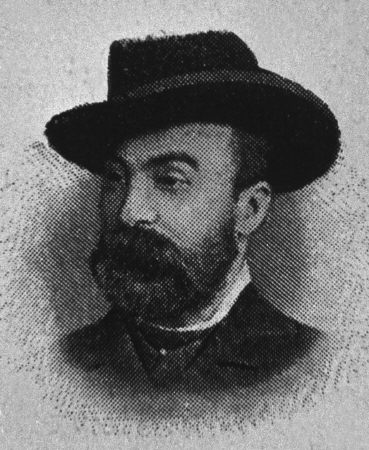
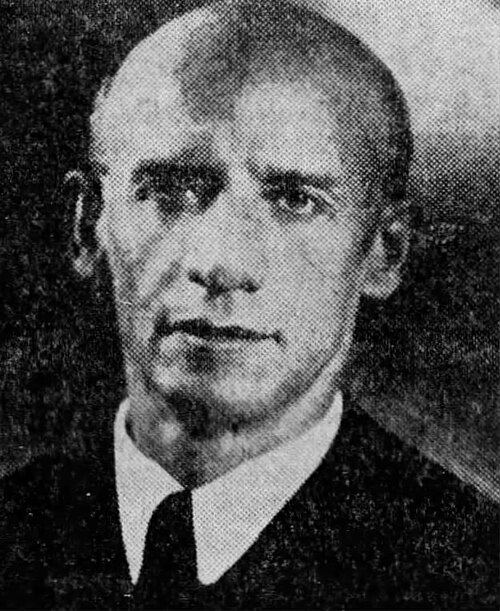
Marinatos was born on 17 November 1901 (4 November in the old calendar) in Lixouri, on the island of Kefalonia. He studied at the University of Athens and later in Berlin and Halle in Germany; in 1919, still a student, he joined the Greek Archaeological Service. He was sent to Crete, where in 1929 he became ephor of antiquities and director of the Heraklion Museum (until 1937), the home of the great Minoan collections. In Crete he excavated many sites, among them, in 1932, Amnisos, the old harbour of Knossos, where he found a Minoan villa decorated with paintings of lilies and, in the ruins, a layer of pumice, the light volcanic stone thrown out by eruptions.
In 1939 he became professor of archaeology at the University of Athens, and in the same year he dug at Thermopylae, where on the little hill of Kolonos he found arrowheads from the last stand of Leonidas and his Spartans in 480 BC. After the war he worked in Messenia, in the region of Pylos, and at Marathon, and in 1955 he was elected a member of the Academy of Athens. In 1967 he began the excavation that crowned his career, at Akrotiri on Santorini. The same year the colonels seized power in Greece, and Marinatos accepted the junta's offer to head the archaeological service as Inspector General, a post he held until January 1974 and for which he was criticised. On 1 October 1974, working at Akrotiri, he fell from a wall and died. He was buried, as he had wished, inside the site he had brought to light; in 2005 his grave was moved near the southern entrance.
Works

Marinatos's first big idea came from the pumice at Amnisos. In an article published in 1939 in the British journal Antiquity, "The Volcanic Destruction of Minoan Crete", he proposed that the explosion of the volcano of Thera, some 110 kilometres north of Crete, had sent ash, earthquakes and tidal waves against the Minoan coasts and helped bring down the civilisation of Knossos. The theory made his name. Today scientists date the eruption to around 1600 BC, earlier than the final fall of the Minoan palaces, so the link is less direct than he thought, but the eruption is still seen as one of the great events of the Aegean Bronze Age.
To test his theory he chose Akrotiri, in the south of Santorini, where farmers had found ancient walls. From 1967 his team uncovered a prosperous Bronze Age town, buried by the eruption and preserved under metres of ash: streets, squares, houses two and three floors high, storage jars, furniture whose shape survived as hollows in the ash. Unlike Pompeii, almost no bodies were found; the inhabitants seem to have escaped in time. Above all, the walls were covered with paintings: Η Άνοιξη (Spring), with red lilies and swallows, two boys boxing, a young fisherman holding his catch, and a long miniature frieze showing a fleet sailing between harbour towns. These frescoes changed our picture of Aegean art. Marinatos published the results year by year in his reports, Excavations at Thera.
Legacy in Greece today
Akrotiri is today one of the most visited archaeological sites in Greece, protected by a large modern roof; walking along its ancient streets, you pass close to the grave of Marinatos, near the entrance. Many of the wall paintings are in the National Archaeological Museum in Athens and in the Museum of Prehistoric Thera in Fira, and the Spring fresco, with its swallows, appears on posters, book covers and souvenirs. The excavation continued after his death under his colleague Christos Doumas. Visitors to Santorini often hear the story, linked by Marinatos and others, that the destruction of Thera lies behind Plato's legend of Atlantis. In Lixouri, his birthplace, he is remembered as one of Kefalonia's famous sons.
Did you know?
- He first suggested the link between the Thera eruption and Minoan Crete in an article of 1939.
- At Thermopylae he found arrowheads from the battle of 480 BC on the hill of Kolonos.
- Almost no human remains were found at Akrotiri, which suggests the inhabitants fled before the eruption.
- He died at Akrotiri in 1974 after a fall during the excavation and is buried inside the site.
Key works
| Greek title | Title | Year |
|---|---|---|
| Ανασκαφή στην Αμνισό της Κρήτης | Excavation at Amnisos, Crete | 1932 |
| «The Volcanic Destruction of Minoan Crete» | The Volcanic Destruction of Minoan Crete (article, Antiquity) | 1939 |
| Ανασκαφή στις Θερμοπύλες (λόφος Κολωνού) | Excavation at Thermopylae (Kolonos hill) | 1939 |
| Ανασκαφή στο Ακρωτήρι της Θήρας | Excavation of Akrotiri, Thera (Santorini) | 1967–1974 |
| Excavations at Thera | Excavations at Thera (annual reports) | 1968–1976 |
From the works


Public-domain pictures from Wikimedia Commons.
A line to remember
Ένα πρωτότυπον μουσείον-ανασκαφή, όπου ο επισκέπτης θα βλέπη μίαν προϊστορικήν Πομπηίαν.
Ena prototypon mouseion-anaskafi, opou o episkeptis tha vlepi mian proistorikin Pompiian.
An original museum-excavation, where the visitor will see a prehistoric Pompeii.