Life
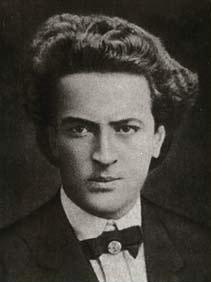
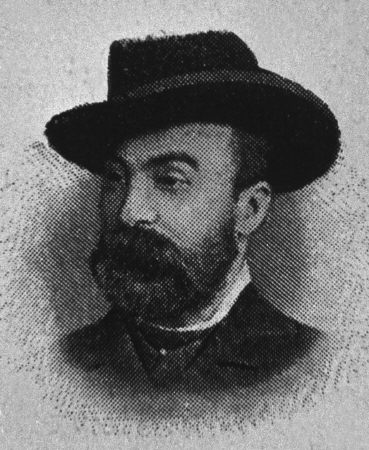
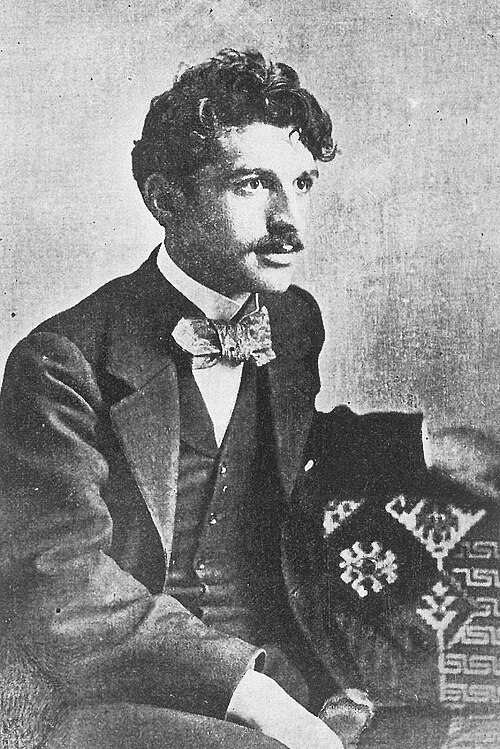
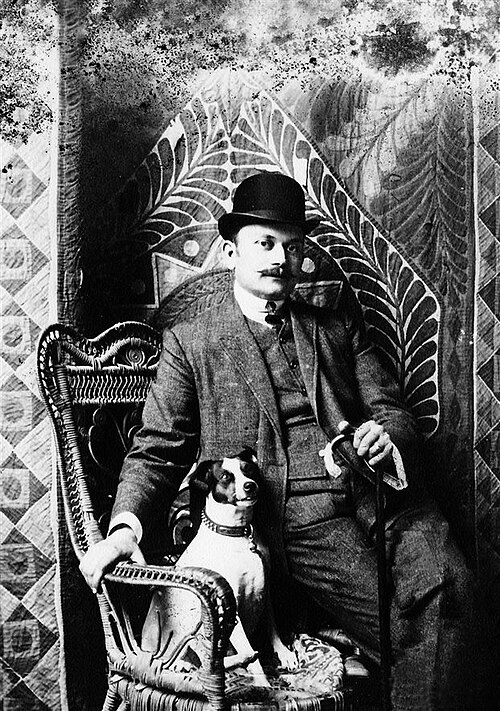
Parthenis was born in Alexandria, Egypt, on 10 May 1878, into the city's prosperous Greek community. From 1895 to 1903 he studied painting at the Academy of Fine Arts in Vienna, when the city was alive with the Secession movement of Gustav Klimt and its love of decoration, flat surfaces and symbolic figures. He came to Athens in 1903, but Greek art there was still dominated by the realism of painters trained in Munich, such as Gyzis and Lytras, and his work seemed strange.
Around 1909 he went to Paris, where he discovered the Post-Impressionists and the painters of the Nabis group, and his palette became lighter and freer. Back in Greece he spent several years in Corfu, painting its olive groves and seashore, and in 1917 he was among the founders of the group Τέχνη (Art), which brought together artists who wanted a modern Greek art.
His appointment as a professor at the Athens School of Fine Arts was a battle in itself: his first application, in 1923, was rejected, and he was appointed only in 1929, by a special law; for nearly two decades his studio was the place where the young modernists of the 1930s Generation learned to paint. After he resigned from the School in 1947 he lived in growing isolation; paralysed and poor in his last years, he died in Athens on 25 July 1967.
Works

A painting by Parthenis is recognisable at once. Figures are long and slender, outlines are drawn with a firm, flowing line, colours are pale, silvery blues, pinks and ochres, and everything seems lit from within. Space is flattened, as in a Byzantine icon or a fresco, and the human body loses its weight. He took ideas from Vienna and Paris, but he mixed them with what he saw as essentially Greek: the clear light of the Aegean, the calm of ancient sculpture and the spirituality of Byzantine painting.
His subjects range widely. There are religious works such as Ευαγγελισμός (The Annunciation, c. 1910–1911), landscapes of Corfu and Attica, and mythological scenes, above all paintings of Ηρακλής (Heracles) in a dreamlike, dancing world; Ο Ηρακλής μάχεται με τις Αμαζόνες (Heracles Fighting the Amazons) won a gold medal at the Paris International Exhibition of 1937. His most famous painting, Η Αποθέωση του Αθανασίου Διάκου (The Apotheosis of Athanasios Diakos, completed in 1933), shows the hero of 1821 not as a martyr on a spit but as a luminous figure rising heavenwards, surrounded by symbolic presences.
Parthenis was less interested in telling a story than in creating harmony and spiritual light, and this is what made him so important: he showed that a Greek painter could be modern without stopping being Greek.
Legacy in Greece today
The best place to meet Parthenis is the National Gallery in Athens, which holds a large group of his works, many of them given by his daughter Sofia; the Apotheosis of Athanasios Diakos itself belonged for decades to the collection of the banker Spyros Loverdos and was sold at auction in Paris in 2021. Greek histories of art treat him as the starting point of Greek modernism, and painters of the 1930s Generation, Yannis Tsarouchis and Nikos Engonopoulos among them, studied in his studio at the School of Fine Arts. Look at one of his landscapes next to a realistic painting by Lytras or Gyzis, and you will see in a moment what changed in Greek art in the twentieth century.
Did you know?
- He was born in Alexandria, like the poet Kavafis, and trained in Vienna at the time of Klimt and the Secession.
- His first application for a chair at the School of Fine Arts was rejected in 1923; he was appointed in 1929 only by a special law.
- Tsarouchis and Engonopoulos, two of the best-known Greek painters of the twentieth century, were his students; Moralis spent a couple of months in his studio, too.
Key works
| Greek title | Title | Year |
|---|---|---|
| Ευαγγελισμός | The Annunciation | c. 1910–1911 |
| Τοπία της Κέρκυρας | Landscapes of Corfu | 1910s |
| Η Αποθέωση του Αθανασίου Διάκου | The Apotheosis of Athanasios Diakos | 1933 |
| Ο Ηρακλής μάχεται με τις Αμαζόνες | Heracles Fighting the Amazons (gold medal, Paris 1937) | by 1937 |
A line to remember
Ο Παρθένης άνοιξε τα μάτια μας σε μια ακόμη, έως τότε άγνωστη, μορφή του τόπου μας.
O Parthenis anoixe ta matia mas se mia akomi, eos tote agnosti, morfi tou topou mas.
Parthenis opened our eyes to yet another face of our land, unknown until then.