Life
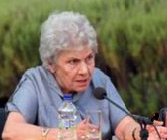
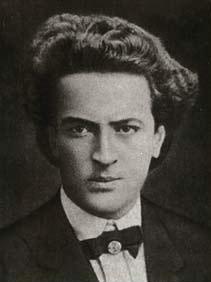
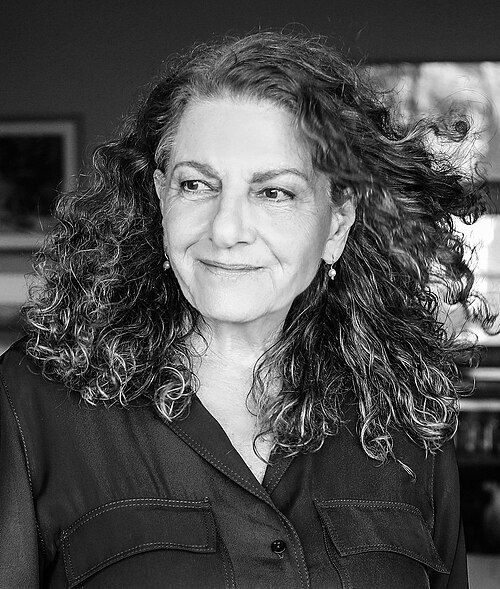
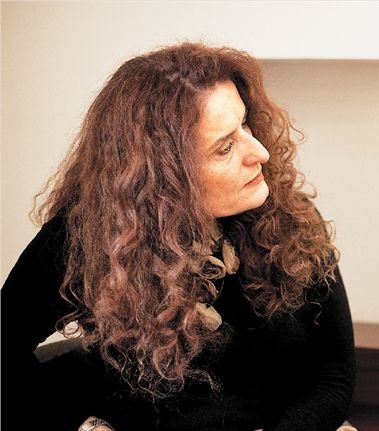
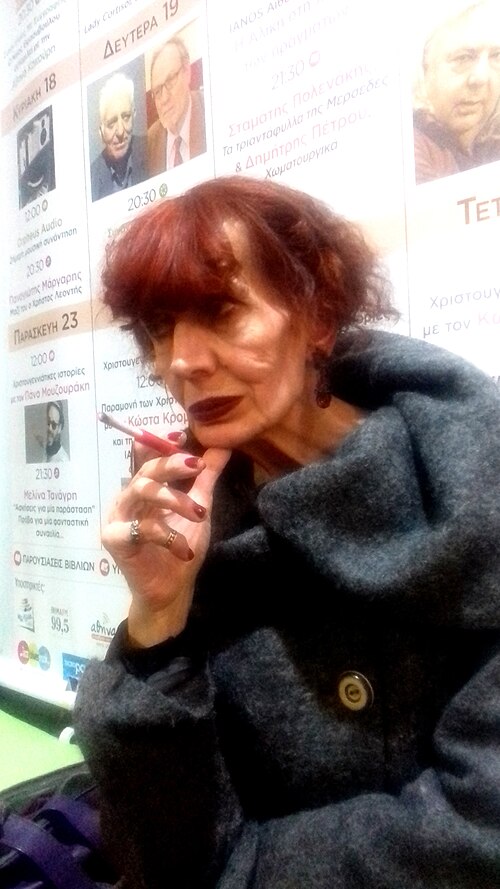
Opy Zouni was born Kalliopi Sarpaki in Cairo on 4 February 1941, into a Greek family with roots in Santorini and Crete. A favourite uncle gave her the nickname Opy, and it stayed with her for life. She lost both parents young; her mother had been the first to introduce her to painting. In Cairo she studied painting from 1959 in the studio of the Armenian painter Ashot Zorian, as well as ceramics and photography, and she held her first exhibition at the Nile Gallery in 1962.
In 1963 she settled in Athens. At the Athens School of Fine Arts she studied painting with Yannis Moralis from 1963 to 1968, together with ceramics and stage design. In 1965 she married the architect Alekos Zounis, and they had two sons. She later recalled that, as a woman making avant-garde work, she could not at first get a solo show in Greece, so she started abroad: she exhibited at the Galerie Vallombreuse in Biarritz in 1970, and her first solo exhibition in Greece followed in 1971 at the Hellenic-American Union in Athens.
In the 1980s the art dealer Alexander Iolas supported her work. From 1996 she lived with cancer but kept working. A large exhibition at the Museum of Cycladic Art in 2006–07 drew many visitors. She died in Athens on 5 December 2008, aged 67.
Works
In the words of the National Gallery of Greece, Zouni’s central question was the passage from two dimensions to three, from a closed space to an open one. Working in painting, sculpture, constructions and printmaking, she used geometric shapes, horizontal and vertical lines, a few strong colours and black and white to create perspective, light, shadow and movement. People are absent from her pictures, which makes the space feel even wider. Her work is usually placed within geometric abstraction and constructivism, and museum texts trace its roots to both Egypt and Greece and to her observation of sea, desert and sky.
Early pieces such as Ασύμμετρη σύνθεση σε πολυσταυρό (Asymmetrical Composition on a Multi-Cross Base, 1974), a pair of sculptures, show her experiments with objects. Χώρος ενός επιπέδου. Αναφορά στον ντε Κίρικο ΙΙ (One-Level Space. Reference to De Chirico II, 1978) responds to the deep perspectives of Giorgio de Chirico. Λευκός κίονας (White Column, 1991) is painted wood on a steel base, 240 cm tall and only 20 cm wide: bands of colour climb upward and end in quick brushstrokes. Βέλος (Arrow, 1992), now at the Averoff Museum in Metsovo, guides the eye towards a single point, as if beyond the canvas. She showed her work across Europe and at the São Paulo Biennial in 1979, and in 1971 she won the national prize at the UNESCO painting festival in Cagnes-sur-Mer.
Legacy in Greece today
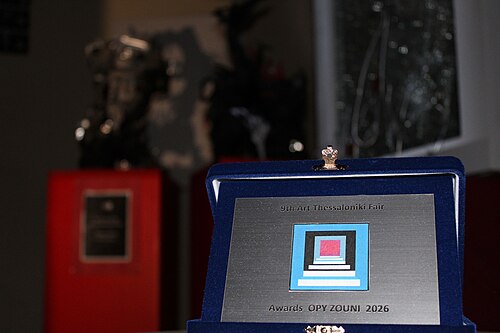
Zouni’s works are held by the National Gallery of Greece and the Averoff Museum, among other collections in Greece and abroad. In 2013 the Michael Cacoyannis Foundation in Athens showed works mainly from her last year, 2008. At the ninth Art Thessaloniki fair in 2026, an Opy Zouni award in her memory was presented to a contemporary artist. To practise, open the National Gallery’s online record of Λευκός κίονας (White Column) or see the work itself at the National Glyptotheque in Goudi, Athens. Describe it in Greek without copying it: Ο κίονας είναι ψηλός και στενός (The column is tall and narrow). Then say which colours seem to come μπροστά (in front) and which seem to stay πίσω (behind).
Did you know?
- Her given name was Kalliopi; Opy was a nickname from her uncle.
- Λευκός κίονας (White Column) is 240 cm tall but only 20 cm wide.
- She exhibited in Biarritz in 1970, a year before her first solo show in Greece.
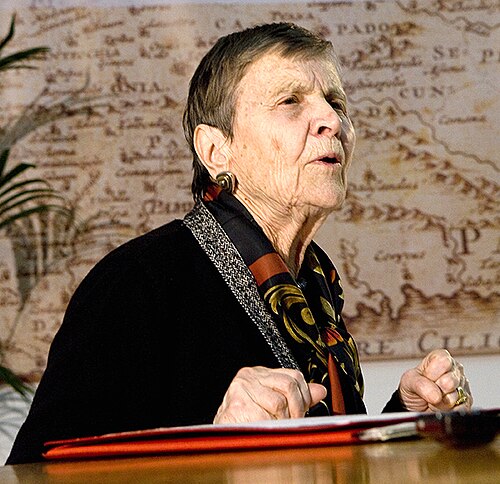
- In 1992 the French Institute in Athens held a round table on her geometry, chaired by the historian Hélène Ahrweiler.
Key works
| Greek title | Title | Year |
|---|---|---|
| Ασύμμετρη σύνθεση σε πολυσταυρό – 2 γλυπτά | Asymmetrical Composition on a Multi-Cross Base – 2 Sculptures | 1974 |
| Χώρος ενός επιπέδου. Αναφορά στον ντε Κίρικο ΙΙ | One-Level Space. Reference to De Chirico II | 1978 |
| Ναός | Temple | 1981 |
| Αντανακλάσεις | Reflections | 1982 |
| Λευκός κίονας | White Column | 1991 |
| Βέλος | Arrow | 1992 |
A line to remember
Ο καλλιτέχνης μπορεί να έχει απαλλαγεί από την απεικόνιση αλλά όχι από την εικόνα.
O kallitéchnis boreí na échei apallageí apó tin apeikónisi allá óchi apó tin eikóna.
The artist may have been freed from depiction, but not from the image.